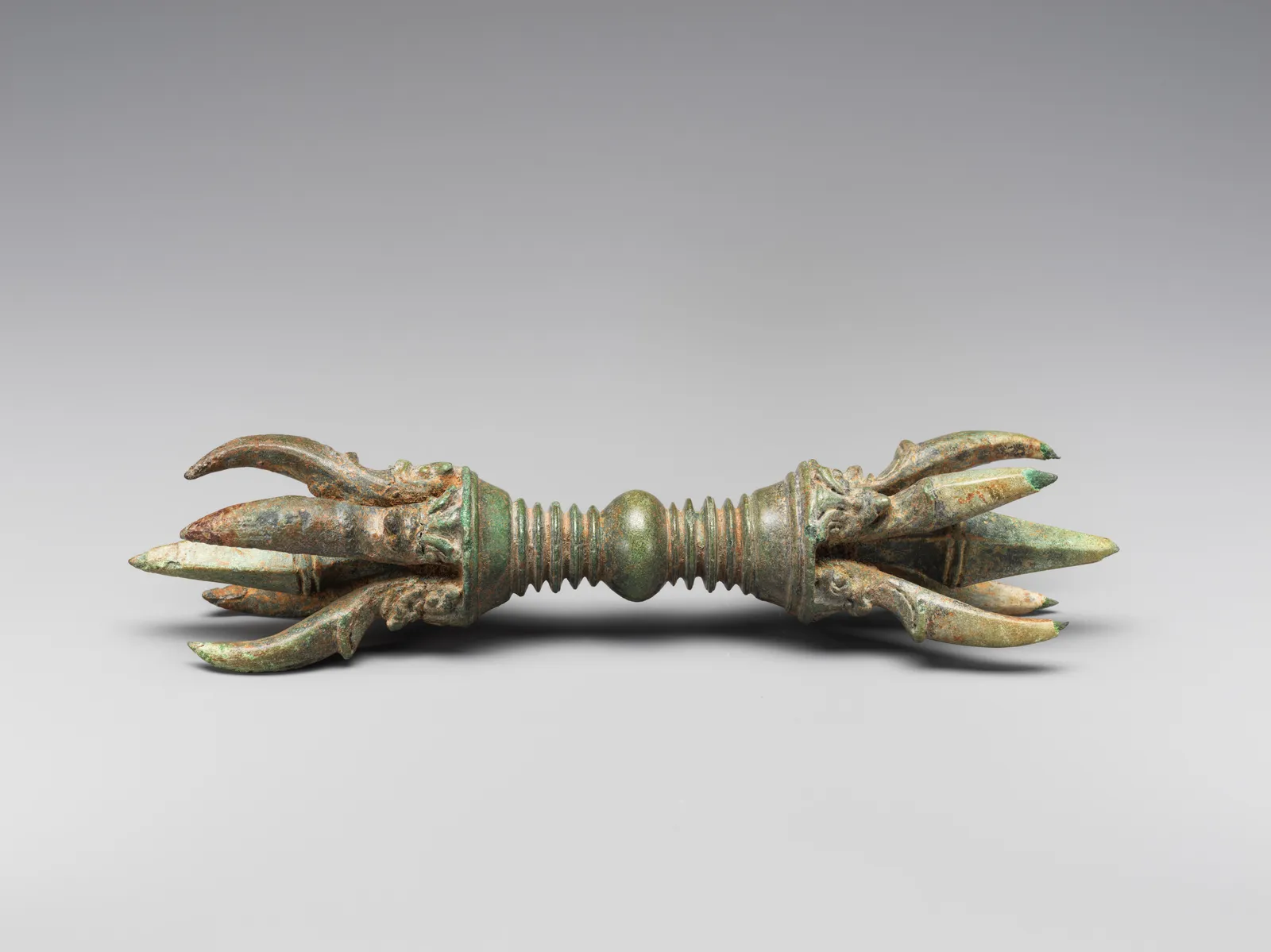
Indian
Vajra
Vajra (वज्र)
Unbreakable as diamond and striking like lightning. It slew Vritra, the serpent of drought.
WeaponFirst recorded c. 1200 BCE
Loading artifact…
Photograph: A painting from Mandi in the Punjab Hills of India, about 1780–90, The Churning of the Ocean of Milk. A serpent winds around a pillar set on a tortoise, with gods and demons pulling on either side; a many-armed Vishnu sits on a lotus above, among a white horse, an elephant, the sun and the moon.
Focus the photograph, then use the arrow keys to pan and the plus and minus keys to zoom. The buttons at the lower left also move it. Press a numbered button on the photograph to zoom to that note.
Amrita (अमृत)
Whoever drinks it does not die.
When the gods lost their strength, Vishnu told them to join with the demons and churn the ocean of milk to obtain the drink of immortality. With Mount Mandara as the churning rod and the great serpent Vasuki as the rope, they pulled from both sides, and Vishnu became the tortoise Kurma to bear the mountain on his back.
Along with all sorts of treasures, the poison that could burn the world rose first. Shiva swallowed it and his throat turned blue, and last of all the divine physician Dhanvantari appeared with the jar of amrita.
When the demons seized the jar, Vishnu turned into the beautiful woman Mohini, beguiled them and served amrita to the gods alone. The demon Rahu, who slipped in and drank, had his head cut off by the disc, but his head did not die.
The photograph shows The Churning of the Ocean of Milk(India (Punjab Hill, Mandi), ca. 1780–90), a real museum object that evokes the legendary artifact.
Vajra (वज्र)
Unbreakable as diamond and striking like lightning. It slew Vritra, the serpent of drought.
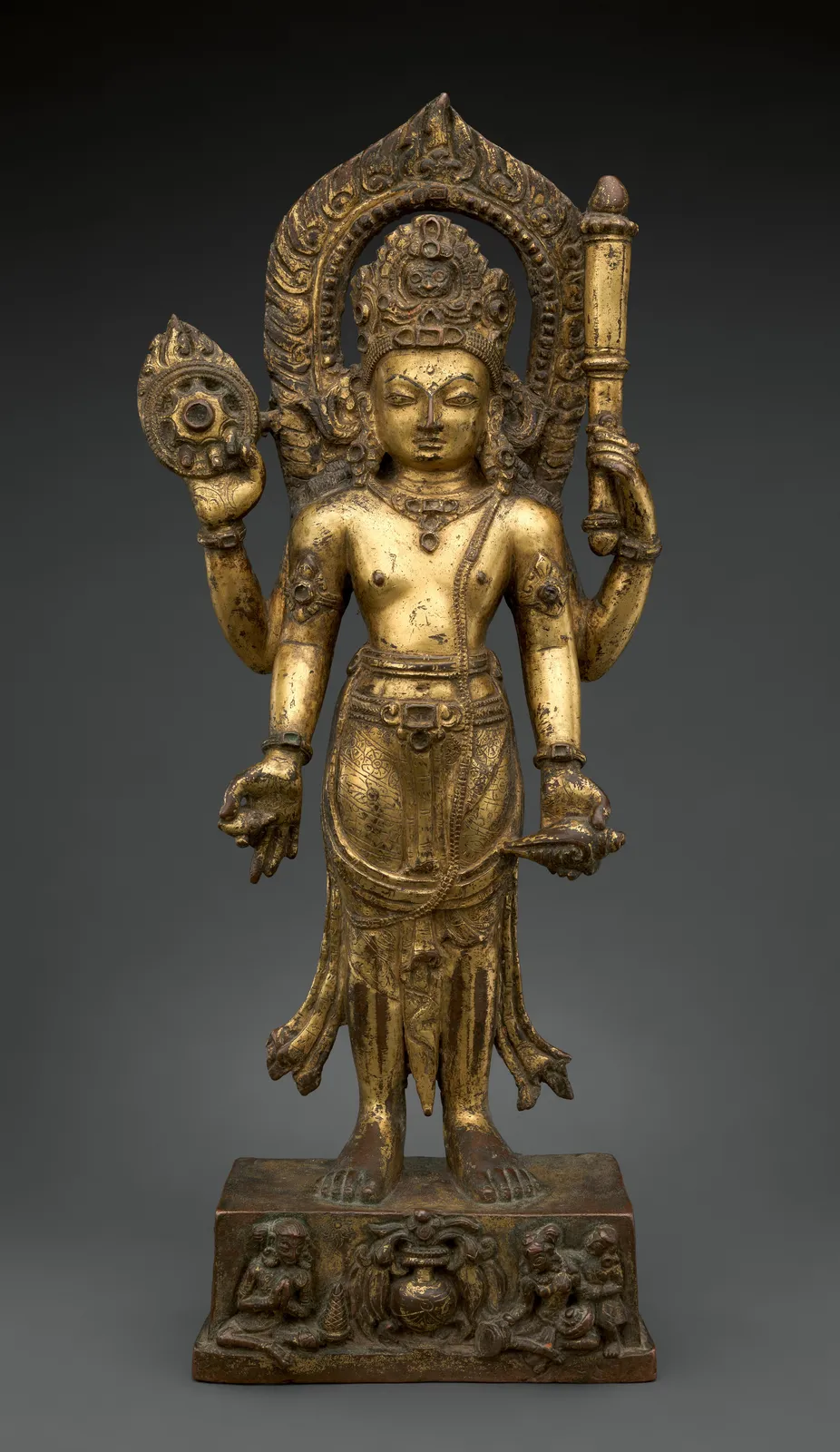
Sudarshana Chakra (सुदर्शन चक्र)
A disc with 108 teeth. Thrown, it cuts down enemies and returns to the hand.
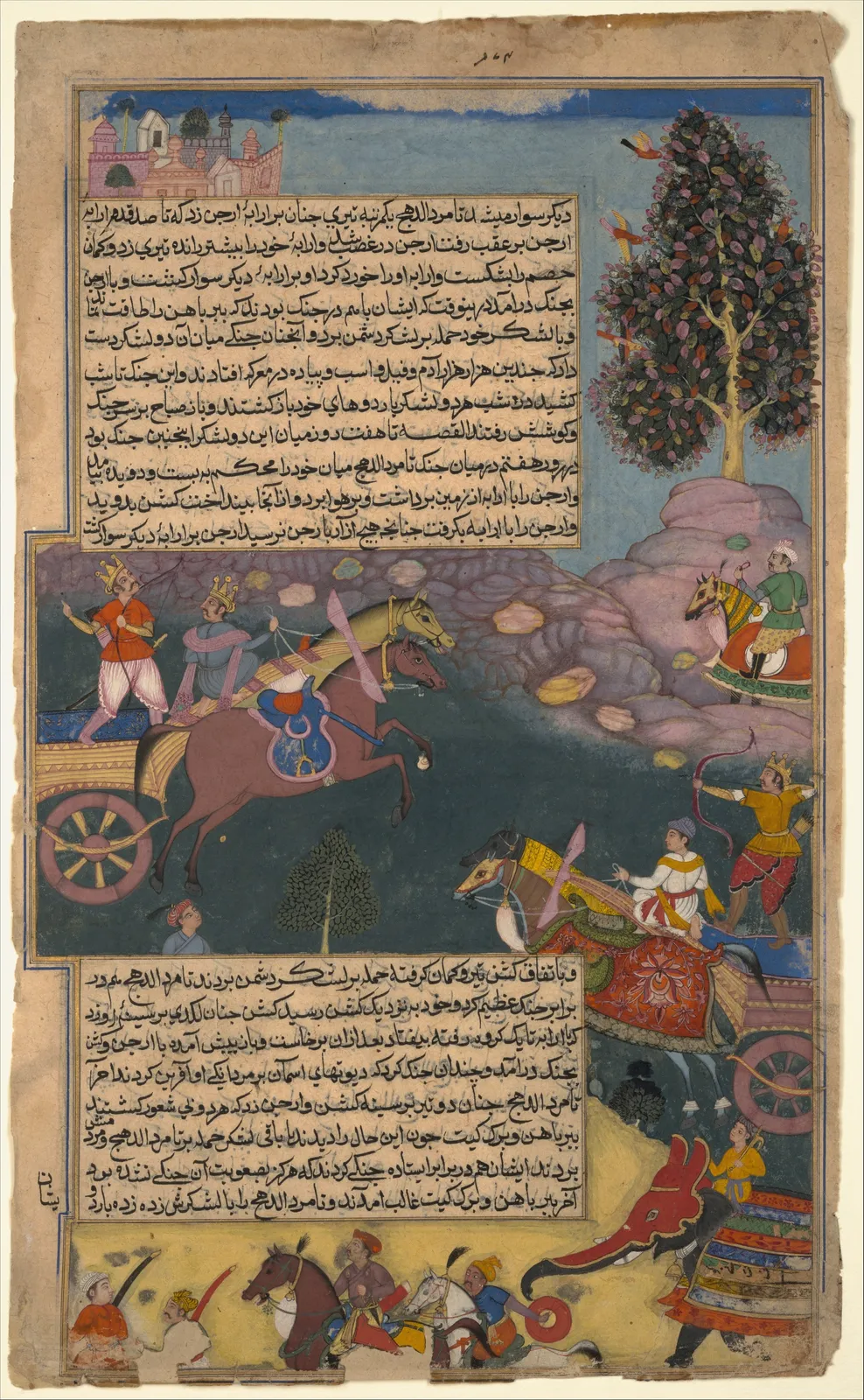
Gandiva (गाण्डीव)
Paired with a quiver that never empties, its bowstring sounds like thunder.
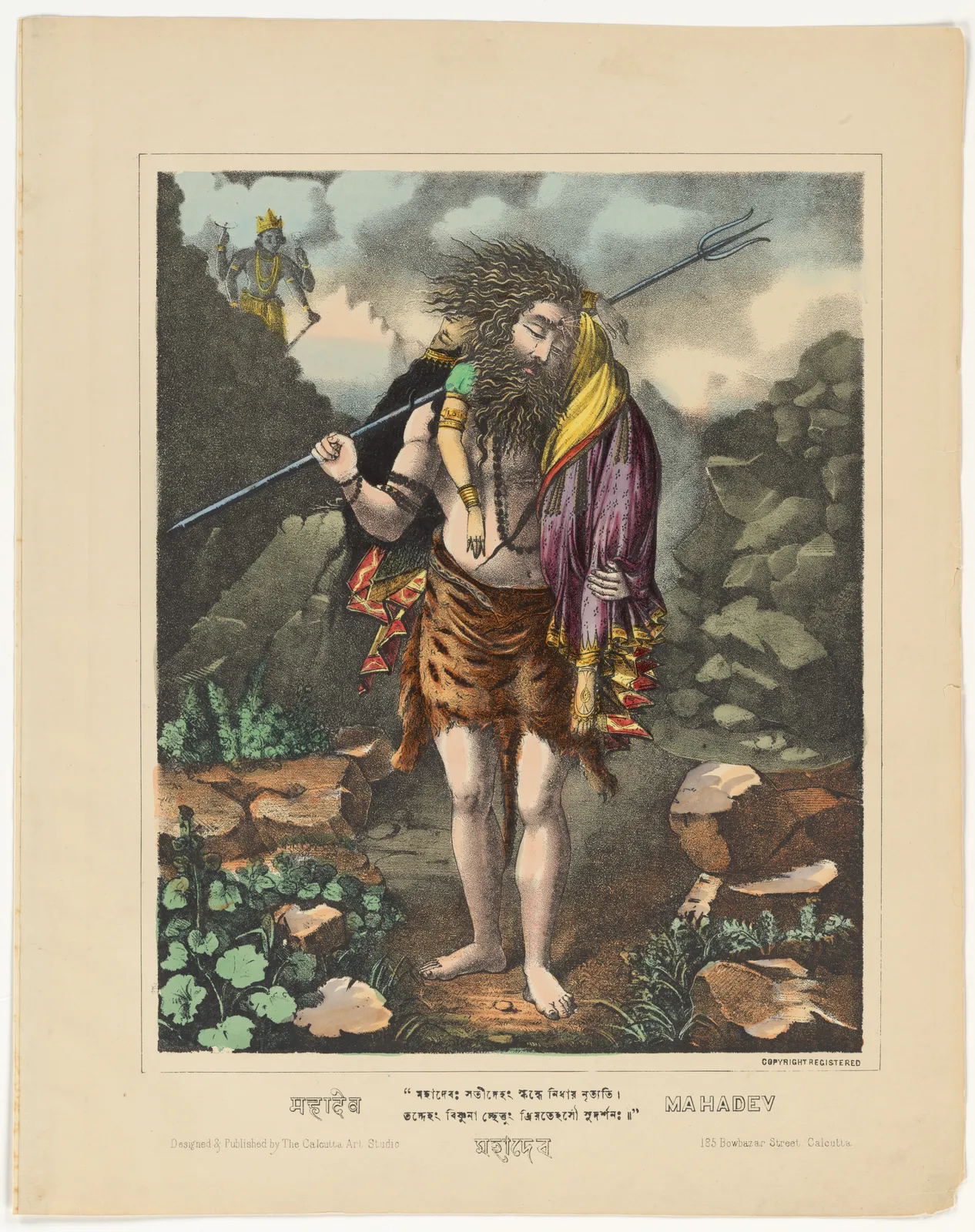
Trishula (त्रिशूल)
Its three prongs govern creation, preservation and destruction, or past, present and future.