Celtic
Loading artifact…
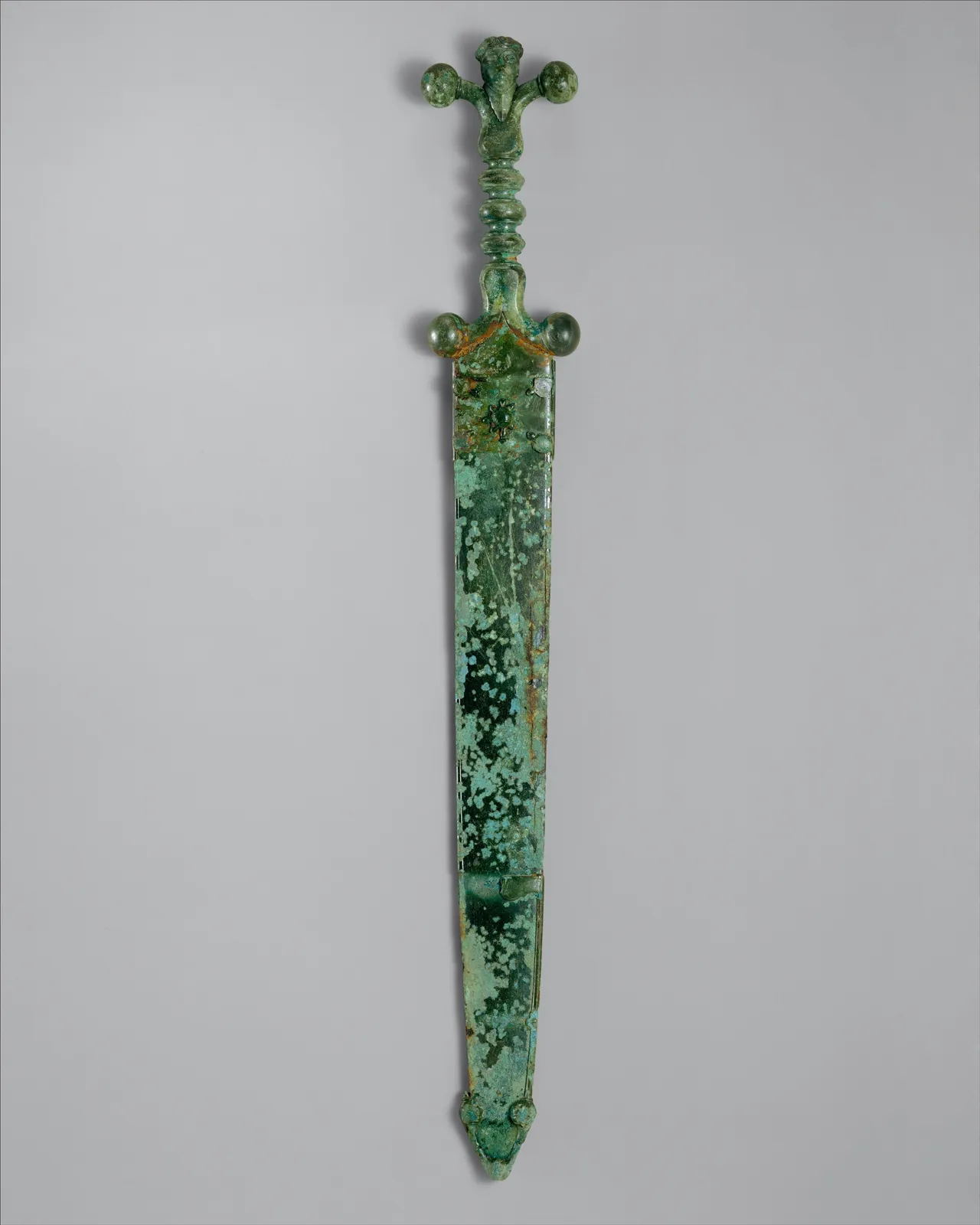
Photograph: An iron sword from Roman Gaul of the second century BCE to first century CE. The blade, with its bronze hilt, is heavily rusted and uneven.
Focus the photograph, then use the arrow keys to pan and the plus and minus keys to zoom. The buttons at the lower left also move it. Press a numbered button on the photograph to zoom to that note.
Caladbolg
When swung it lengthens like a rainbow and shears off the tops of hills.
Fergus mac Róich was a former king of Ulster, driven from the throne, who fought for Connacht against Ulster. His sword Caladbolg was said to stretch out long like a rainbow when swung.
In the last great battle of The Cattle Raid of Cooley, Fergus swept through the Ulster army with Caladbolg. When his old comrade Cormac urged him to remember his homeland, Fergus turned the sword from men to hills and struck off the tops of the three hills of Meath.
Scholars regard Caladbolg as a name of the same root as the Welsh Caledfwlch, and so as Excalibur. The legend of a "shining sword" widespread in the Celtic world attached itself to different heroes in different places.
The photograph shows Iron sword with bronze hilt(Roman, Gaul, ca. 2nd century BCE–1st century CE), a real museum object that evokes the legendary artifact.
Coire Dagdae
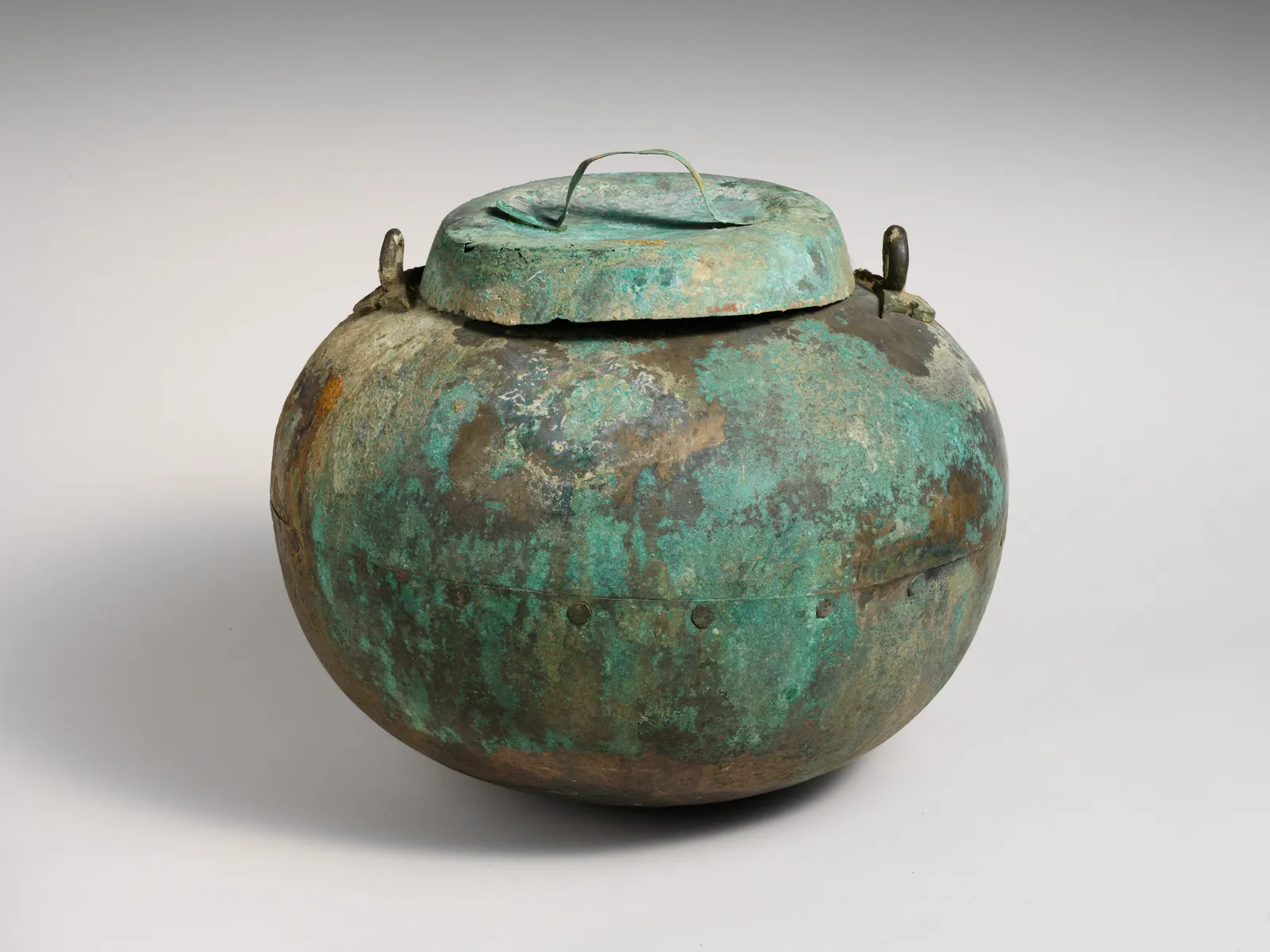
It never runs dry, however many eat. None left it unsatisfied.
Gáe Bulg
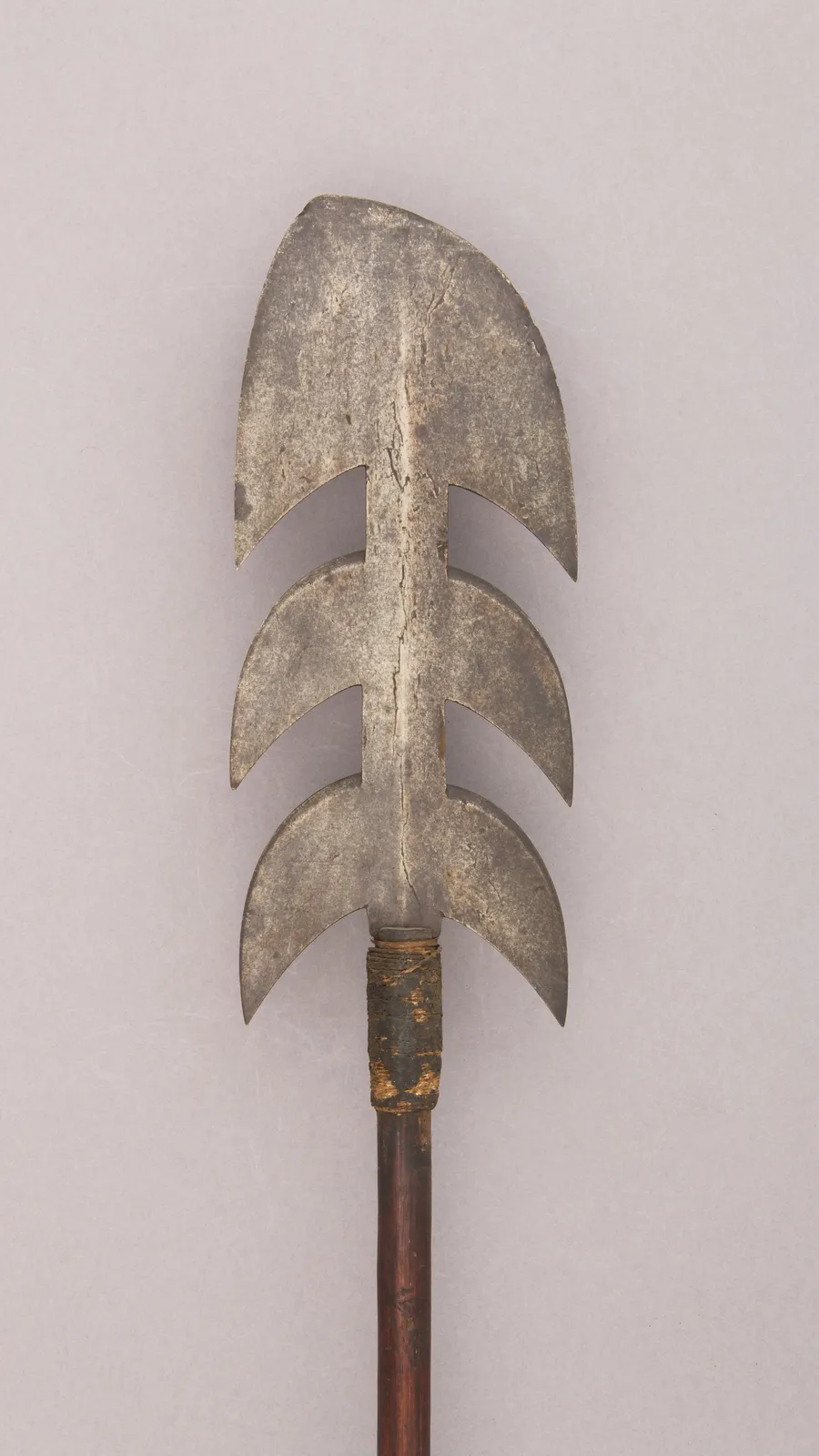
Thrown with the foot, its barbs open inside the body so that it cannot be pulled out.