Celtic
Loading artifact…
Photograph: A ritual cauldron from Bronze Age Hungary, about 1000–900 BCE. A large looped handle in two strands rises above the round bronze body, and fine patterns are incised around the rim.
Focus the photograph, then use the arrow keys to pan and the plus and minus keys to zoom. The buttons at the lower left also move it. Press a numbered button on the photograph to zoom to that note.
Pair Ceridwen
Boiled for a year and a day, its first three drops hold all the wisdom of the world.
The witch Ceridwen had the ugliest son in the world, Morfran. To give him wisdom at least, she put herbs into a great cauldron and began to boil it for a year and a day. The first three drops to leap from the cauldron would hold all the wisdom of the world, and the rest would become poison.
The boy Gwion Bach was set to stir the cauldron. On the day the year was complete, three drops of the boiling brew splashed onto Gwion's thumb. He put the burning thumb in his mouth and at once knew everything in the world; the rest of the brew turned to poison, and the cauldron split in two.
Furious, Ceridwen chased the fleeing Gwion. He became a hare, a fish, a bird and a grain of wheat, and she became a greyhound, an otter, a hawk and a black hen, and at last she swallowed the grain. Nine months later the child was born again, put into a leather bag and thrown into the sea, and the man who found him cried "a radiant brow!", which gave Taliesin, the greatest poet of Wales, his name.
The photograph shows Ritual Cauldron(Hungary, Bronze Age, c. 1000–900 BCE), a real museum object that evokes the legendary artifact.
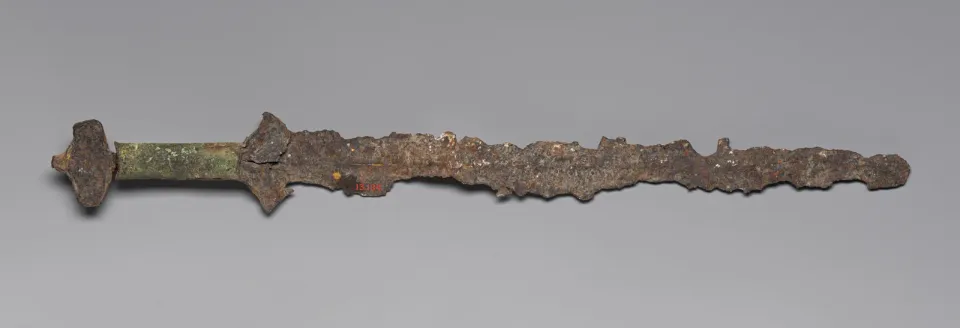
Caladbolg
When swung it lengthens like a rainbow and shears off the tops of hills.
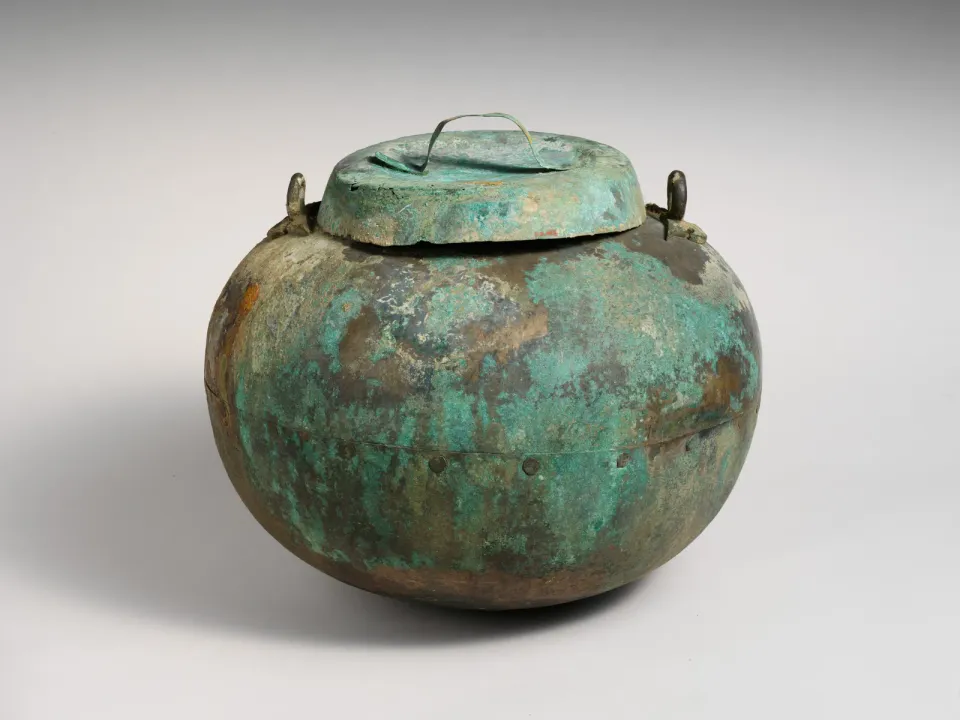
Coire Dagdae
It never runs dry, however many eat. None left it unsatisfied.