Celtic
Loading artifact…
Photograph: A purse-shaped reliquary from the Upper Rhine region of Germany, about 1320. Gilded copper is densely set with rock crystal, glass and gems, and a blue roundel at the center carries the Virgin holding the Christ Child.
Focus the photograph, then use the arrow keys to pan and the plus and minus keys to zoom. The buttons at the lower left also move it. Press a numbered button on the photograph to zoom to that note.
Corrbolg (The Crane Bag)
When the sea is full, all the treasures of the gods appear in it; when the tide ebbs, it is empty.
Aoife loved Ilbrec, son of the sea god. Jealous of her, Iuchra turned Aoife into a crane by magic, and as a crane Aoife lived two hundred years in the house of Manannan, the sea god, before she died.
Manannan made a bag from her skin and put into it his most precious treasures: his own shirt and knife, the belt of Goibniu the smith god, the shears of the king of Scotland, the helmet of the king of the north, and a belt made from the back of a great whale. When the sea was full all those treasures could be seen, and when the tide ebbed the bag was empty.
The story comes from a poem in Duanaire Finn, compiled in the seventeenth century. The crane bag is said to have passed from Manannan to Lugh, god of light, and then to Fionn mac Cumhaill, leader of the war band.
The photograph shows Reliquary in Purse Form(Germany, Upper Rhine, Southern Swabia, Gothic period, 14th century, c. 1320), a real museum object that evokes the legendary artifact.
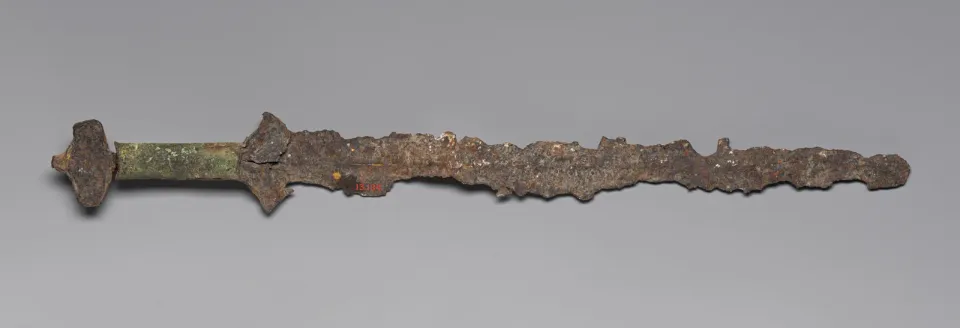
Caladbolg
When swung it lengthens like a rainbow and shears off the tops of hills.
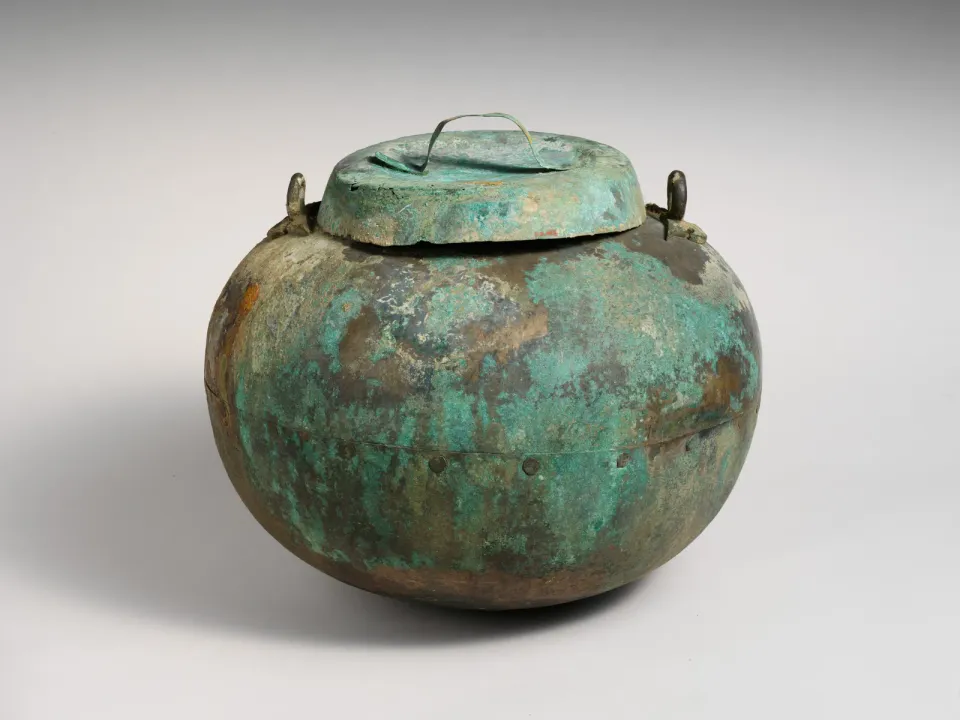
Coire Dagdae
It never runs dry, however many eat. None left it unsatisfied.