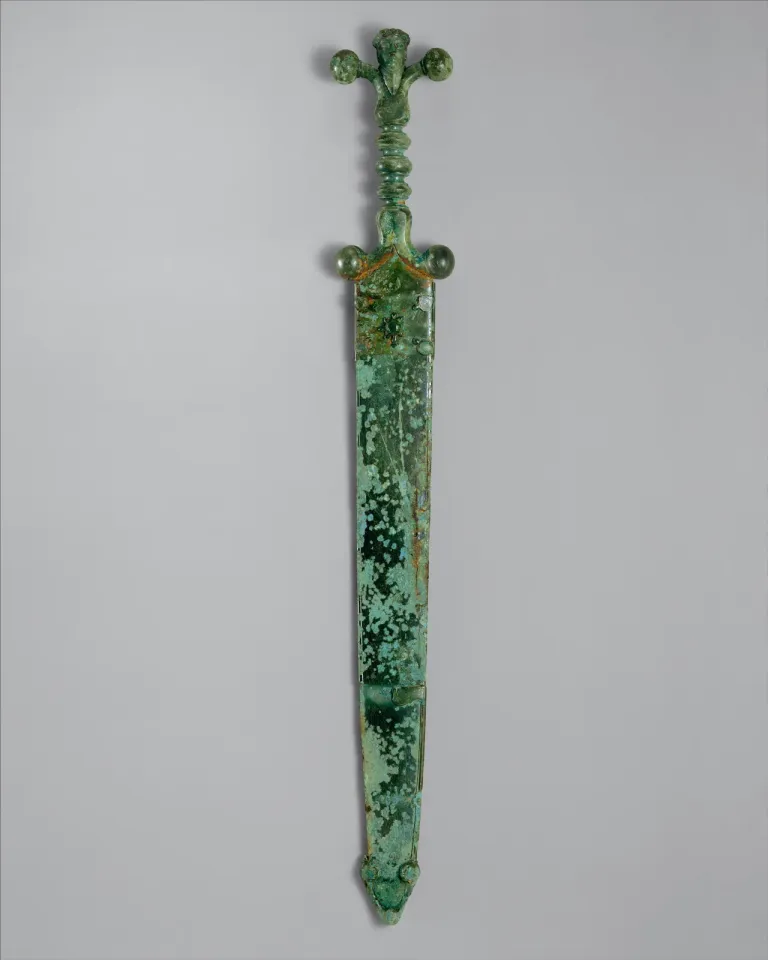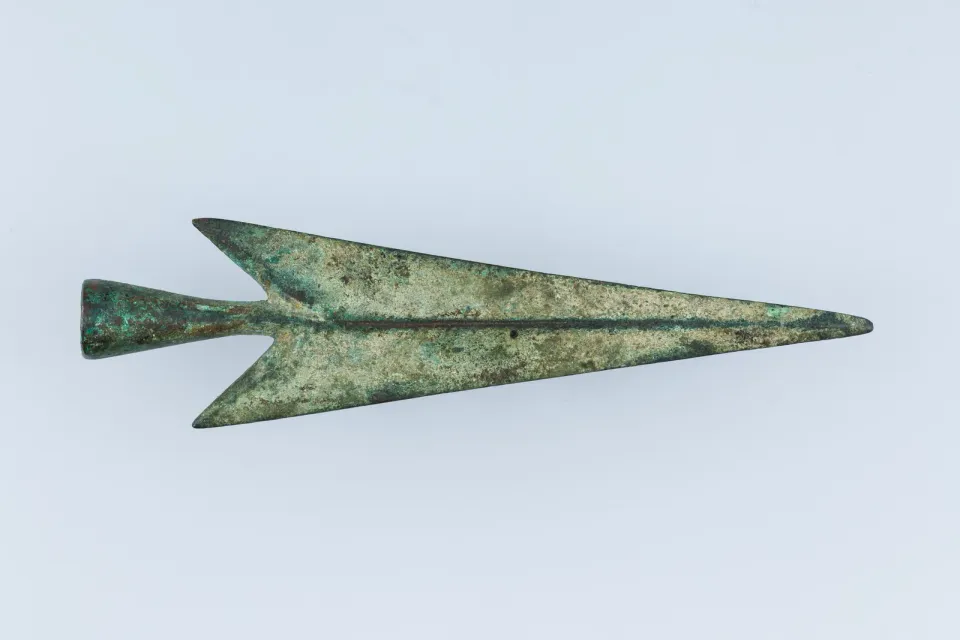
Celtic
Loading artifact…
Photograph: The two faces of a gold coin (stater) of the Catuvellauni of Britain, about 20 BCE–10 CE. The obverse at left bears the letters TASCIOV RICON in a band; the reverse at right shows a horse carrying a warrior with a sword.
Focus the photograph, then use the arrow keys to pan and the plus and minus keys to zoom. The buttons at the lower left also move it. Press a numbered button on the photograph to zoom to that note.
Énbarr
Runs faster than the spring wind over water and land alike, and no one on its back can be killed, it was said.
Enbarr, "flowing mane," is the horse of the sea god Manannan. It ran faster than the cold spring wind, over water and land alike, and it is said that no one on its back was ever killed.
In "The Fate of the Children of Tuireann," Lugh, the god of light, borrowed Enbarr from Manannan and appeared on it before Nuada, king of the Tuatha De Danann. Equipped with Manannan's armor and sword as well, he struck down the envoys who had come to collect tribute for the Fomorians.
The three sons of Tuireann, as the price for killing Lugh's father, had to fetch treasures from the ends of the earth. When they asked to borrow Enbarr for the long journey, Lugh refused, saying he could not lend what was itself on loan, and gave them instead Manannan's boat, the "Wave-Sweeper," which crossed the sea by itself wherever its passengers wished.
The photograph shows Tasciovanus Stater: Wreath (obverse); Horse and Armed Rider (reverse)(England, Catuvellauni, c. 20 BCE–10 CE), a real museum object that evokes the legendary artifact.
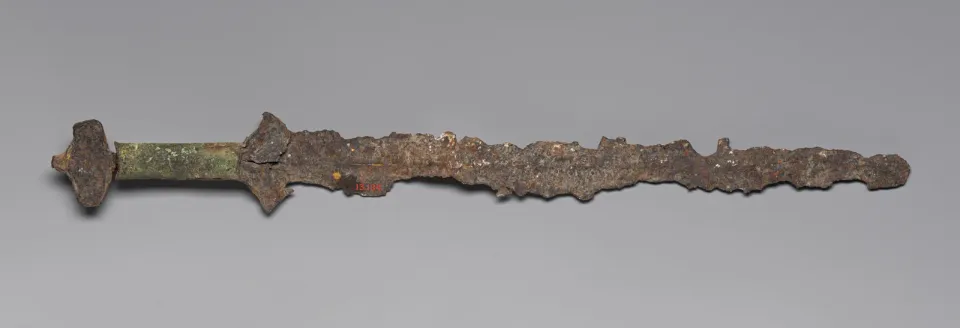
Caladbolg
When swung it lengthens like a rainbow and shears off the tops of hills.
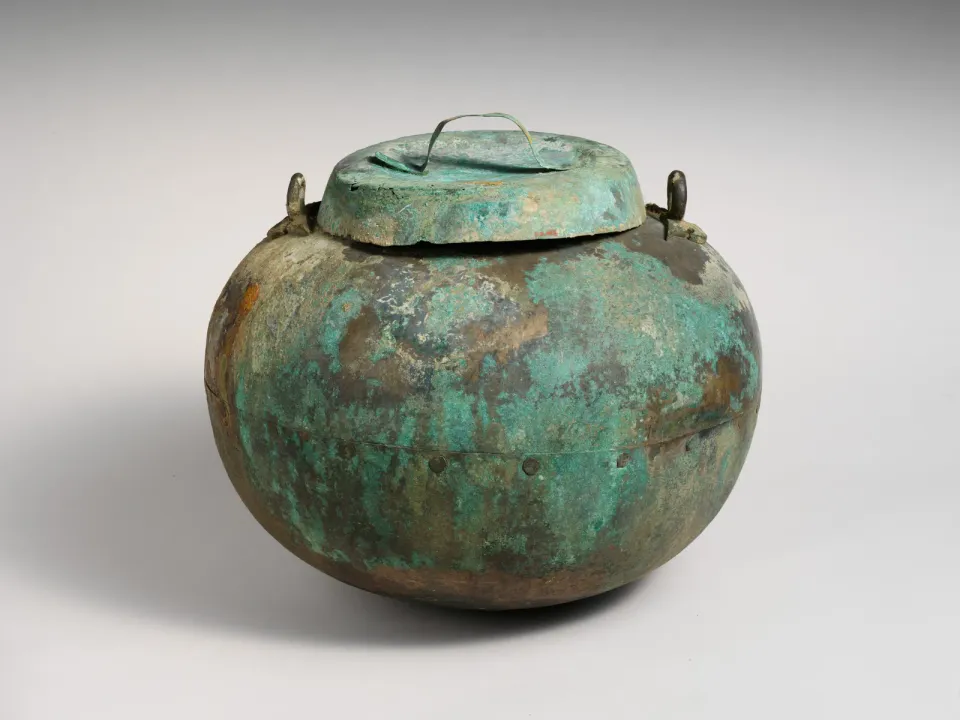
Coire Dagdae
It never runs dry, however many eat. None left it unsatisfied.