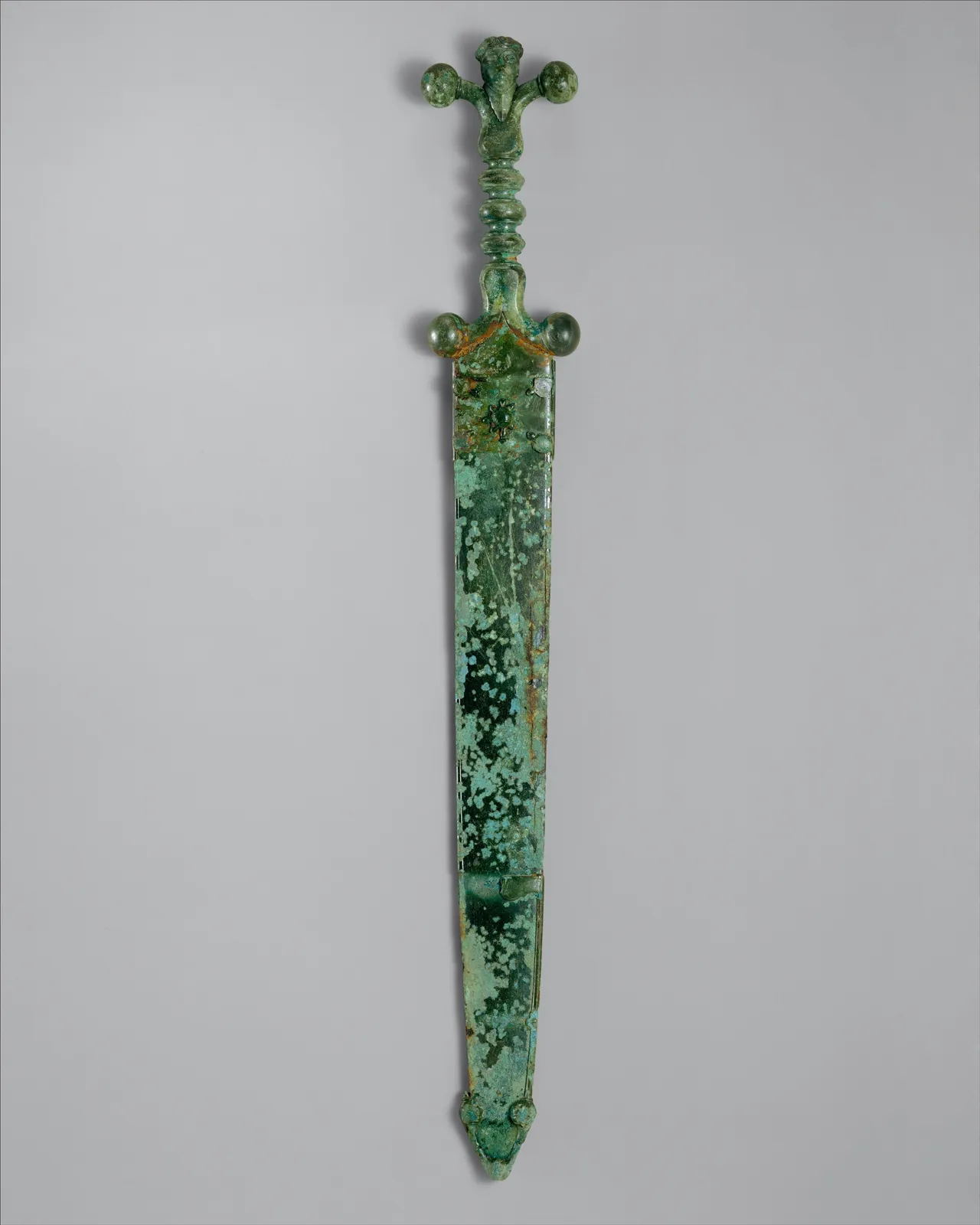
Celtic
Loading artifact…
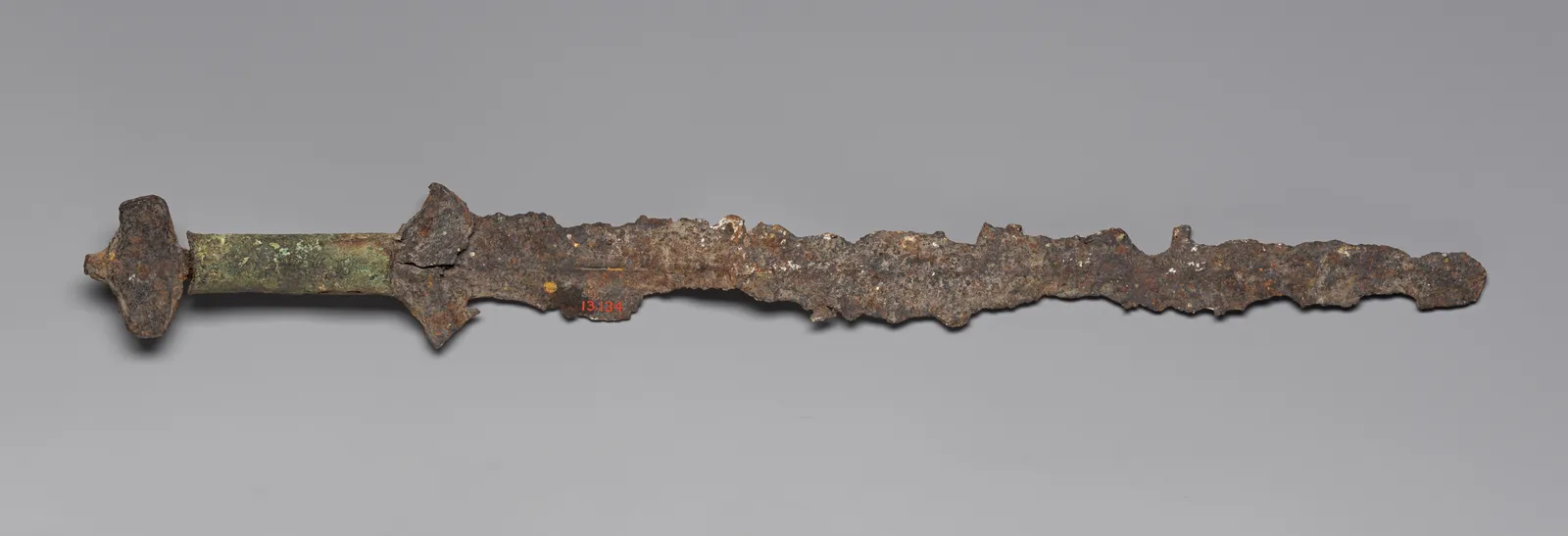
Photograph: A Cypriot iron sword of the sixth century BCE. A hilt end survives above a straight blade thick with rust, with one silver rivet gleaming.
Focus the photograph, then use the arrow keys to pan and the plus and minus keys to zoom. The buttons at the lower left also move it. Press a numbered button on the photograph to zoom to that note.
Freagarthach
Held to the throat, it prevents its victim from moving or lying. Wounds from it never heal.
Fragarach means "the answerer" or "the retaliator" in Irish. It was the sword of the sea god Manannán mac Lir and later passed to Lugh, god of light.
A person held at the throat by this sword could neither move nor lie. No one survived its wounds, and no armor could stop its blade.
In the later tale "The Fate of the Children of Tuireann," Lugh wore this sword to battle against the Fomorians. On the three sons of Tuireann, who had killed his father, he laid the penalty of gathering treasures from the ends of the earth.
The photograph shows Iron, silver, and bronze sword(Cypriot, 6th century BCE), a real museum object that evokes the legendary artifact.
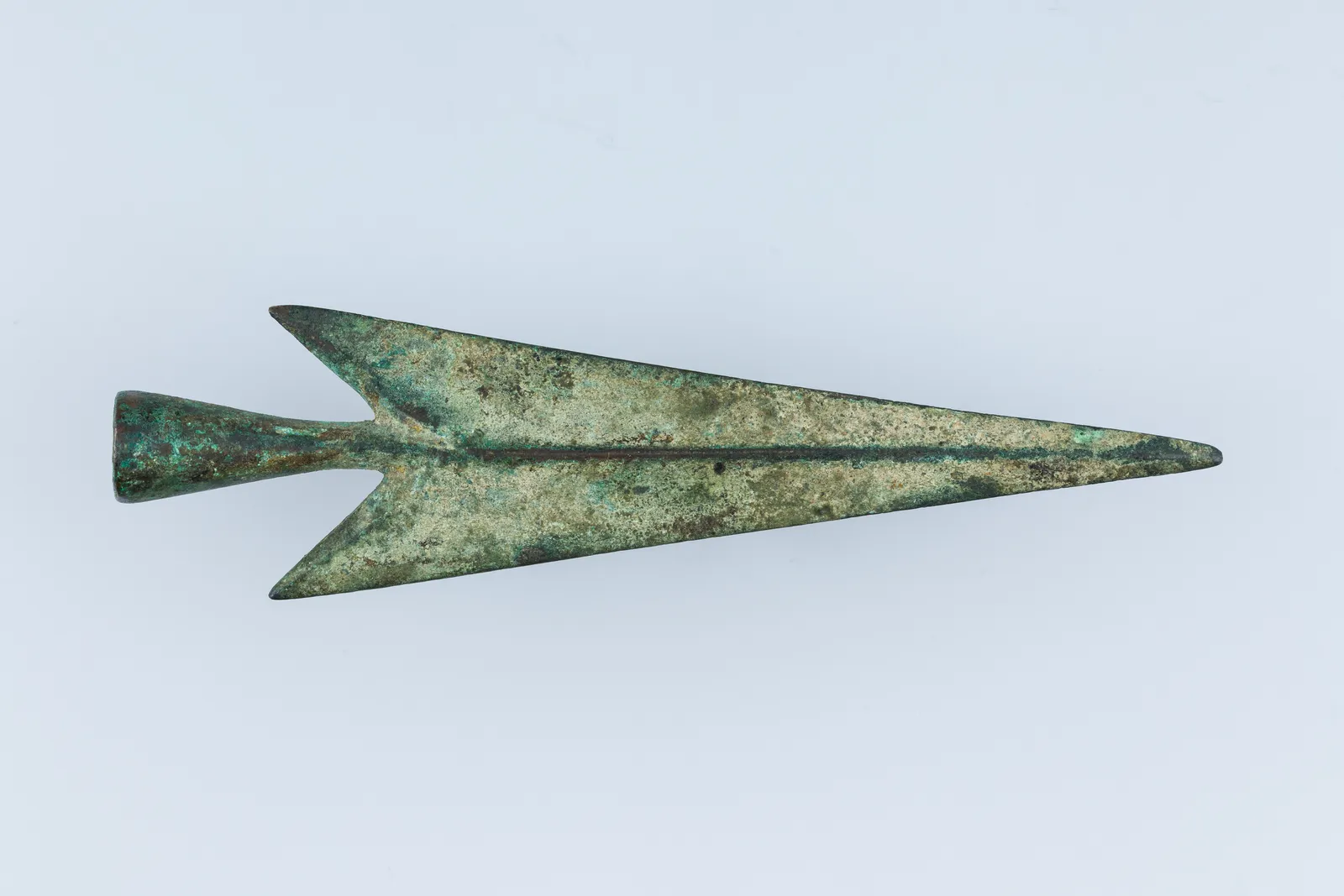
Caladbolg
When swung it lengthens like a rainbow and shears off the tops of hills.
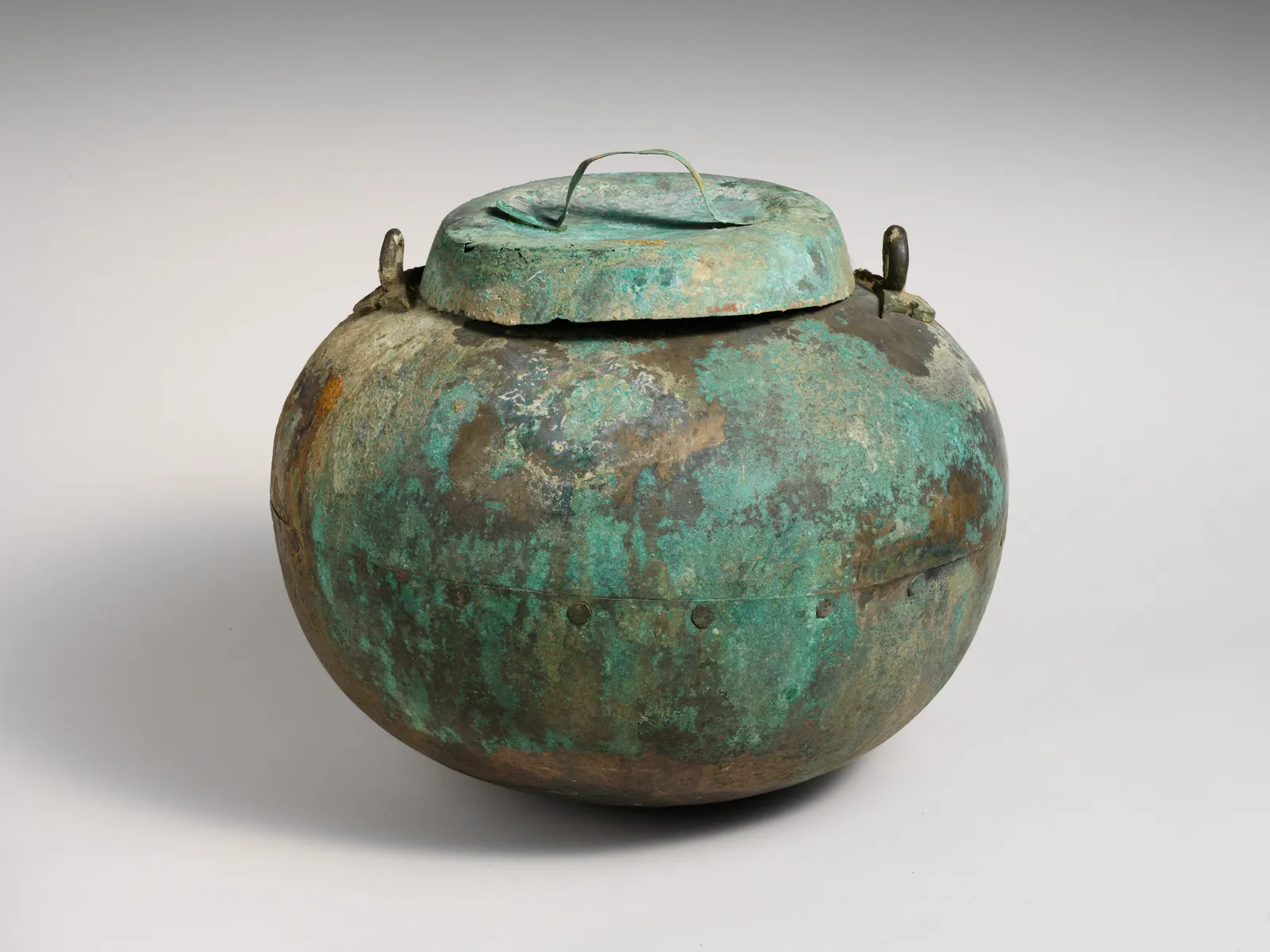
Coire Dagdae
It never runs dry, however many eat. None left it unsatisfied.