Celtic
Loading artifact…
Photograph: An amber game board made in Konigsberg by Georg Schreiber in the seventeenth century. Inside the open box-shaped board, slices of red and yellow amber and ivory form the triangular points of backgammon.
Focus the photograph, then use the arrow keys to pan and the plus and minus keys to zoom. The buttons at the lower left also move it. Press a numbered button on the photograph to zoom to that note.
Gwyddbwyll Gwenddoleu
Set out the pieces, and they move by themselves and play the game.
Gwyddbwyll, "wood-sense," was a board game enjoyed by the medieval Welsh. According to "The Thirteen Treasures of the Island of Britain," King Gwenddoleu's board was made of gold and its pieces of silver, and once the pieces were set out they moved by themselves and played the game.
Gwenddoleu was a king of northern Britain who fell at the Battle of Arfderydd in 573. In Welsh tradition his poet, Myrddin, that is Merlin, went mad with grief at losing his lord and wandered in the forest.
Boards that play by themselves appear in other stories too. In "Peredur," Peredur finds a board in a castle on which the game plays by itself, and when the side he favors loses, he angrily throws the board into a lake. In "The Dream of Rhonabwy," Arthur and Owain play the game while their men and a flock of ravens fight.
The photograph shows Chess and backgammon game board(Georg Schreiber, 17th century), a real museum object that evokes the legendary artifact.
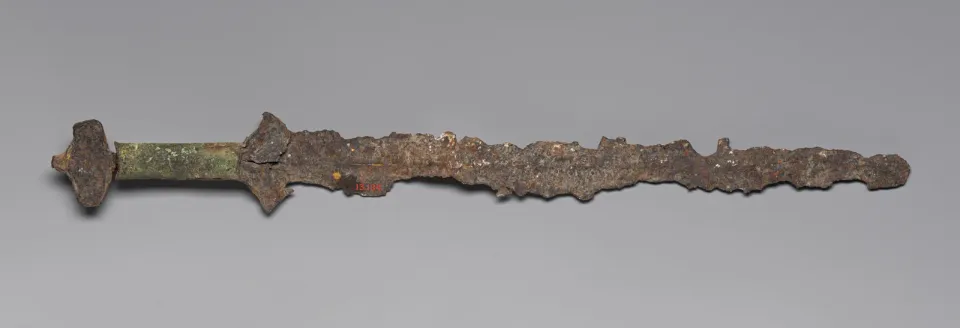
Caladbolg
When swung it lengthens like a rainbow and shears off the tops of hills.
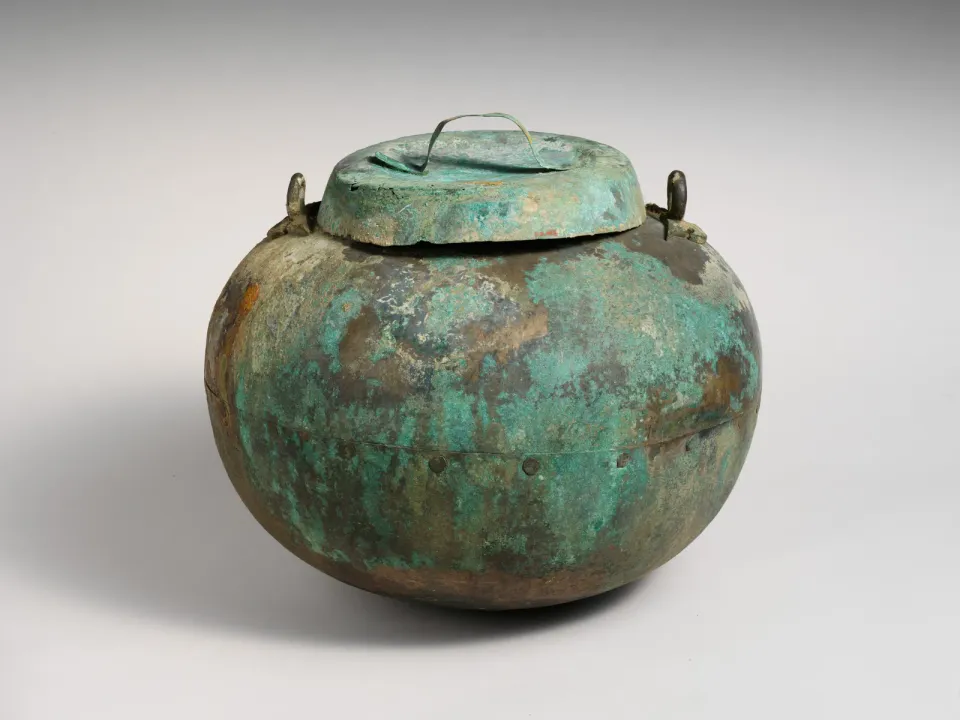
Coire Dagdae
It never runs dry, however many eat. None left it unsatisfied.