Celtic
Loading artifact…
Photograph: A portable harp made by John Egan of Dublin, Ireland, in 1819. Many strings stretch between the gold-painted curved neck and the pillar, and the green soundbox is painted with gold leaves.
Focus the photograph, then use the arrow keys to pan and the plus and minus keys to zoom. The buttons at the lower left also move it. Press a numbered button on the photograph to zoom to that note.
Daur Dá Bláo (Harp of the Dagda)
It plays the three strains of weeping, laughter and sleep, and flies to its master's hands when called by name.
After the Tuatha De Danann defeated the Fomorians at the Second Battle of Mag Tuired, the fleeing Fomorians carried off the Dagda's harper and his harp. The Dagda, with Lugh and Ogma, followed them to the hall where they were feasting. The harp hung on the wall.
The Dagda had bound the music into the harp so that it would not sound until he called it. When he called out its names, "Come, Daur Da Blao; come, Coir Cetharchair; come, summer; come, winter," the harp leaped from the wall, killing nine men in its path, and came into its master's hands.
The Dagda played the three strains. At the strain of sorrow the women wept; at the strain of laughter the women and children laughed; at the strain of sleep all the Fomorians fell asleep, and the three gods escaped unharmed. The harp is also the national emblem of Ireland today.
The photograph shows Portable Harp(Irish, 1819), a real museum object that evokes the legendary artifact.
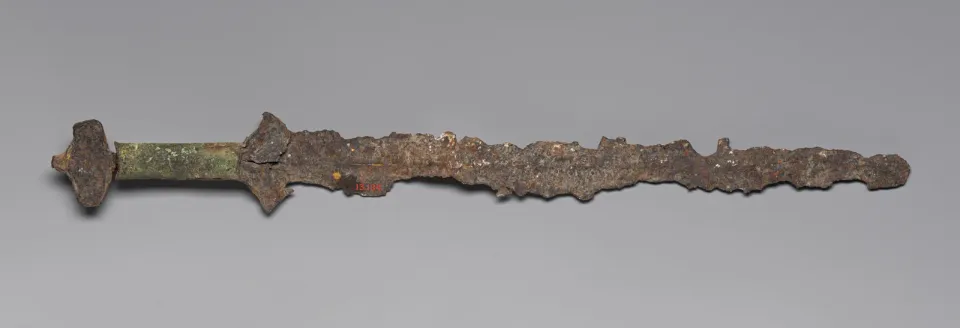
Caladbolg
When swung it lengthens like a rainbow and shears off the tops of hills.
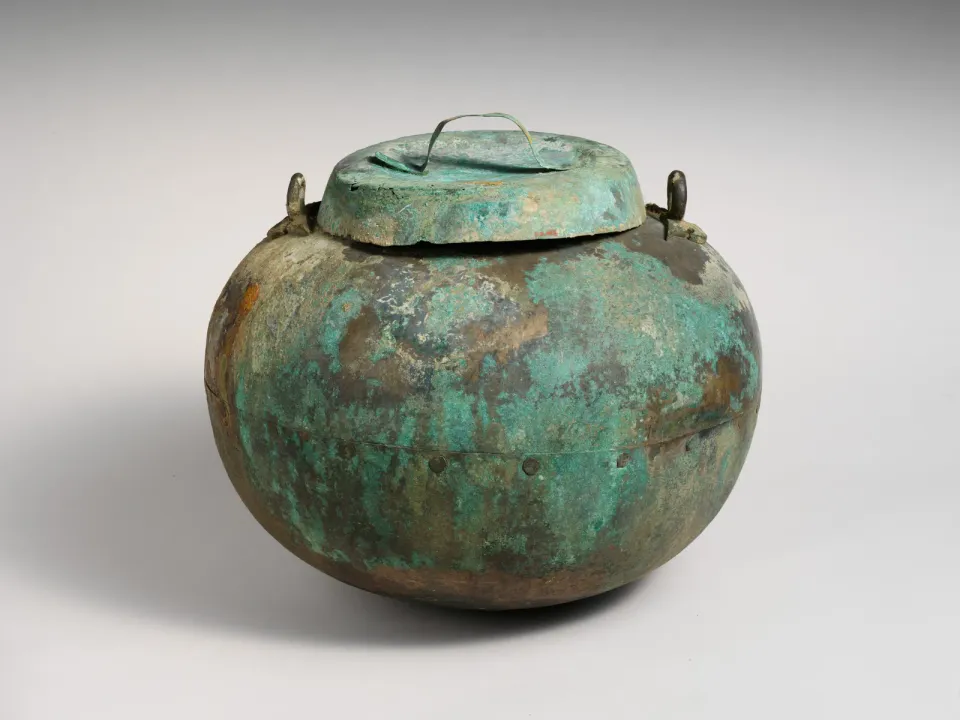
Coire Dagdae
It never runs dry, however many eat. None left it unsatisfied.