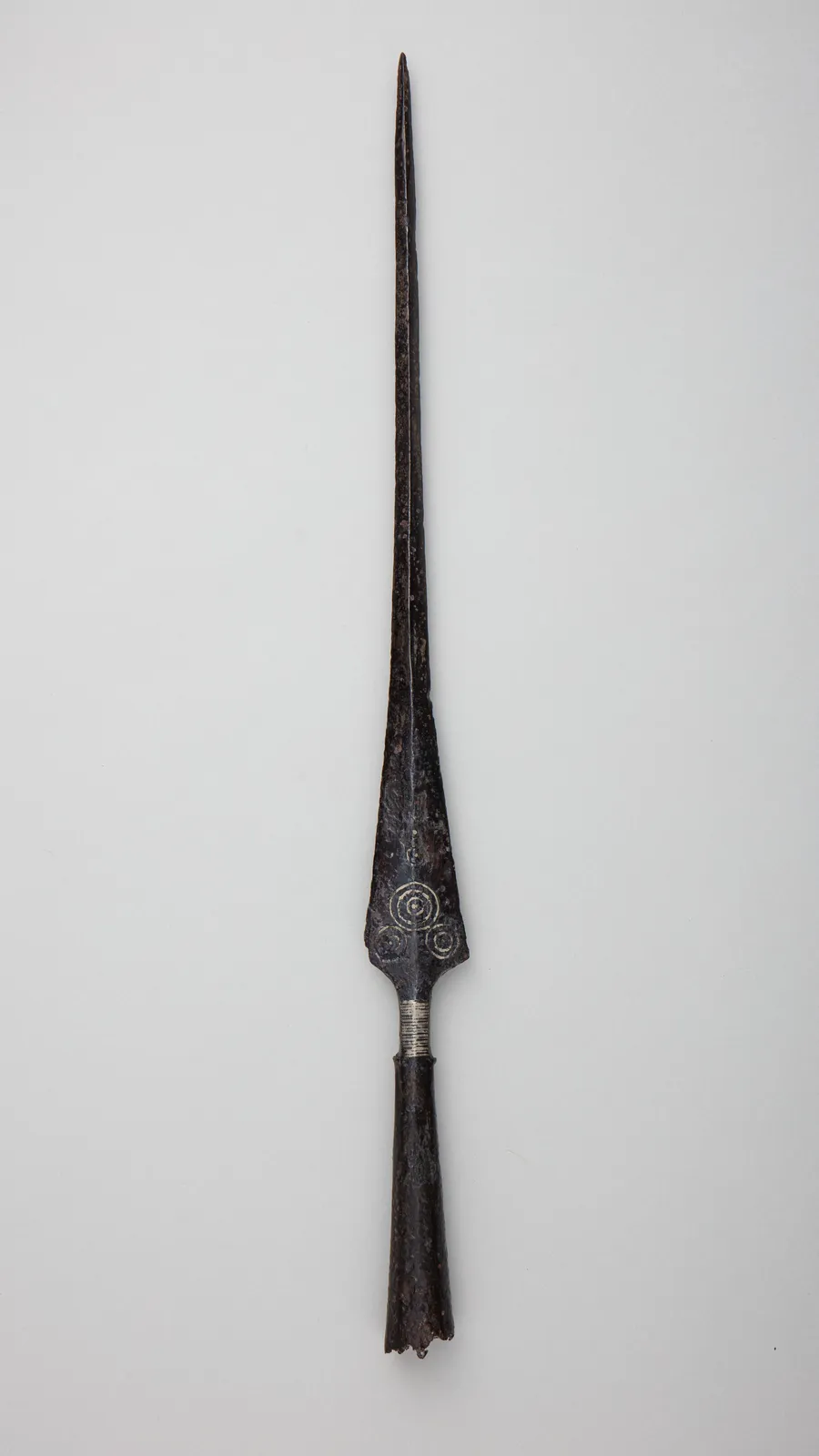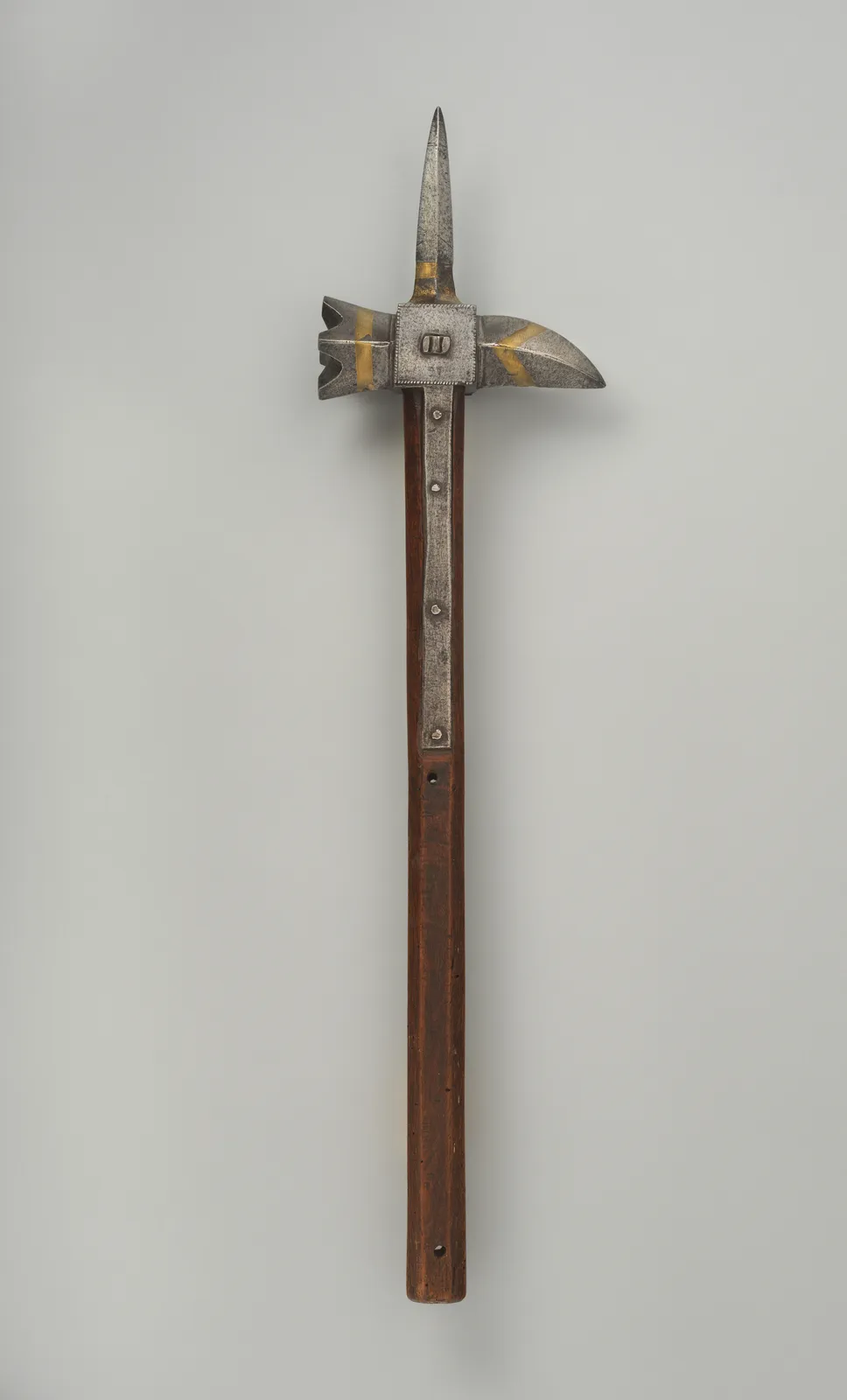
Norse & Germanic
Mjölnir
Mjölnir
Smashes anything, and returns to its owner's hand when thrown.
WeaponFirst recorded 1220
Loading artifact…
Photograph: A bronze sword, probably Central European, of the thirteenth century BCE. Its slightly swelling leaf-shaped blade is covered in patina.
Focus the photograph, then use the arrow keys to pan and the plus and minus keys to zoom. The buttons at the lower left also move it. Press a numbered button on the photograph to zoom to that note.
Hrunting
A patterned steel blade steeped in venom. It had never failed in battle.
In the Old English epic Beowulf, Unferth of the Danish court at first mocks Beowulf. But after Beowulf defeats the monster Grendel, Unferth lends him his own sword, Hrunting, for the fight against Grendel's mother.
The poem boasts that its blade is patterned steel steeped in venom and that no one who carried it ever failed in battle. Yet when Beowulf swings Hrunting in the underwater cave, the blade rebounds from the monster's head.
It was the first time the famous sword had failed. Beowulf throws Hrunting aside and ends the fight with a giant's sword hanging on the cave wall.
The photograph shows Sword(probably Central European, 13th century BCE), a real museum object that evokes the legendary artifact.
Mjölnir
Smashes anything, and returns to its owner's hand when thrown.
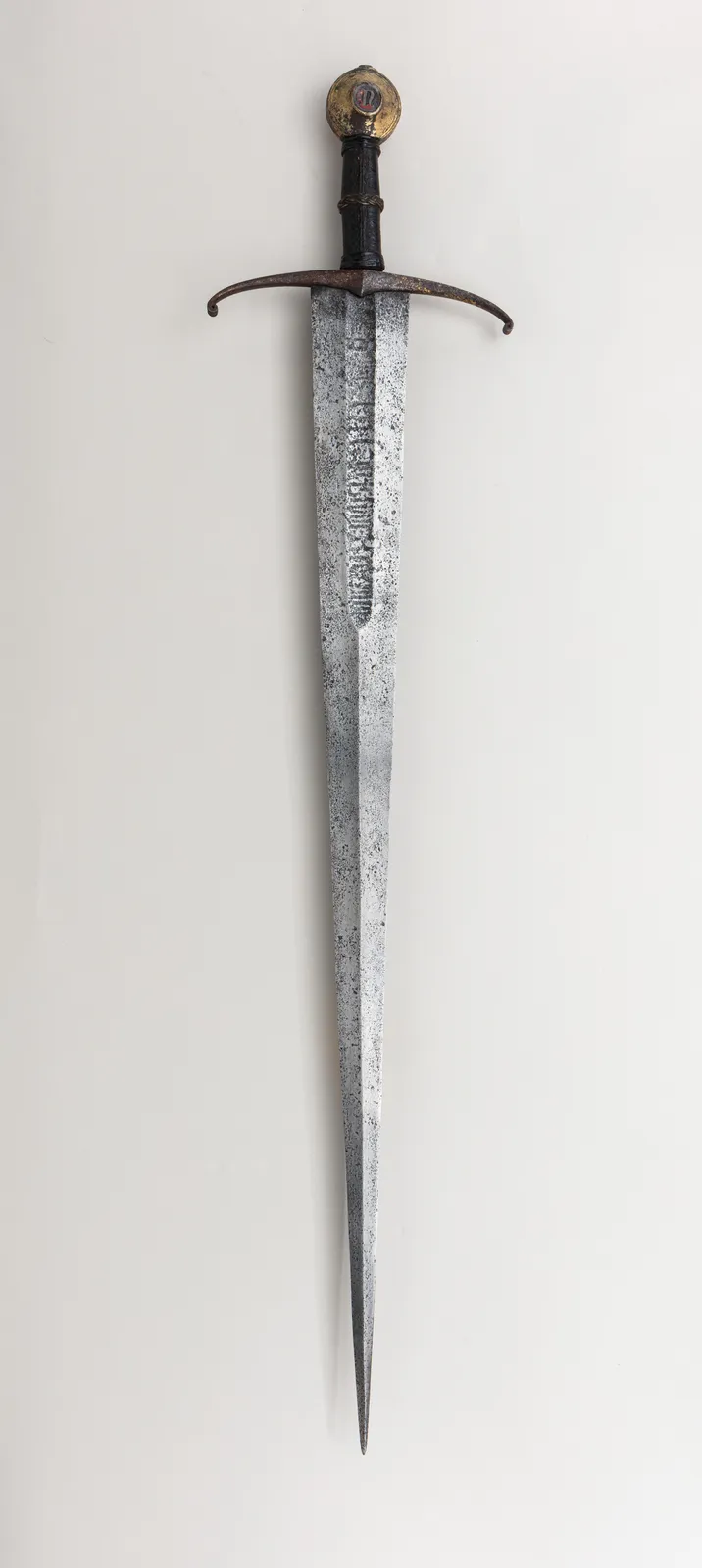
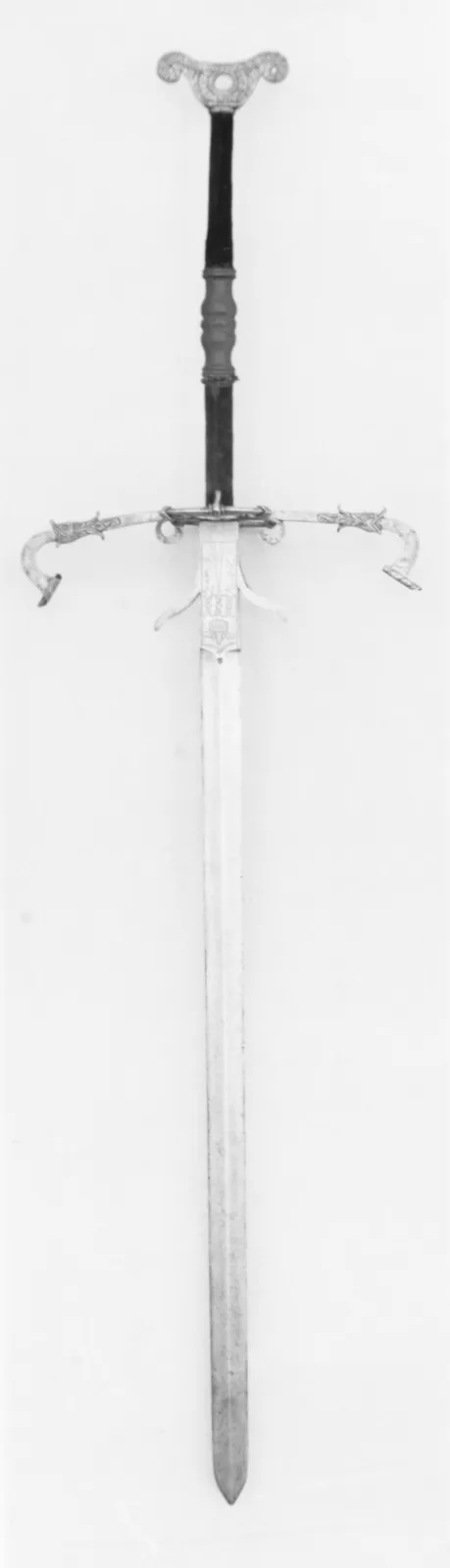
Ealdsweord eotenisc
So large an ordinary man could not lift it. Its blade melted in the monster's blood.