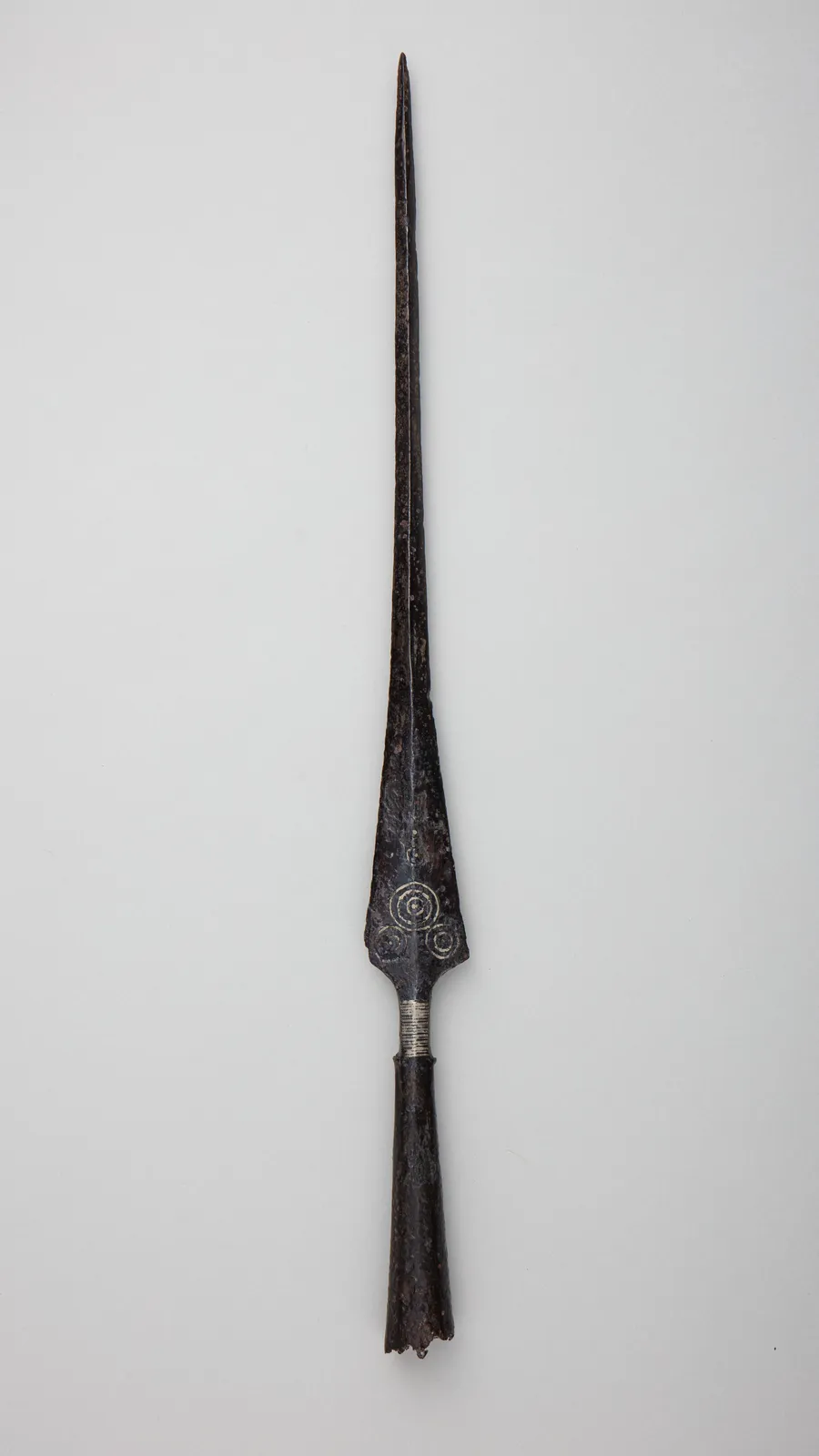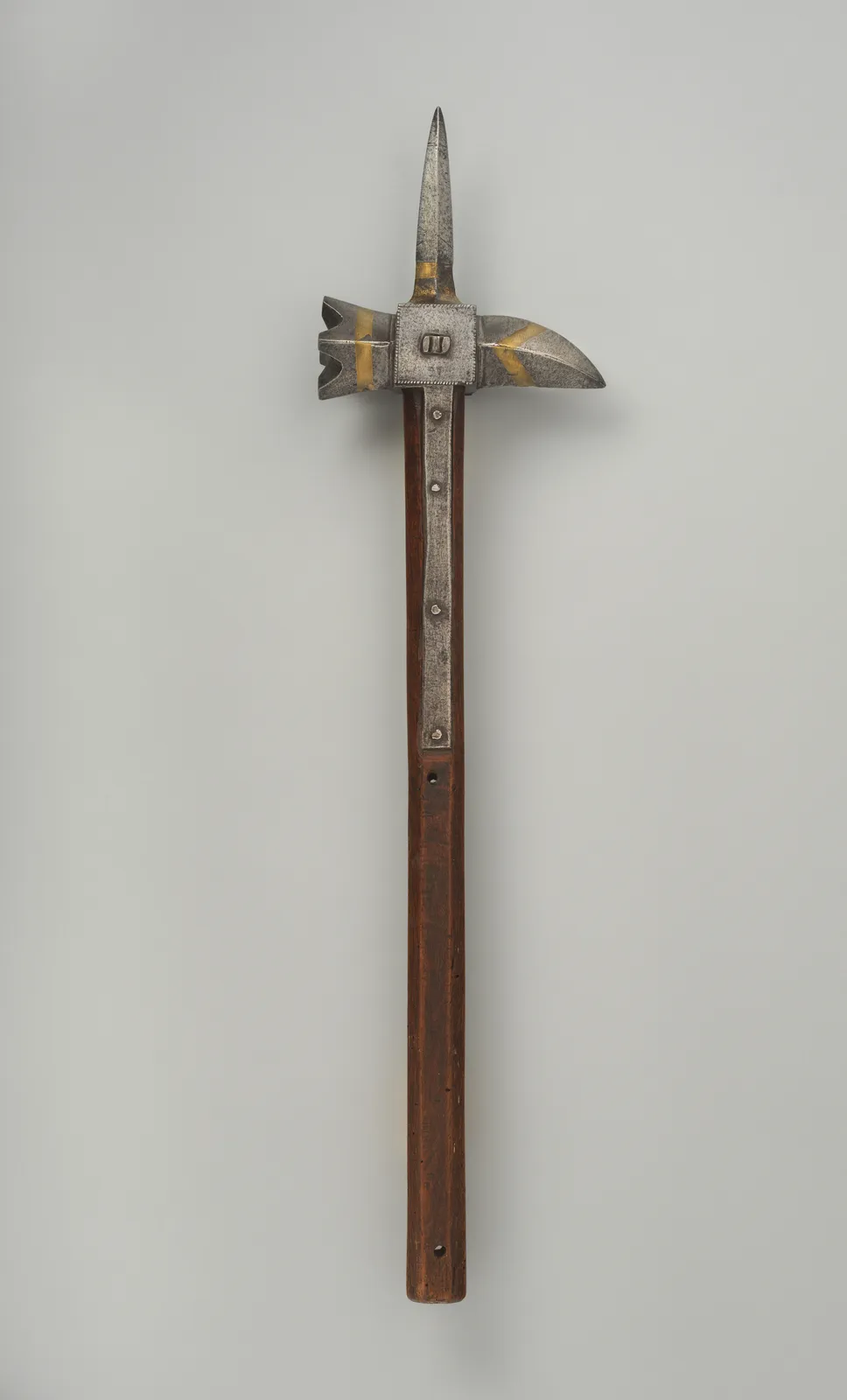
Norse & Germanic
Mjölnir
Mjölnir
Smashes anything, and returns to its owner's hand when thrown.
WeaponFirst recorded 1220
Loading artifact…
Photograph: A long sword made in nineteenth-century Europe, possibly France, in fifteenth-century Gothic style, with a decorated straight blade, a down-curved guard and a round pommel.
Focus the photograph, then use the arrow keys to pan and the plus and minus keys to zoom. The buttons at the lower left also move it. Press a numbered button on the photograph to zoom to that note.
Nægling
The gray blade at old Beowulf's last battle.
After ruling for fifty years as king, Beowulf in his old age had to face a dragon burning his land. The sword he carried then was Nægling, the "gray blade."
When Beowulf struck the dragon's head with all his might, Nægling snapped in two. The poem explains that Beowulf's hand was so strong no sword could withstand it.
Young Wiglaf came to help and stabbed the dragon in the belly, and Beowulf finished it with a dagger. But, wounded by the dragon's venom, Beowulf too died on that spot.
The photograph shows Sword in 15th Century Gothic Style(European, possibly French, 19th century), a real museum object that evokes the legendary artifact.
Mjölnir
Smashes anything, and returns to its owner's hand when thrown.
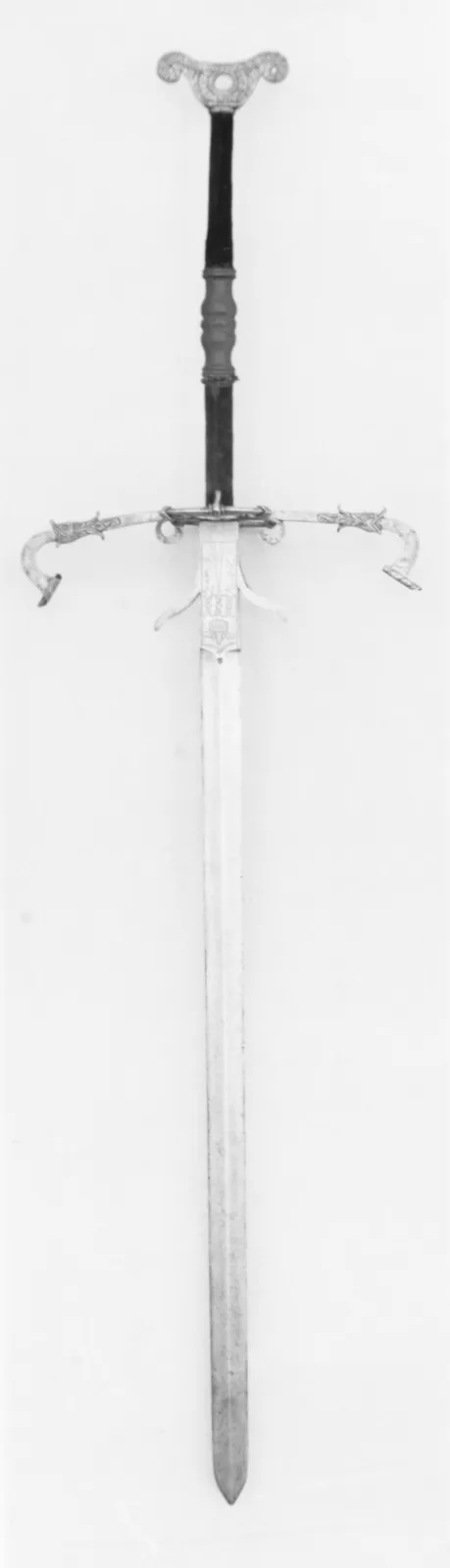
Ealdsweord eotenisc
So large an ordinary man could not lift it. Its blade melted in the monster's blood.
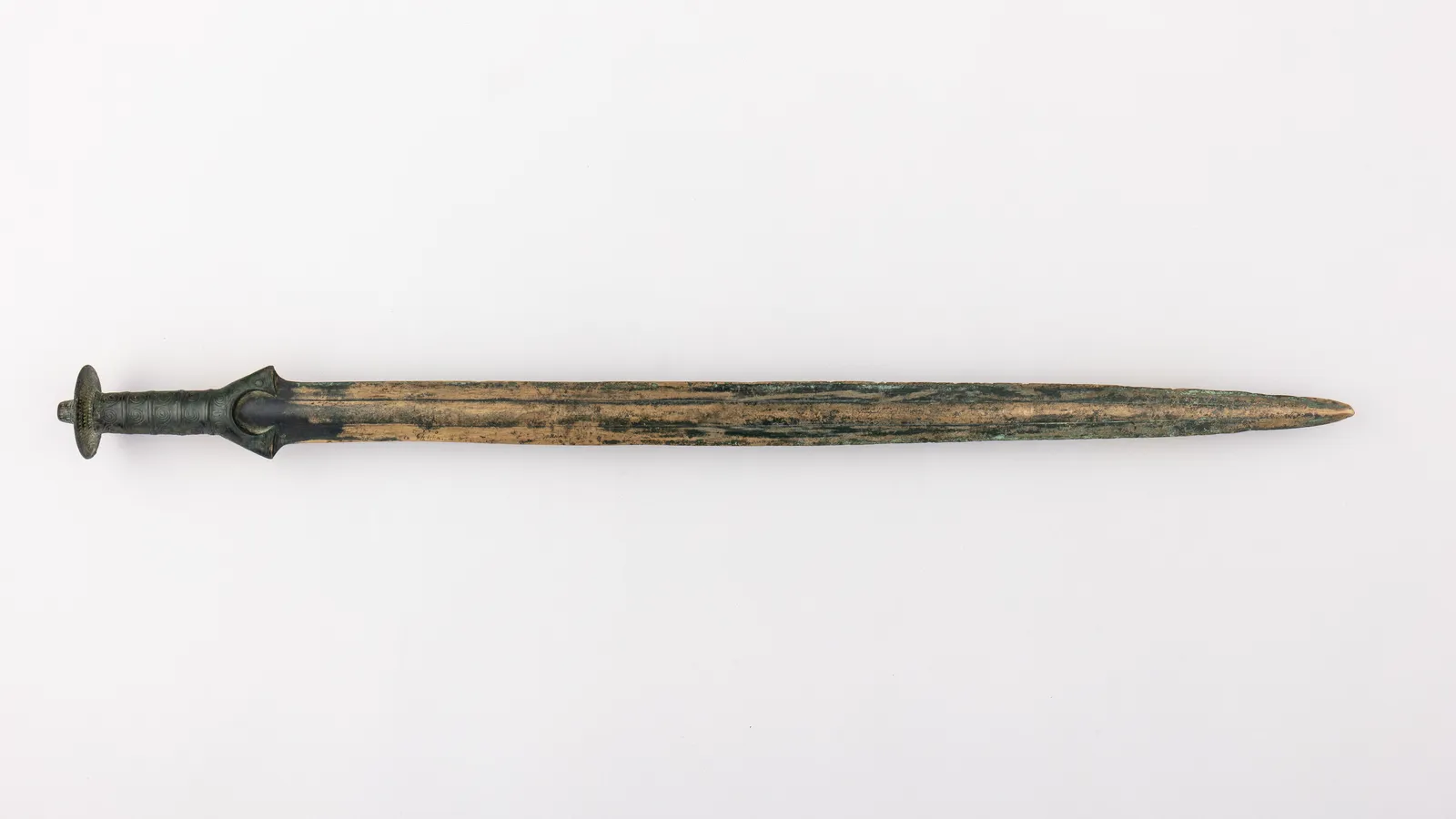
Hrunting
A patterned steel blade steeped in venom. It had never failed in battle.