Celtic
Loading artifact…
Photograph: A Celtic-style stone head from northern England under Roman rule, about 100–300. Large almond-shaped eyes, a straight nose and a thin, closed mouth are carved in red sandstone, with bulging locks of hair at both sides.
Focus the photograph, then use the arrow keys to pan and the plus and minus keys to zoom. The buttons at the lower left also move it. Press a numbered button on the photograph to zoom to that note.
Lia Fáil
It cries out aloud when the rightful king of Ireland stands upon it.
The Tuatha De Danann came to Ireland bearing four treasures from four northern cities: from Gorias the spear of Lugh, from Findias the sword of Nuada, from Murias the cauldron of the Dagda, and from Falias the Lia Fail, the Stone of Destiny.
The Lia Fail cried out aloud when the rightful king of Ireland stood upon it. According to legend, the hero Cu Chulainn struck it with his sword when it would not acknowledge his protege Lugaid as king, and after that the stone fell silent. Only when Conn of the Hundred Battles stepped on it did it cry out once more.
Today a granite standing stone called the Lia Fail stands on the Hill of Tara in County Meath, Ireland. There is also a story that the Stone of Scone, on which the kings of Scotland sat to be crowned, was the Lia Fail.
The photograph shows Celtic Head(Northern England (Romano-British), Migration period, 2nd-3rd centuries, 100–300 CE), a real museum object that evokes the legendary artifact.
Caladbolg
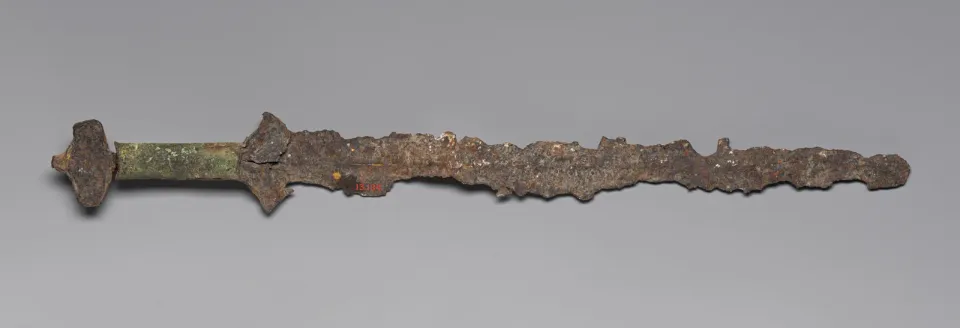
When swung it lengthens like a rainbow and shears off the tops of hills.
Coire Dagdae
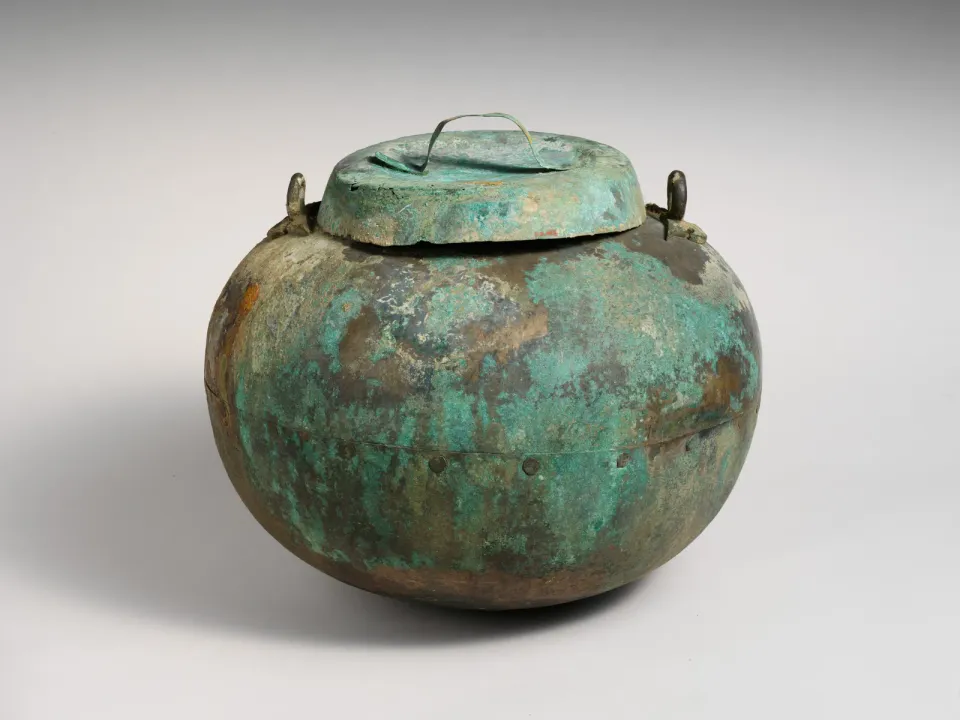
It never runs dry, however many eat. None left it unsatisfied.