Indian
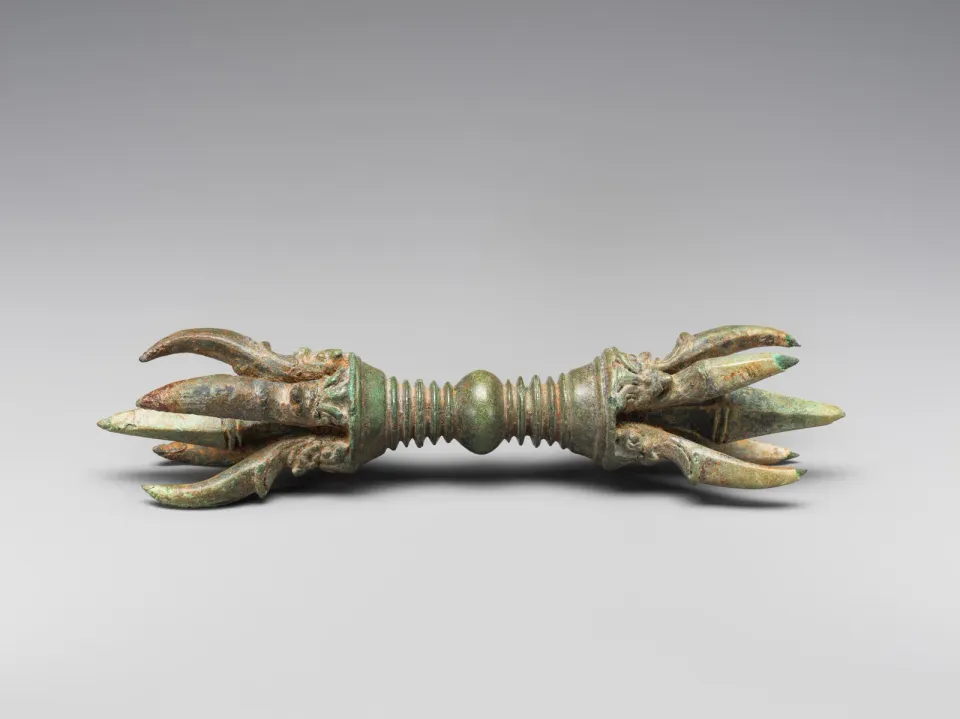
Vajra
Vajra (वज्र)
Unbreakable as diamond and striking like lightning. It slew Vritra, the serpent of drought.
WeaponFirst recorded c. 1200 BCE
Loading artifact…
Photograph: Nine Celestial Bodies (Navagraha), carved in sandstone in central India in the eighth century. Gods stand in a row on a long stone: at far left the sun god in a tall crown with the goddess of dawn, then the moon and the planetary gods in similar poses, and at right Rahu with a huge head.
Focus the photograph, then use the arrow keys to pan and the plus and minus keys to zoom. The buttons at the lower left also move it. Press a numbered button on the photograph to zoom to that note.
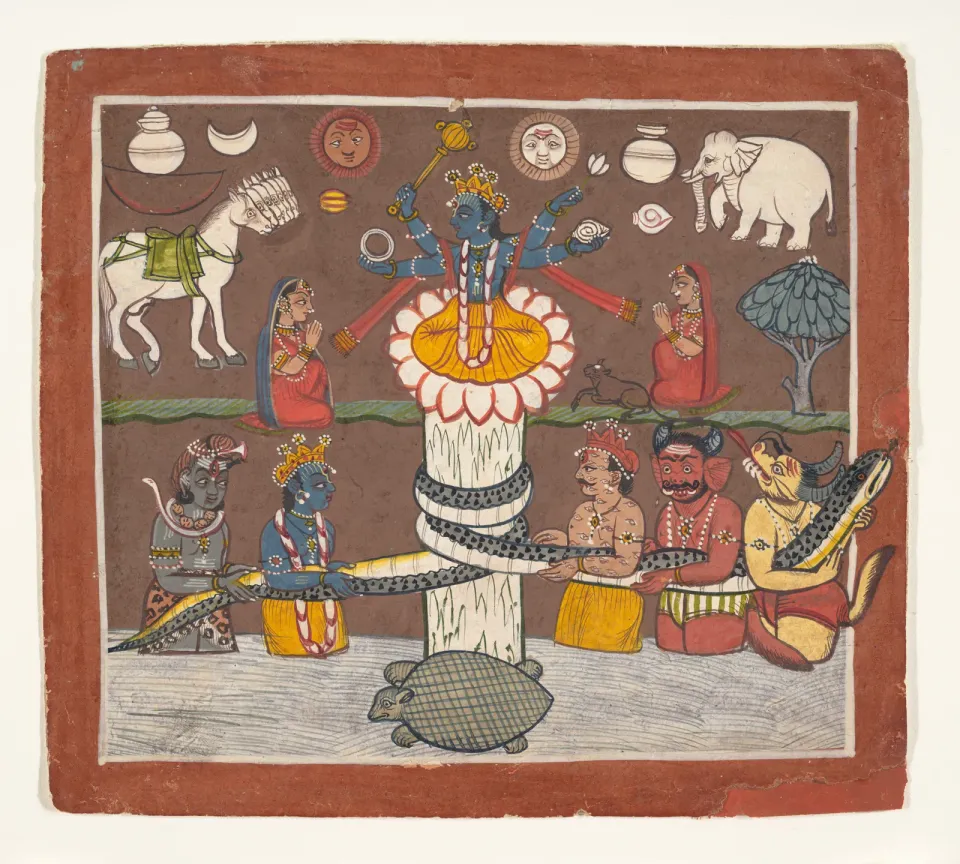
Soma
The hymns sing that whoever drinks it is filled with strength and inspiration and becomes immortal.
The priests of the Rigveda crushed the stalks of the soma plant, which grew in the mountains, with stones to press out the juice, strained it through wool and offered the gods a drink mixed with water and milk. The ninth book of the Rigveda consists entirely of hymns to this drink and to Soma, its god.
Indra, king of the gods, drank down the soma and, gaining strength, struck Vritra, the dragon that had imprisoned the waters, with his vajra and set the rivers free. One hymn sings, 'We have drunk the soma, we have become immortal, we have come to the light.'
What plant soma was has never been settled; some think it was ephedra, others a mushroom. In later texts Soma was identified with the moon god, and the Iranian Avesta speaks of haoma, a drink with the same roots.
The photograph shows Nine Celestial Bodies (Navagraha)(Central India, 700s), a real museum object that evokes the legendary artifact.
Vajra (वज्र)
Unbreakable as diamond and striking like lightning. It slew Vritra, the serpent of drought.
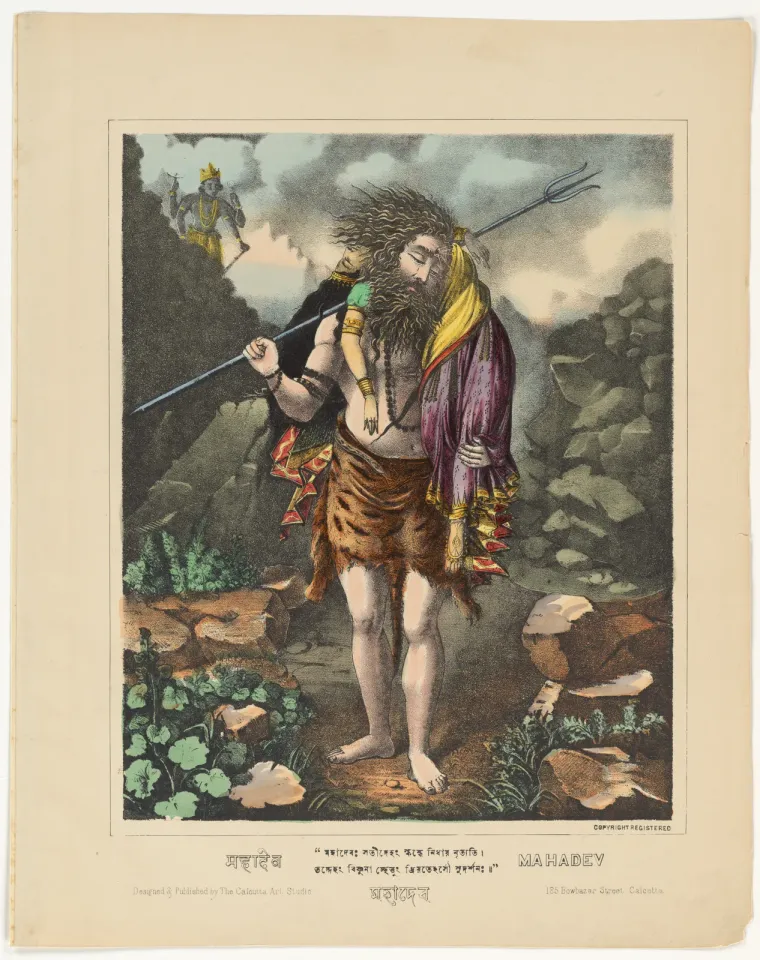
Trishula (त्रिशूल)
Its three prongs govern creation, preservation and destruction, or past, present and future.
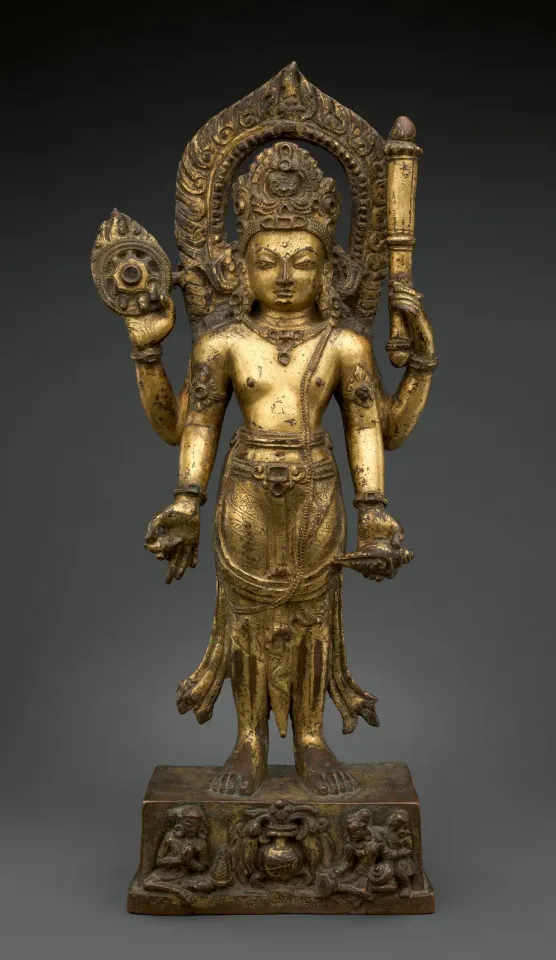
Sudarshana Chakra (सुदर्शन चक्र)
A disc with 108 teeth. Thrown, it cuts down enemies and returns to the hand.