Celtic
Loading artifact…
Photograph: A whetstone handle cast in bronze in Luristan, Iran, about 1100–900 BCE. An ibex stretches its long neck, its horns curving into a loop above its head, and the whetstone fitted into the socket below.
Focus the photograph, then use the arrow keys to pan and the plus and minus keys to zoom. The buttons at the lower left also move it. Press a numbered button on the photograph to zoom to that note.
Hogalen Tudwal Tudglyd
If a brave man sharpened his sword on it, anyone it drew blood from would die; if a coward did, the sword would not cut at all.
The whetstone of Tudwal Tudglyd, one of the Thirteen Treasures of the Island of Britain, knew the heart of whoever sharpened a sword on it. If a brave man whetted his sword on it, anyone the sword drew blood from would surely die. If a coward whetted it, the sword would cut nothing.
Many of the Thirteen Treasures test the worth of their owners in this way, such as the cauldron of the giant Dyrnwch, which would not boil meat for a coward, and the coat of Padarn, which fitted only the well-born.
A whetstone never left a warrior's side, together with his sword. In the seventh-century royal burial at Sutton Hoo in England, a great whetstone carved with human faces at both ends was found like a royal scepter, showing that the whetstone could also be a symbol of authority.
The photograph shows Ibex Whetstone Handle(Iran, Luristan, 1100–900 BCE), a real museum object that evokes the legendary artifact.
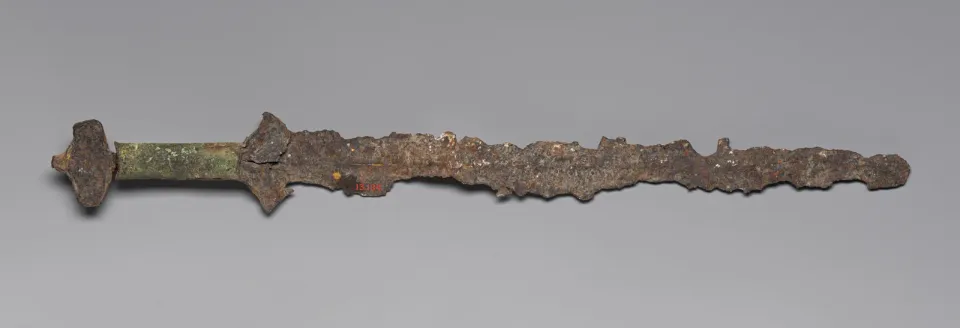
Caladbolg
When swung it lengthens like a rainbow and shears off the tops of hills.
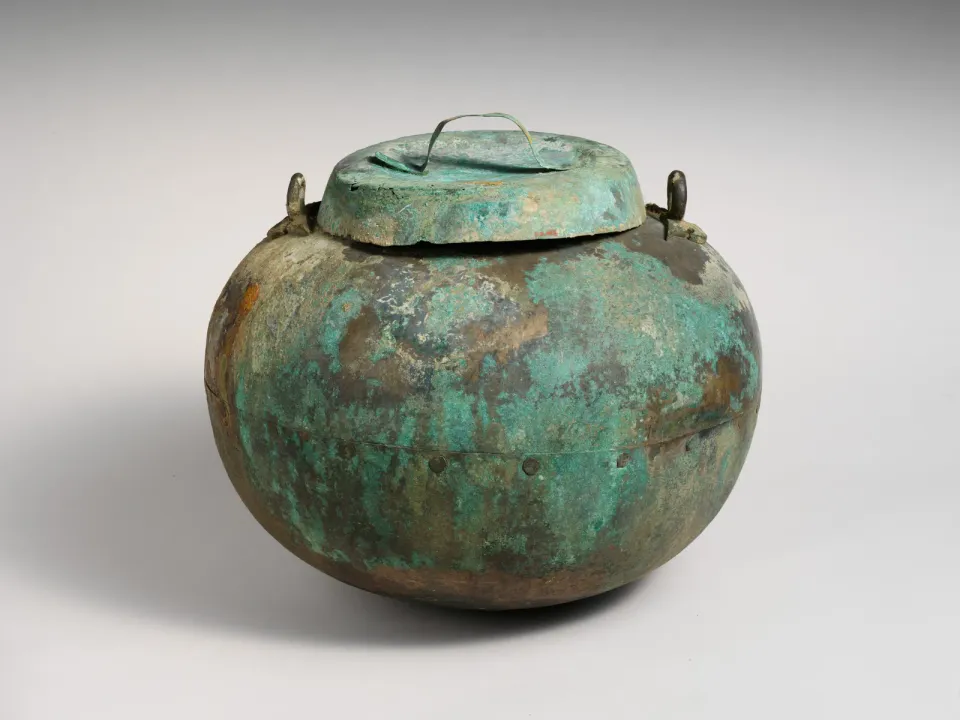
Coire Dagdae
It never runs dry, however many eat. None left it unsatisfied.