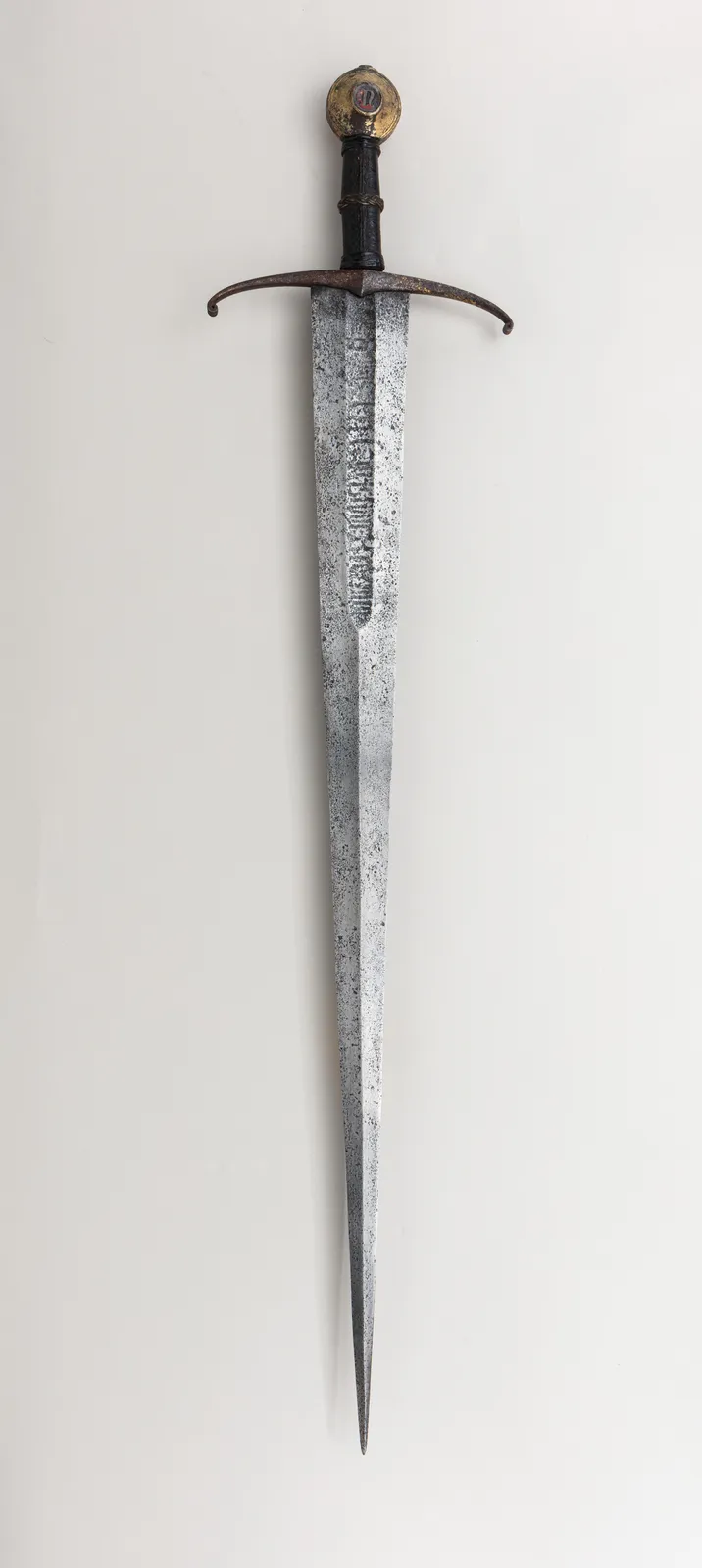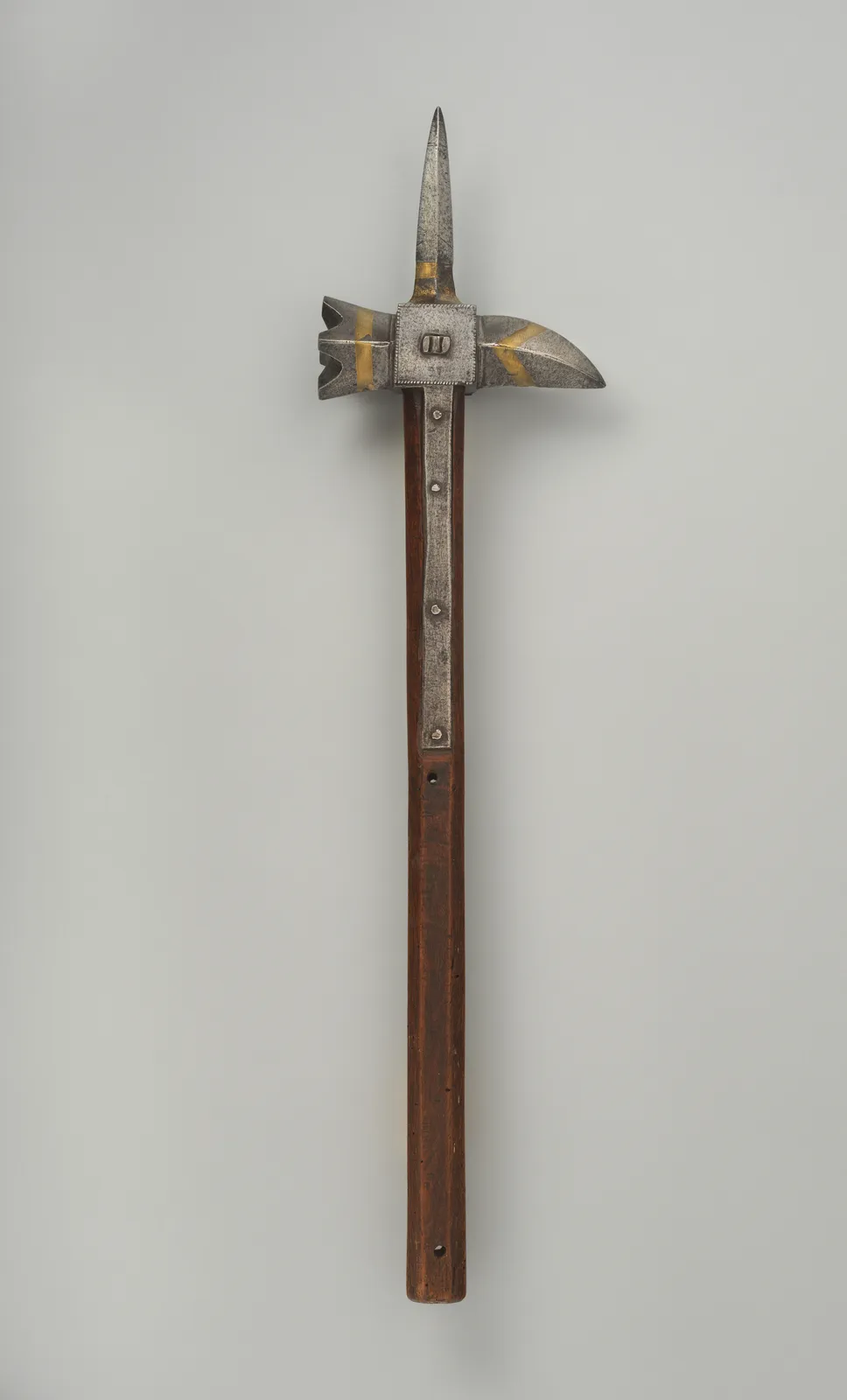
Norse & Germanic
Mjölnir
Mjölnir
Smashes anything, and returns to its owner's hand when thrown.
WeaponFirst recorded 1220
Loading artifact…
Photograph: A Turkish helmet, probably from Istanbul, about 1560. A pointed steel bowl with gold and silver inlay carries ear and neck guards.
Focus the photograph, then use the arrow keys to pan and the plus and minus keys to zoom. The buttons at the lower left also move it. Press a numbered button on the photograph to zoom to that note.
Ægishjálmr
All who look on its wearer are seized by terror.
Having killed Hreidmar and seized the gold, Fafnir changed into a dragon and lay upon it. In the Lay of Fafnir he boasts that because he wore the Helm of Awe, no one dared come near.
Sigurd dug a pit, hid in it, and stabbed the dragon's belly from below as it went to drink. The dying Fafnir admits that the helm did not protect him after all.
Sigurd took the helm along with the gold. Among Icelandic magical symbols today there is a star-shaped design called the Helm of Awe, named after this story.
The photograph shows Helmet(Turkish, probably Istanbul, ca. 1560), a real museum object that evokes the legendary artifact.
Mjölnir
Smashes anything, and returns to its owner's hand when thrown.
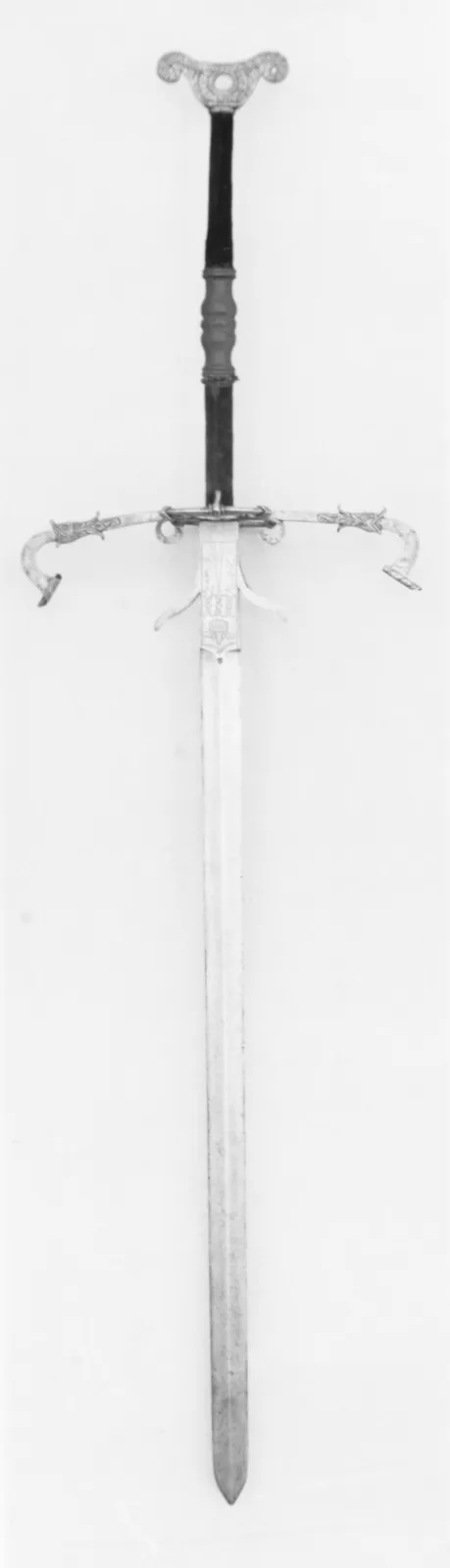
Ealdsweord eotenisc
So large an ordinary man could not lift it. Its blade melted in the monster's blood.
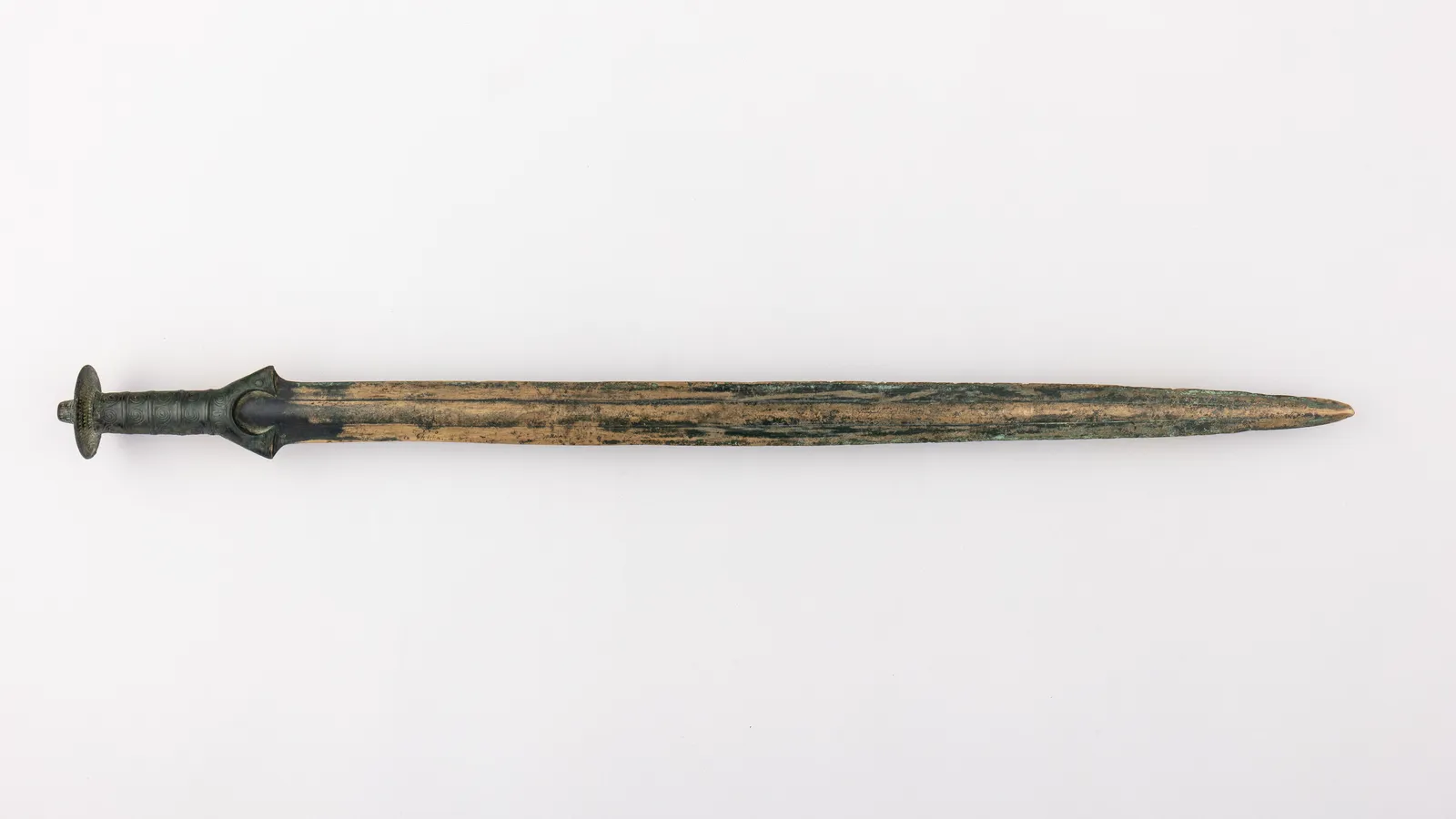
Hrunting
A patterned steel blade steeped in venom. It had never failed in battle.