Arthurian & Chivalric
Excalibur
Excalibur
Cuts through enemy armor, and whoever wears its scabbard does not bleed.
WeaponFirst recorded 1136
Loading artifact…
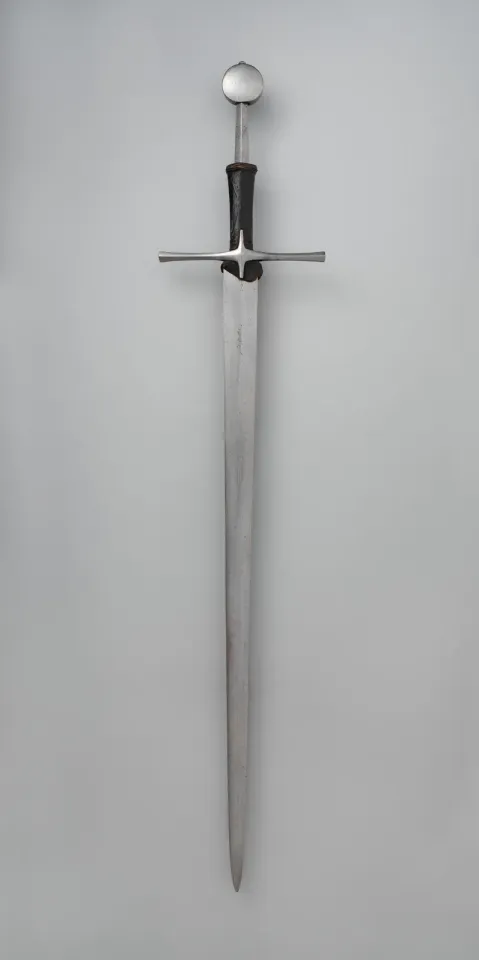
Photograph: A French double-edged sword of the thirteenth century. Below a disk-shaped pommel and a straight crossguard runs a long blade that tapers toward the point, darkened with age.
Focus the photograph, then use the arrow keys to pan and the plus and minus keys to zoom. The buttons at the lower left also move it. Press a numbered button on the photograph to zoom to that note.
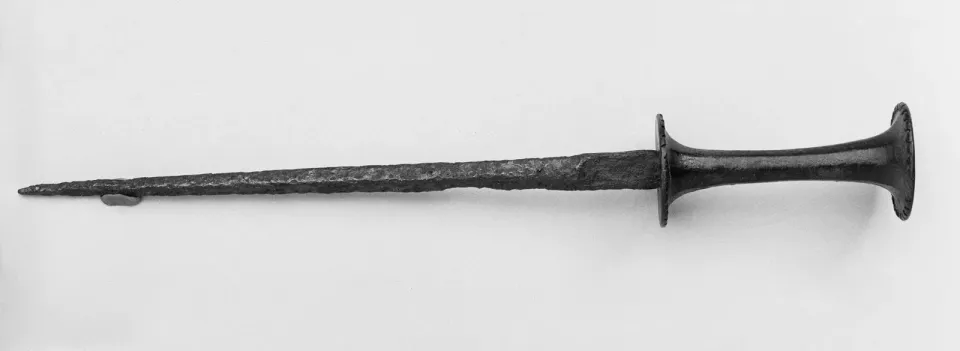
Almace
With this sword the warrior-priest Turpin cut down Saracen after Saracen.
Turpin in The Song of Roland is both archbishop of Reims and a knight who bears a sword. At the pass of Roncevaux he has the knights confess their sins and blesses them, then spurs his own horse into the Saracen army. The sword he swings is Almace.
The poem tells how Turpin drew Almace and cut down one Saracen warrior after another. Pierced by lances all over his body, he did not stop fighting until he fell, and he gave a last blessing to the bodies of his fellow knights that Roland gathered before him.
The real Turpin was archbishop of Reims in the eighth century. In the twelfth century a Latin chronicle claiming to be his work, the Pseudo-Turpin Chronicle, spread the story of Charlemagne's Spanish campaigns across Europe.
The photograph shows Sword(French, 13th century), a real museum object that evokes the legendary artifact.
Excalibur
Cuts through enemy armor, and whoever wears its scabbard does not bleed.
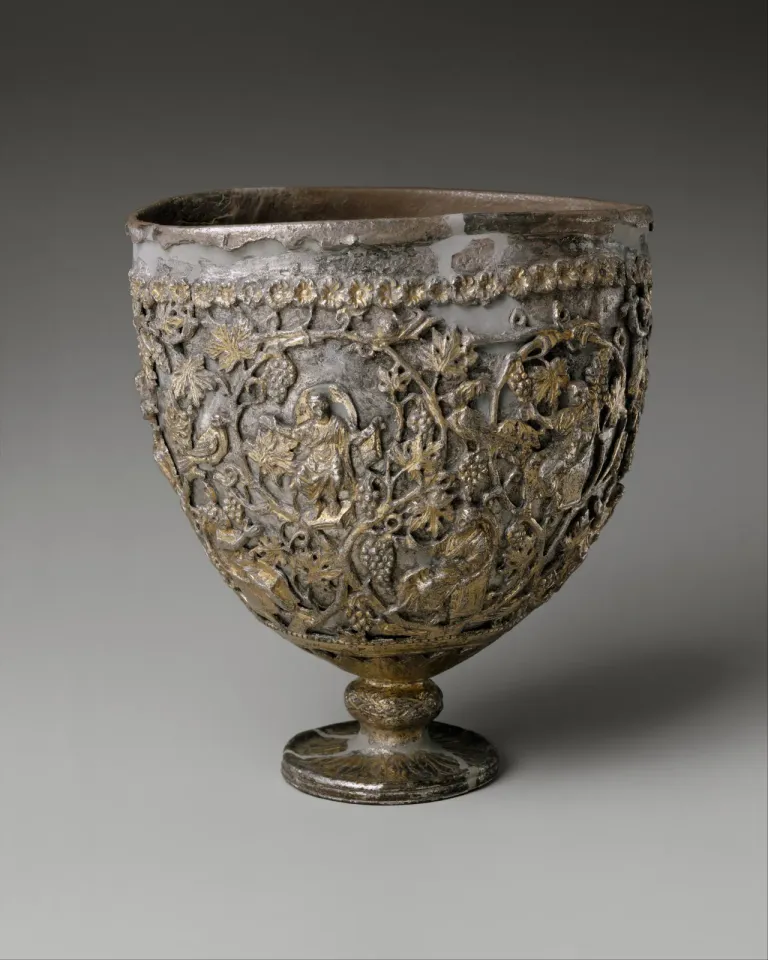
Holy Grail
Grants those who see it the food they desire, and shows itself only to the pure knight.
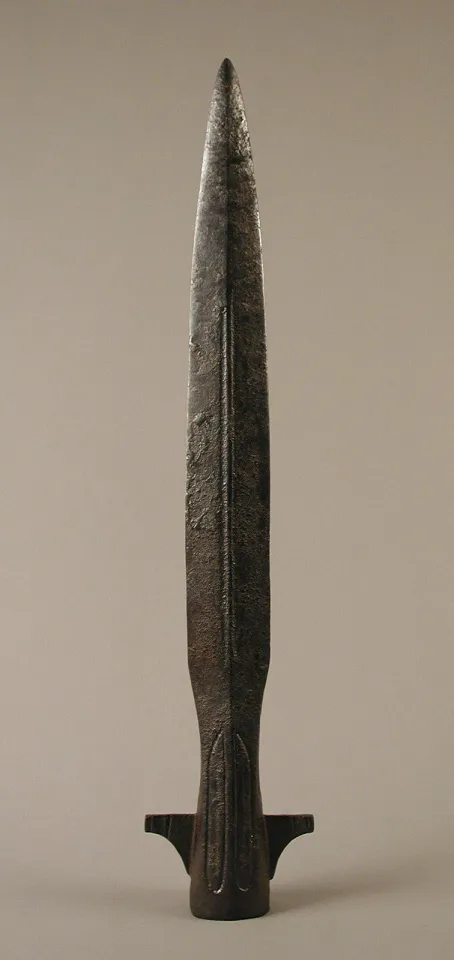
Rhongomyniad
Long and broad-bladed, said to thirst for enemy blood.