Arthurian & Chivalric
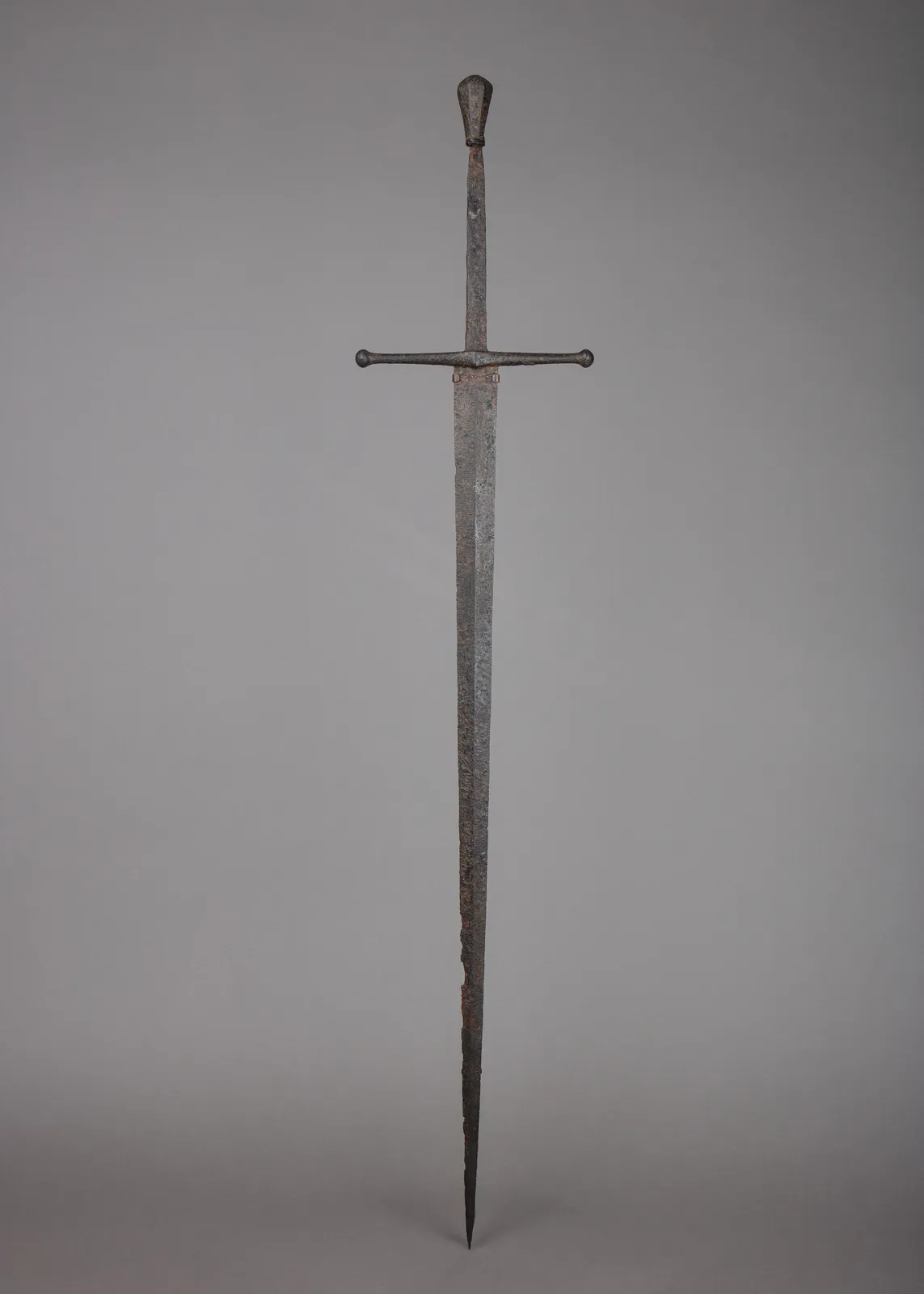
Excalibur
Excalibur
Cuts through enemy armor, and whoever wears its scabbard does not bleed.
WeaponFirst recorded 1136
Loading artifact…
Photograph: A Carolingian or Ottonian winged lance head of the ninth to tenth century. Short wings project from either side below the long, slender steel blade.
Focus the photograph, then use the arrow keys to pan and the plus and minus keys to zoom. The buttons at the lower left also move it. Press a numbered button on the photograph to zoom to that note.
Rhongomyniad
Long and broad-bladed, said to thirst for enemy blood.
In Culhwch and Olwen, the list of treasures Arthur says he will never give away includes the sword Caledfwlch, the dagger Carnwennan and the spear Rhongomyniad. The name is roughly interpreted as "cutting spear."
In the twelfth century Geoffrey of Monmouth's History of the Kings of Britain calls this spear Ron and describes it as long, broad-bladed and thirsty for blood in battle. Arthur fought the Saxons with it, together with Caliburnus and the shield Pridwen.
Though overshadowed by Excalibur's fame, it is a weapon never left out when describing Arthur fully armed.
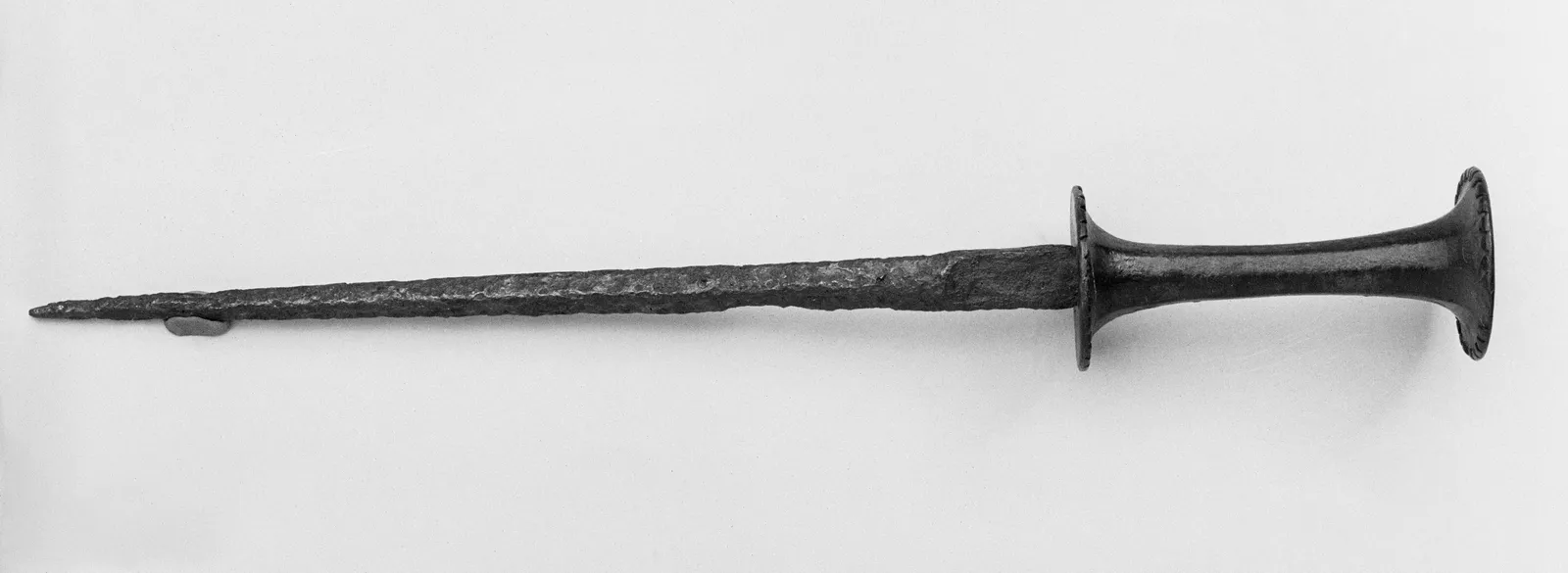
The photograph shows Lance Head ("Flügellanz")(Carolingian or Ottonian, ca. 9th–10th century), a real museum object that evokes the legendary artifact.
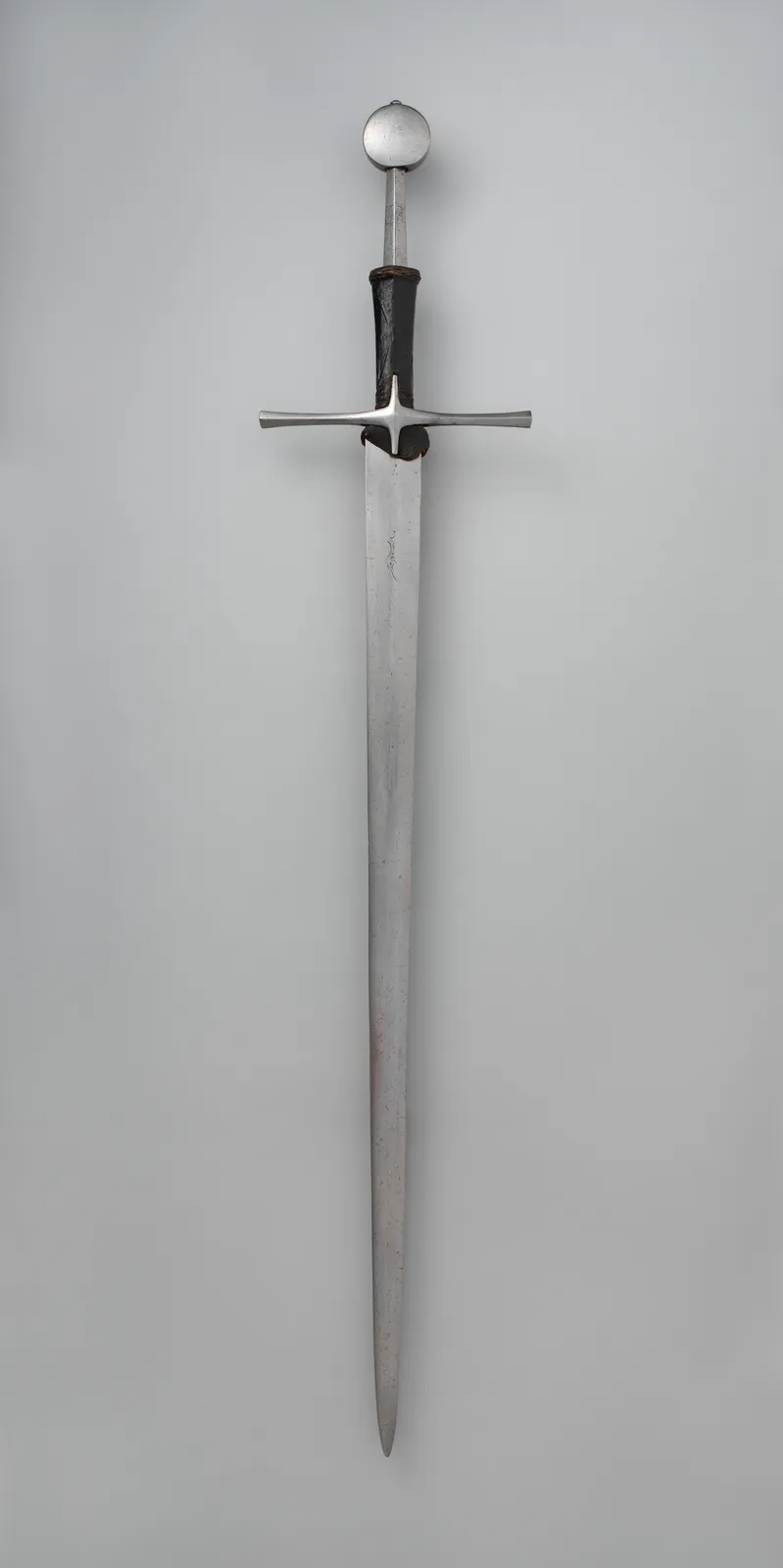
Excalibur
Cuts through enemy armor, and whoever wears its scabbard does not bleed.
Holy Grail
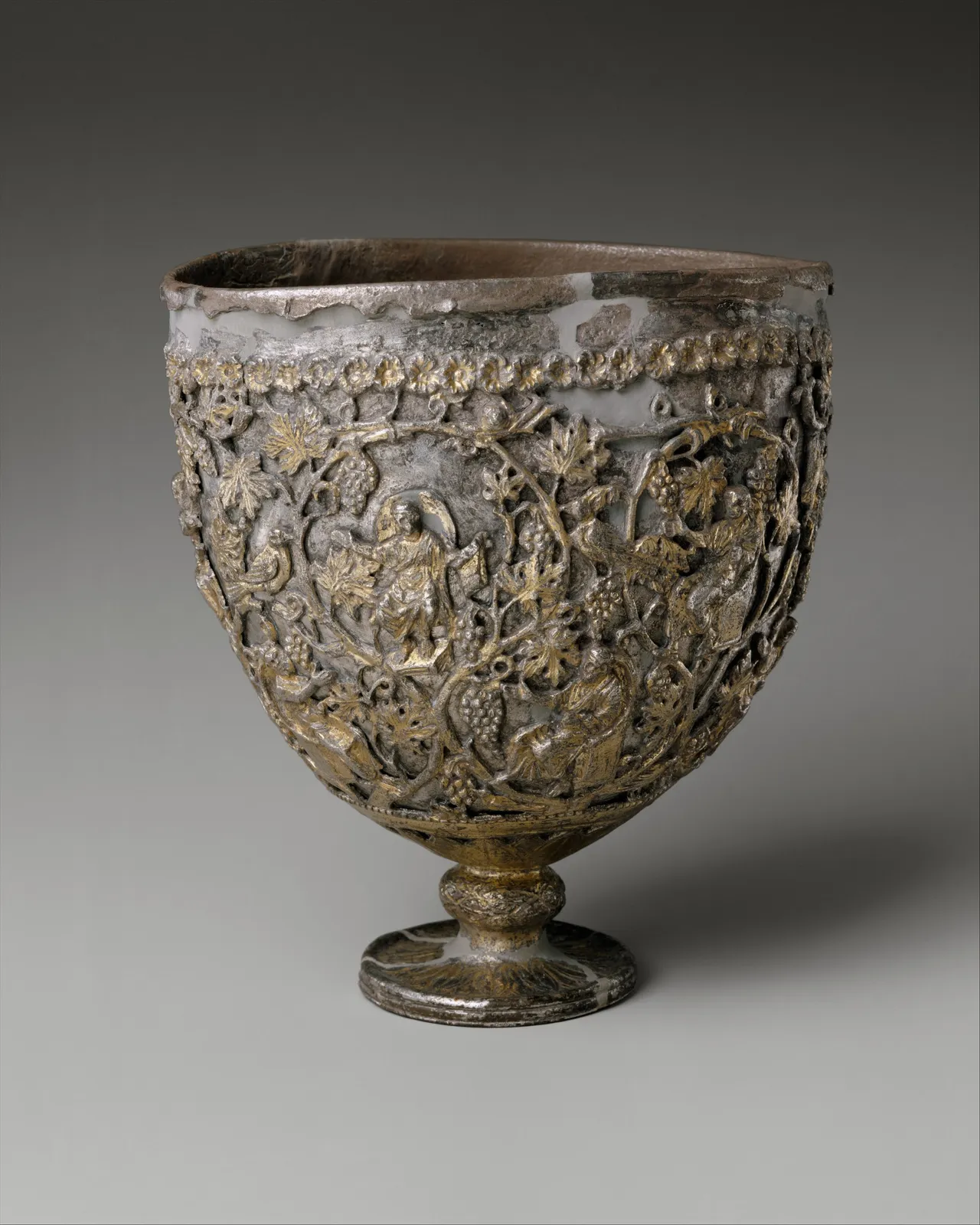
Grants those who see it the food they desire, and shows itself only to the pure knight.