Arthurian & Chivalric
Excalibur
Excalibur
Cuts through enemy armor, and whoever wears its scabbard does not bleed.
WeaponFirst recorded 1136
Loading artifact…
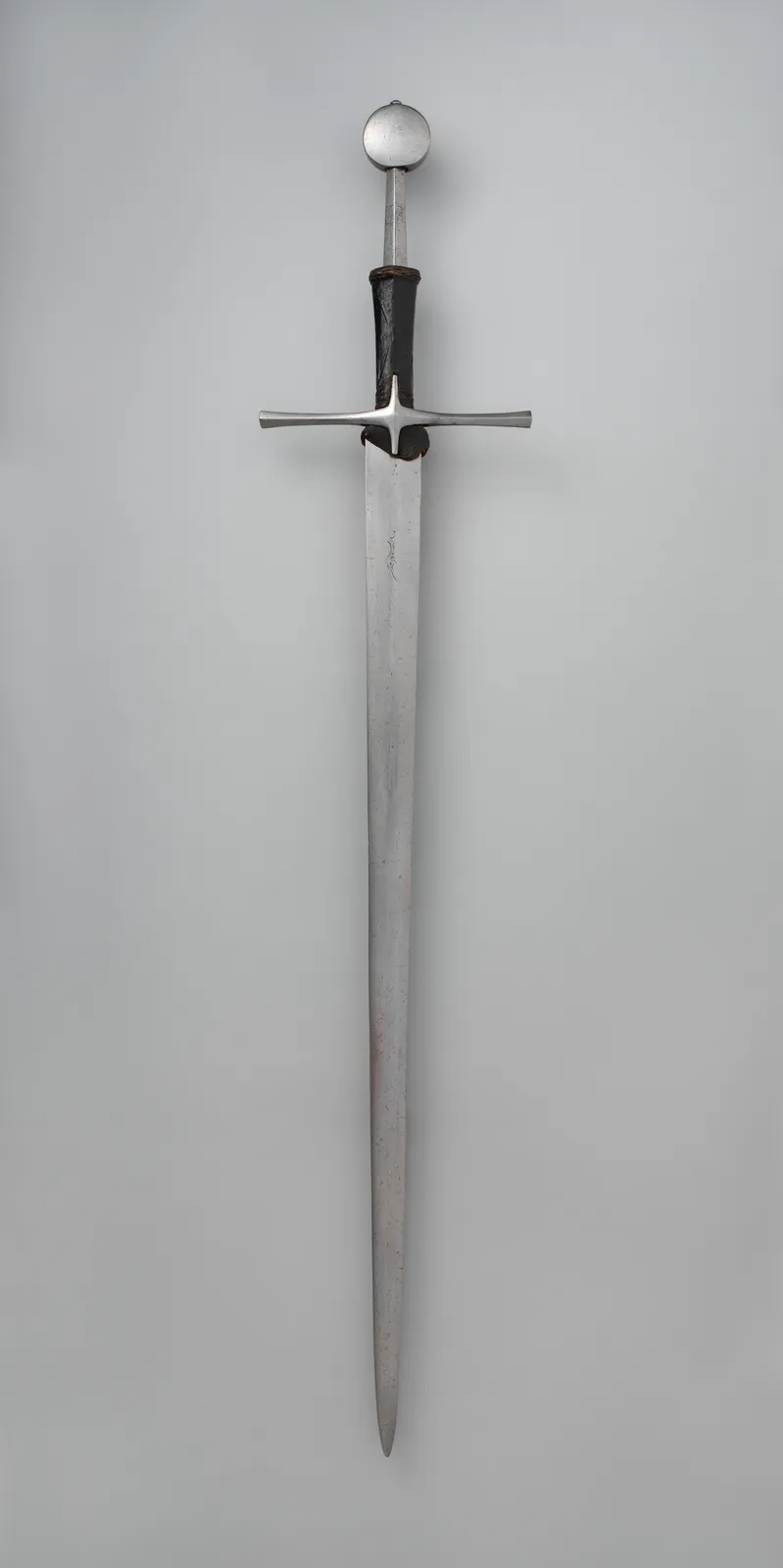
Photograph: A two-handed Western European sword of the early fifteenth century with a long blade and a wide cross guard.
Focus the photograph, then use the arrow keys to pan and the plus and minus keys to zoom. The buttons at the lower left also move it. Press a numbered button on the photograph to zoom to that note.
Durendal
Never chips, even when struck against rock.
In the late eleventh-century epic The Song of Roland, Durendal is the sword Charlemagne gave to his nephew Roland. Its golden hilt was said to hold a tooth of Saint Peter, the blood of Saint Basil, hair of Saint Denis and a piece of the Virgin's clothing.
Commanding the rearguard in the pass of Roncevaux, Roland is surrounded by an ambush. Facing death, he tries to shatter the sword on a rock so that it will not fall to the enemy, but the blade stays whole and the rock splits. The Brèche de Roland in the Pyrenees is said to have been made at that moment.
At last Roland lay down with the sword beneath him, facing the enemy, and died. A sword said to be Durendal is still lodged in the cliff at Rocamadour in France.
The photograph shows Two-Handed Sword(British or Western European, ca. 1400–1450), a real museum object that evokes the legendary artifact.
Excalibur
Cuts through enemy armor, and whoever wears its scabbard does not bleed.
Holy Grail
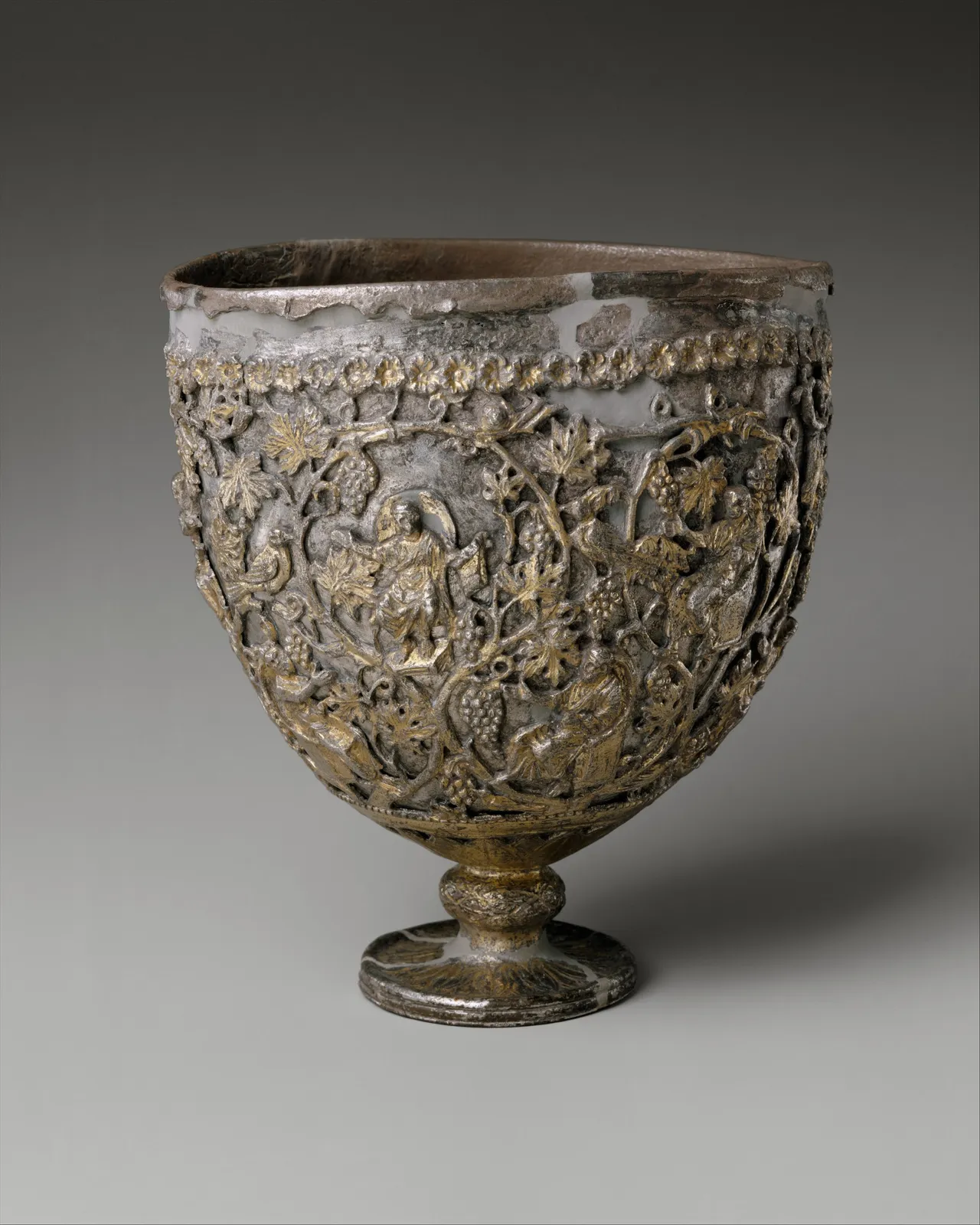
Grants those who see it the food they desire, and shows itself only to the pure knight.
Rhongomyniad
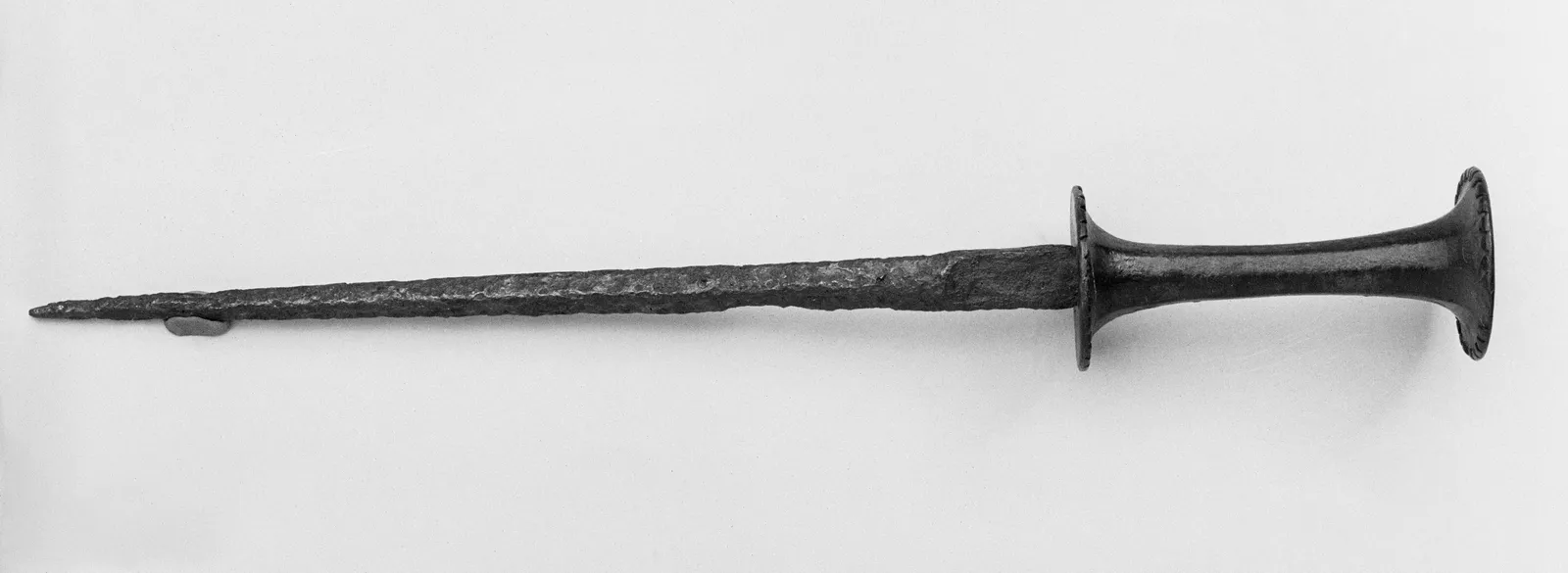
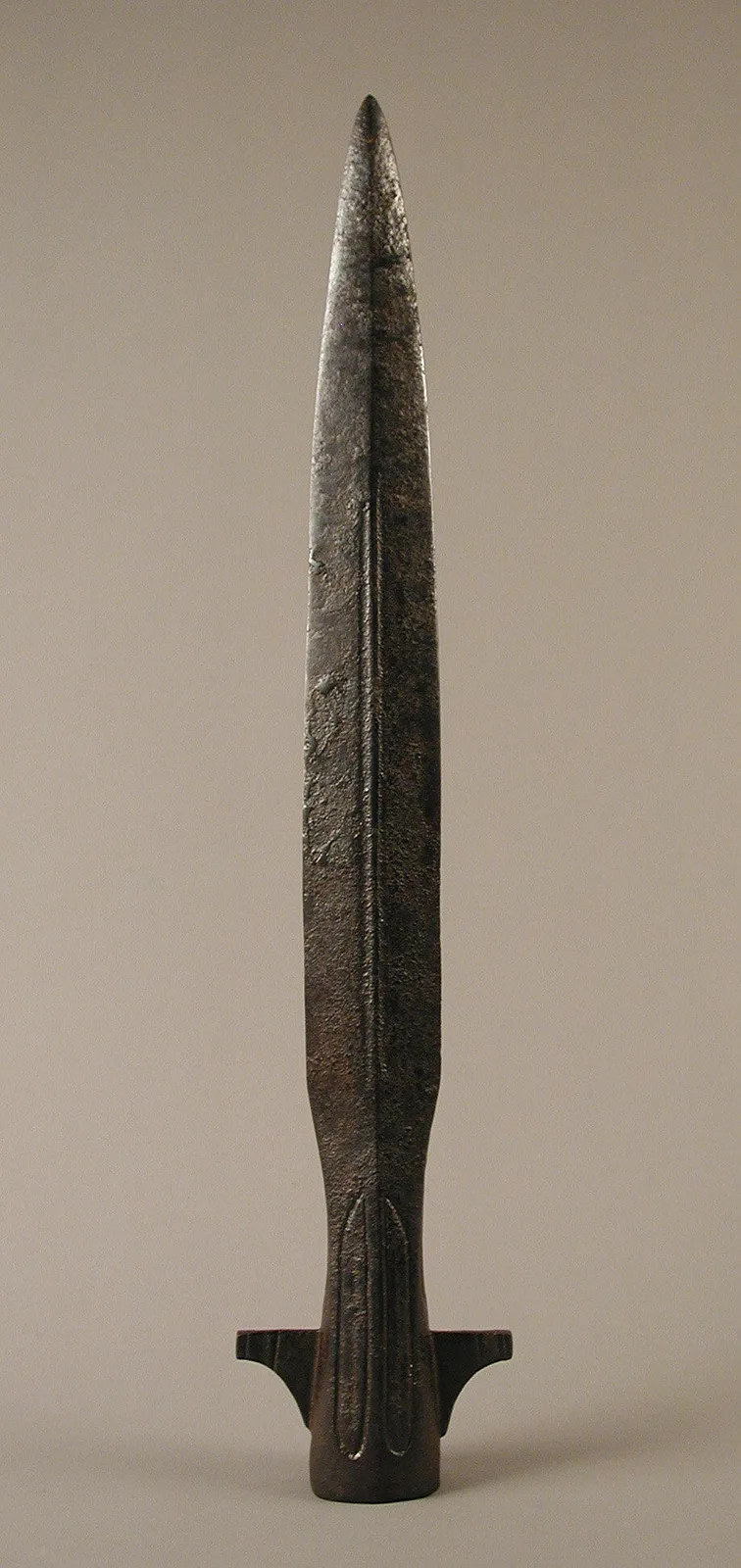
Long and broad-bladed, said to thirst for enemy blood.