Arthurian & Chivalric
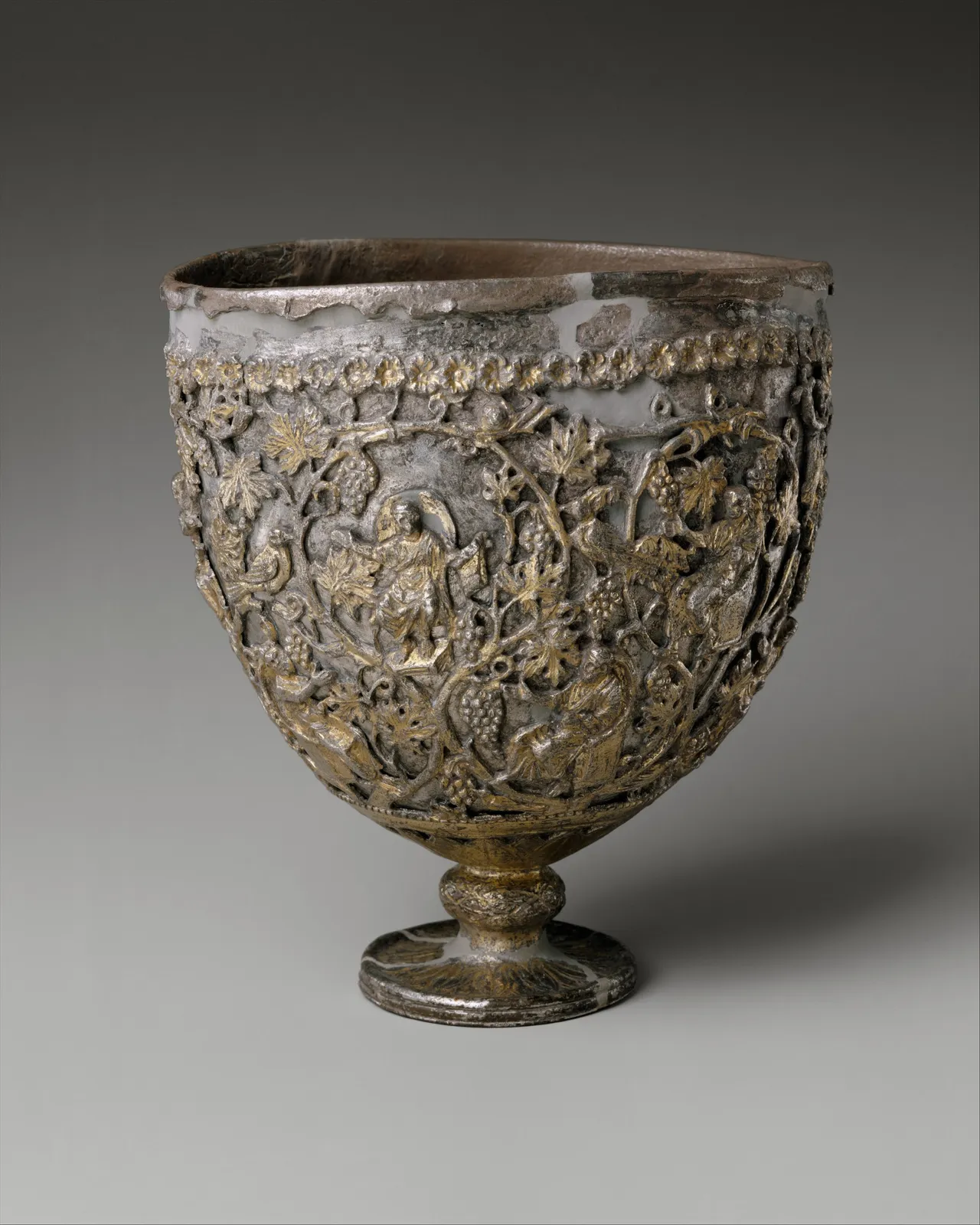
Holy Grail
Holy Grail
Grants those who see it the food they desire, and shows itself only to the pure knight.
VesselFirst recorded 1180
Loading artifact…
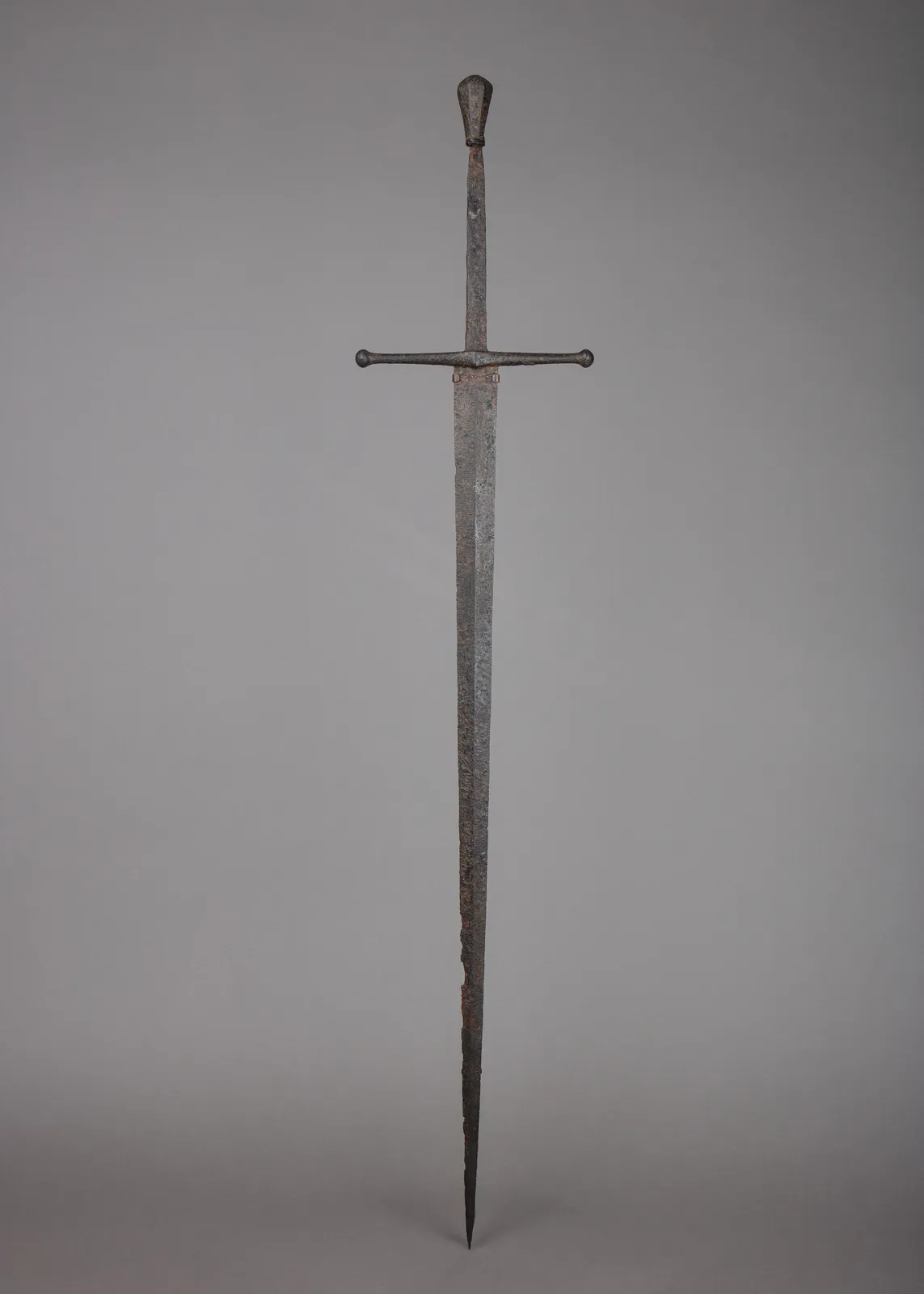
Photograph: A fifteenth-century European hand-and-a-half sword with a straight double-edged blade, cross guard and round pommel.
Focus the photograph, then use the arrow keys to pan and the plus and minus keys to zoom. The buttons at the lower left also move it. Press a numbered button on the photograph to zoom to that note.
Excalibur
Cuts through enemy armor, and whoever wears its scabbard does not bleed.
Excalibur first takes shape in Geoffrey of Monmouth's twelfth-century History of the Kings of Britain, where Arthur's sword is called Caliburnus and is said to have been forged on the isle of Avalon. Caledfwlch in Welsh tradition and Caladbolg in Irish heroic tales are counted as names from the same root.
The scene in which Arthur wins the sword comes down in two forms. In one he pulls it from a stone and becomes king; in the other he receives it from an arm rising out of a lake. Thomas Malory's Le Morte d'Arthur keeps both, explaining that the Lady of the Lake gave him Excalibur after the sword from the stone broke.
Merlin said the scabbard was worth more than the blade, because whoever wore it would not bleed however badly he was wounded. Having lost the scabbard, Arthur took a mortal wound at Camlann and ordered his last knight, Bedivere, to return the sword to the lake. Only at the third throw did a hand rise from the water, catch the sword and vanish.
The photograph shows Hand-and-a-Half Sword(European or possibly British, 15th century), a real museum object that evokes the legendary artifact.
Holy Grail
Grants those who see it the food they desire, and shows itself only to the pure knight.
Rhongomyniad
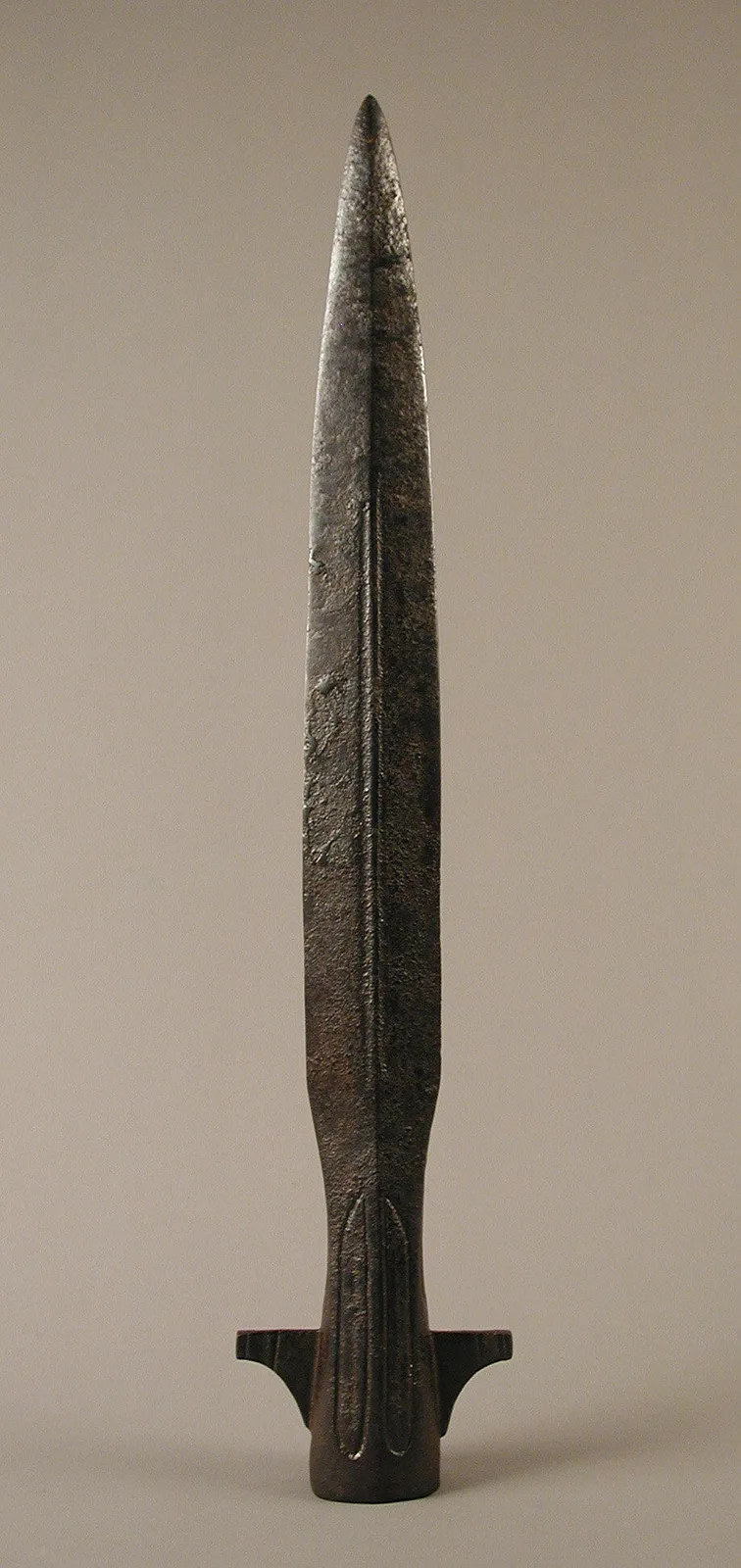
Long and broad-bladed, said to thirst for enemy blood.