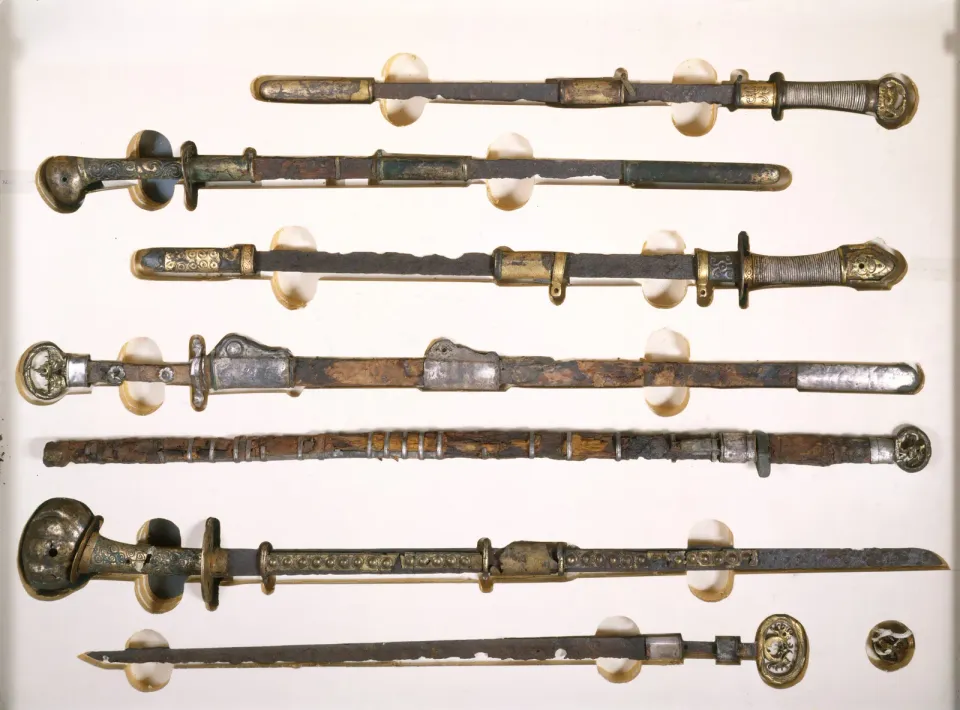
Japanese
Kusanagi-no-Tsurugi
草薙剣 (Kusanagi-no-Tsurugi)
Cuts the grass by itself and turns back fire.
WeaponFirst recorded 712
Loading artifact…
Photograph: A Japanese steel arrowhead (yanone) of the fifteenth–sixteenth century. A groove runs down the center of the long, pointed head shaped like a willow leaf, and a slender tang extends below to fit into the shaft.
Focus the photograph, then use the arrow keys to pan and the plus and minus keys to zoom. The buttons at the lower left also move it. Press a numbered button on the photograph to zoom to that note.
天之波波矢
A feathered arrow given with the heavenly bow; shot upward, it flew all the way to heaven and came back.
In the Kojiki, the gods of heaven send Ame-no-Wakahiko down to rule the land on earth, giving him the heavenly bow Ame-no-Makakoyumi and the feathered arrows Ame-no-Habaya. But he marries a daughter of Ōkuninushi, the god of the land, and sends no word for eight years.
When the gods of heaven sent the pheasant Nakime to ask why, Ame-no-Wakahiko shot the pheasant dead with this arrow. The arrow pierced the pheasant's breast, flew up to heaven and fell before the god Takamimusuhi.
Takamimusuhi saw blood on the arrow and, declaring that if Ame-no-Wakahiko had evil intent he would be struck by it, hurled the arrow back down. The arrow struck Ame-no-Wakahiko in the chest as he lay asleep in the morning. The word kaeshi-ya, 'the returning arrow,' is said to come from this.
The photograph shows Arrowhead (Yanone)(Japanese, 15th–16th century), a real museum object that evokes the legendary artifact.
草薙剣 (Kusanagi-no-Tsurugi)
Cuts the grass by itself and turns back fire.
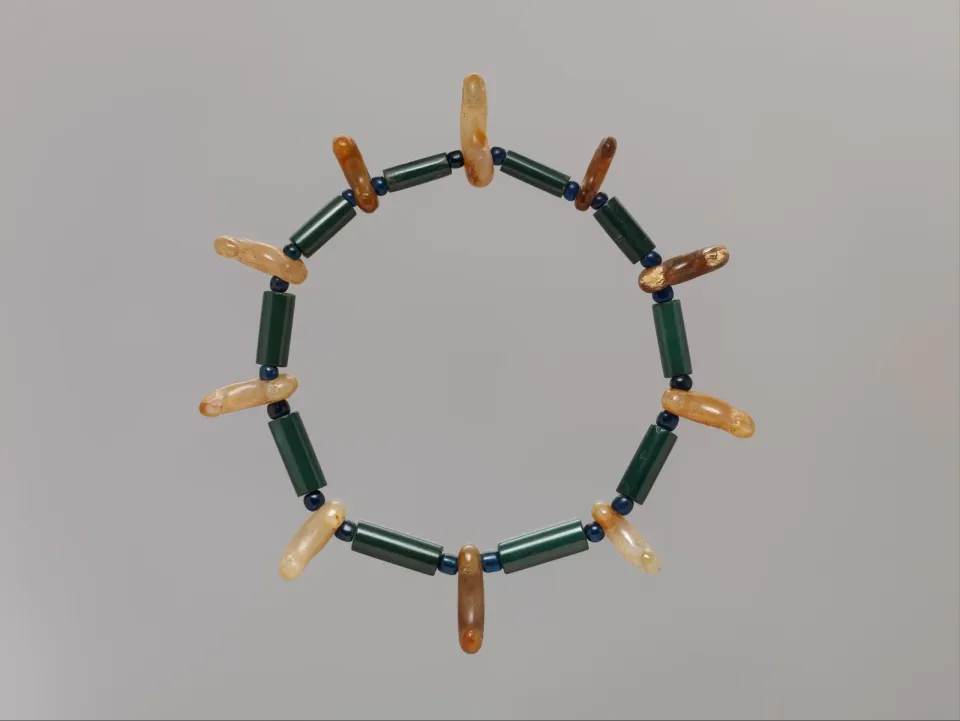
八尺瓊勾玉
One of the three sacred treasures, holding the spirit of the gods and the legitimacy of the imperial line.
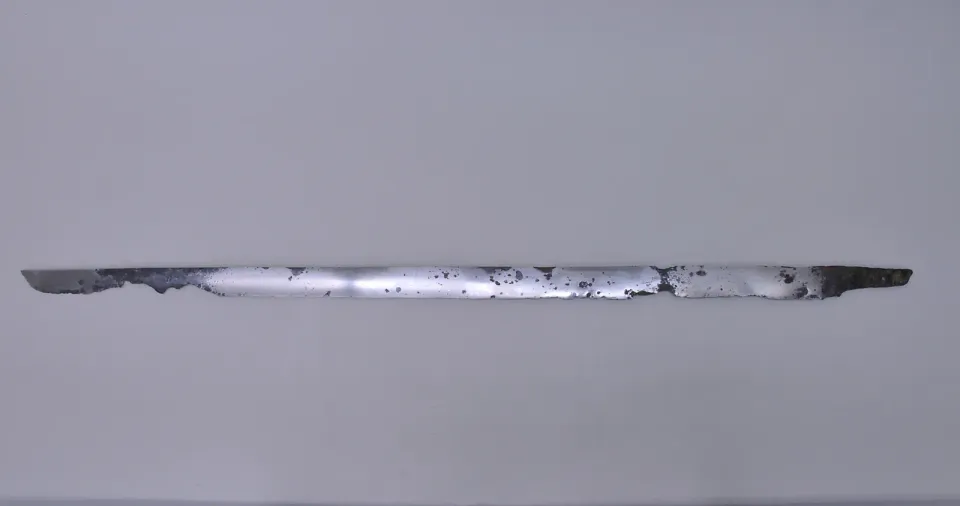
十拳剣
A great sword ten fists long, which cut the eight-headed serpent to pieces.
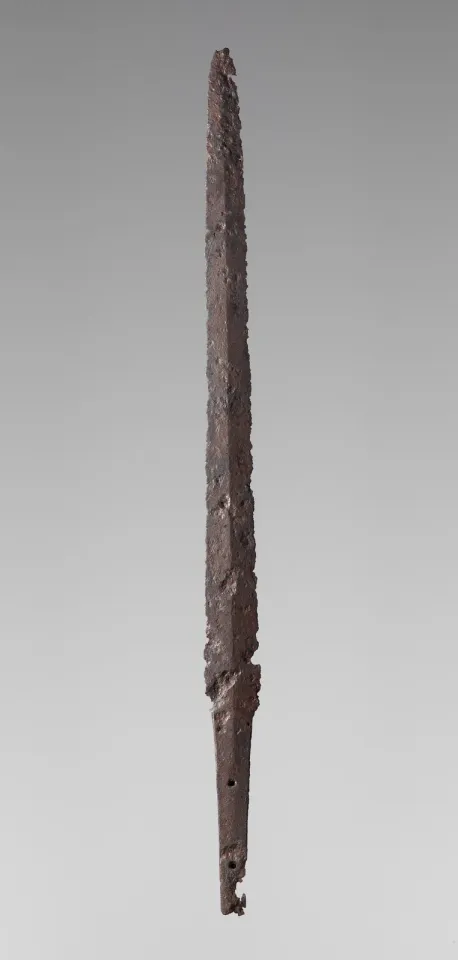
布都御魂
A single stroke revived soldiers felled by poisonous vapors.