Japanese
Kusanagi-no-Tsurugi
草薙剣 (Kusanagi-no-Tsurugi)
Cuts the grass by itself and turns back fire.
WeaponFirst recorded 712
Loading artifact…
Photograph: A fifth-century Japanese double-edged sword blade (ken) of the Kofun period. The rusted iron blade stands vertically, and the tang for the hilt survives at the bottom.
Focus the photograph, then use the arrow keys to pan and the plus and minus keys to zoom. The buttons at the lower left also move it. Press a numbered button on the photograph to zoom to that note.
布都御魂
A single stroke revived soldiers felled by poisonous vapors.
According to the Kojiki, when Emperor Jimmu reached Kumano on his eastern expedition, a great bear appeared and the emperor and his soldiers all collapsed from poisonous vapors.
Then a man named Takakuraji, receiving a revelation in a dream, came carrying a sword. It had been sent down from heaven by the thunder god Takemikazuchi, who had used it to pacify the land. When the emperor received it he recovered, and at a single stroke the evil gods of Kumano fell of themselves.
This sword, Futsu-no-Mitama, is enshrined as the chief deity at Isonokami Shrine in Nara Prefecture. A sword unearthed in 1874 from forbidden ground at the shrine is said to be this one.
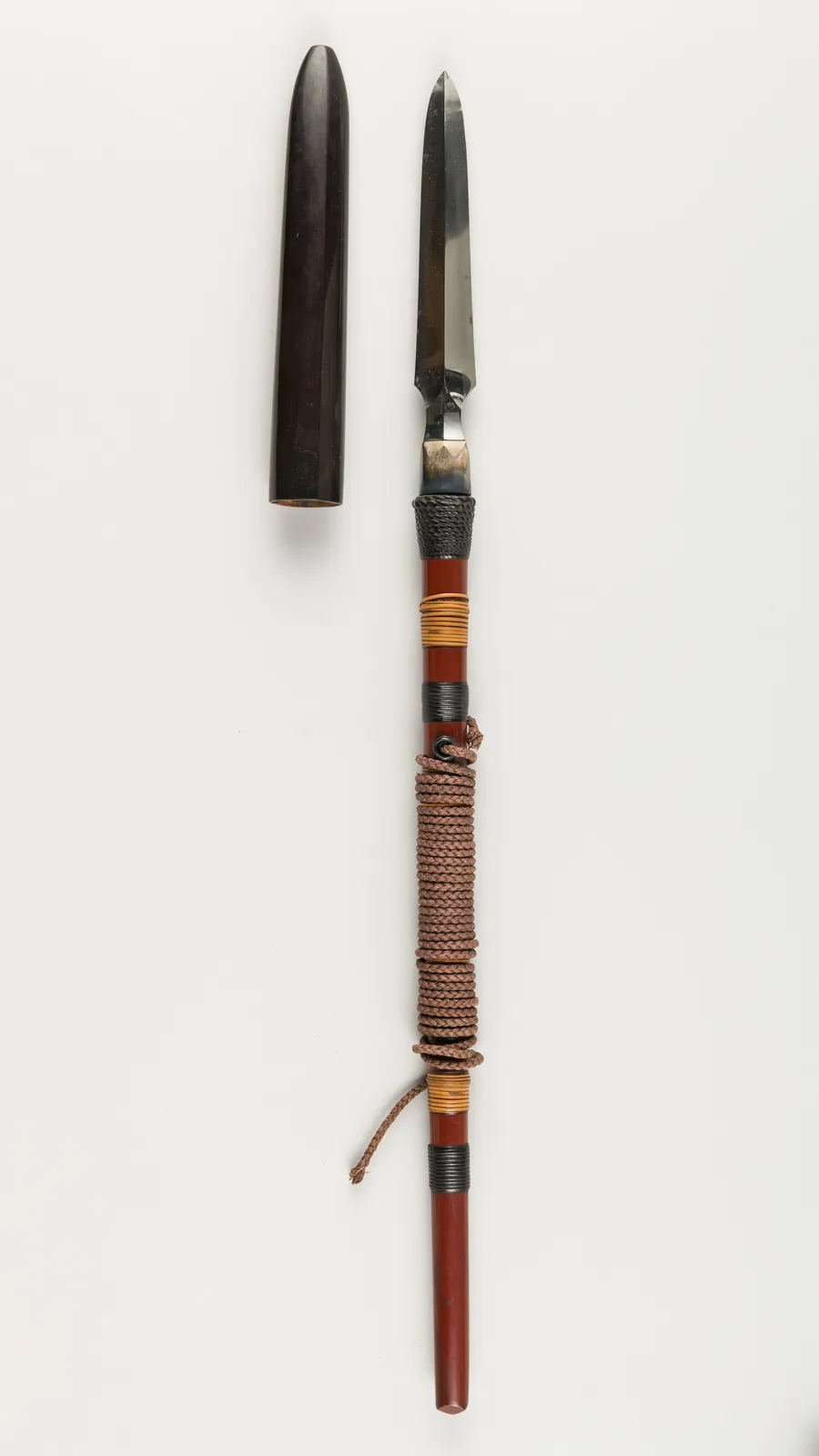
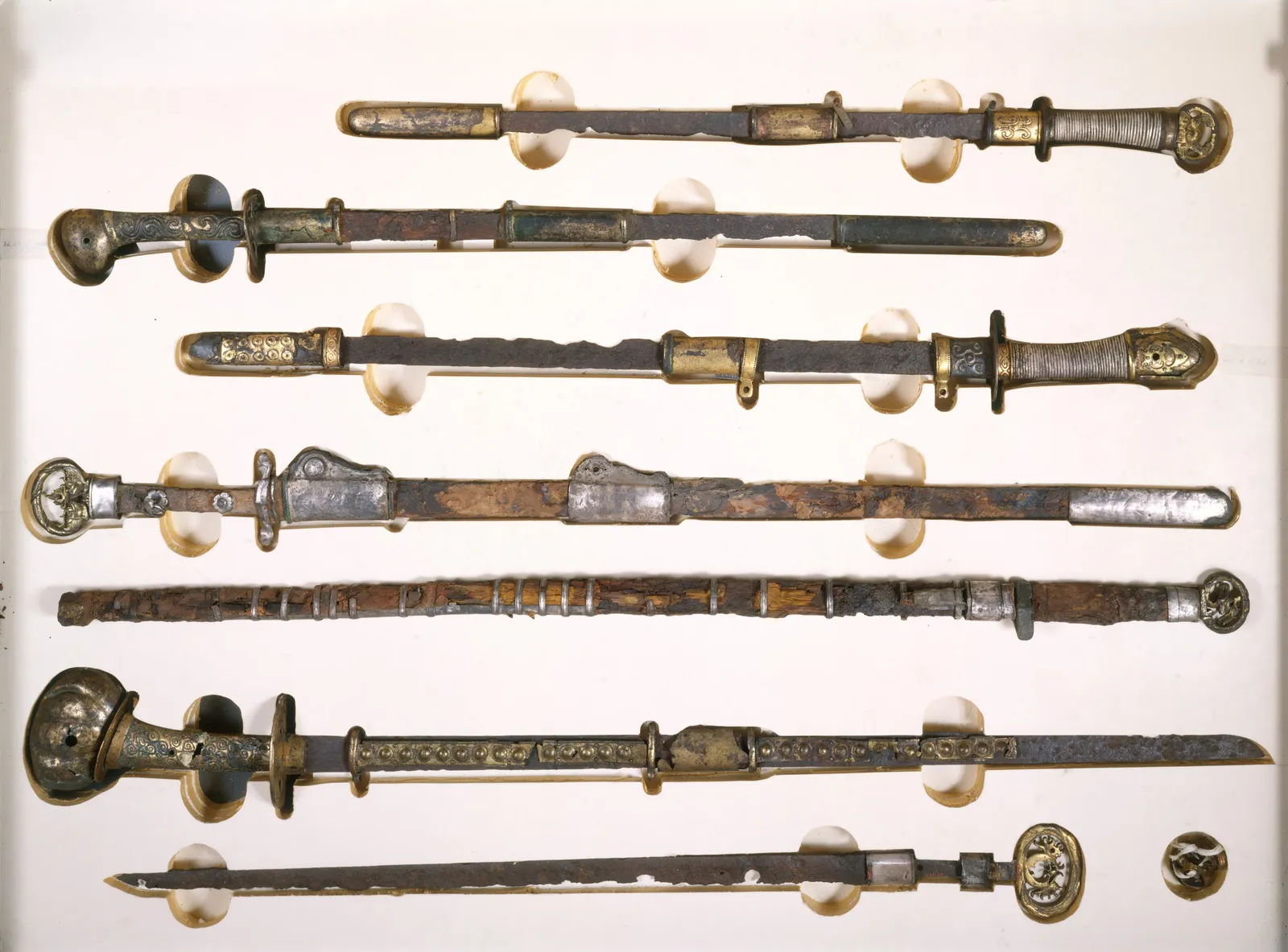
The photograph shows Blade for a Double-Edged Sword (Ken)(Japanese, 5th century), a real museum object that evokes the legendary artifact.
草薙剣 (Kusanagi-no-Tsurugi)
Cuts the grass by itself and turns back fire.
八尺瓊勾玉
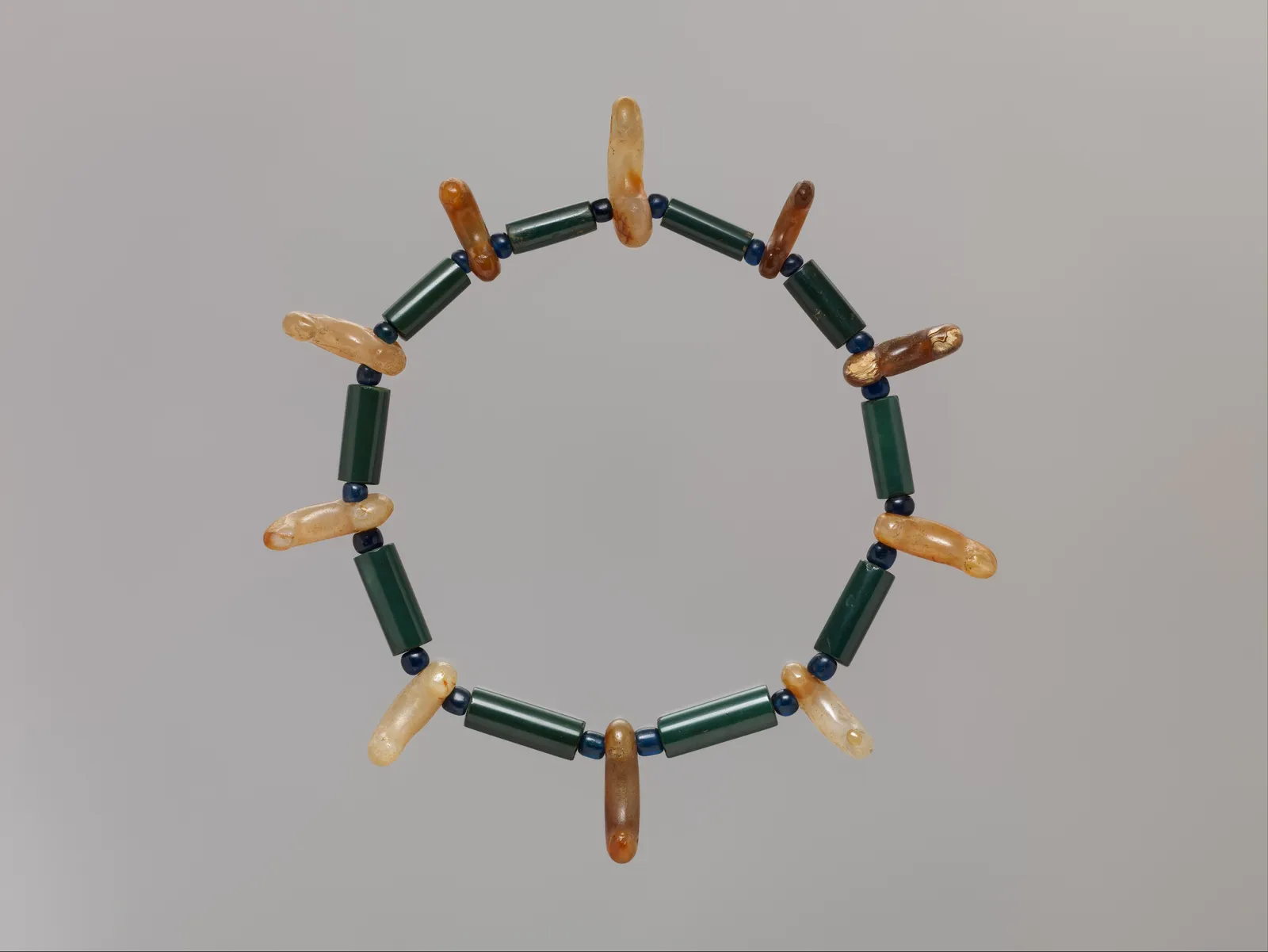
One of the three sacred treasures, holding the spirit of the gods and the legitimacy of the imperial line.