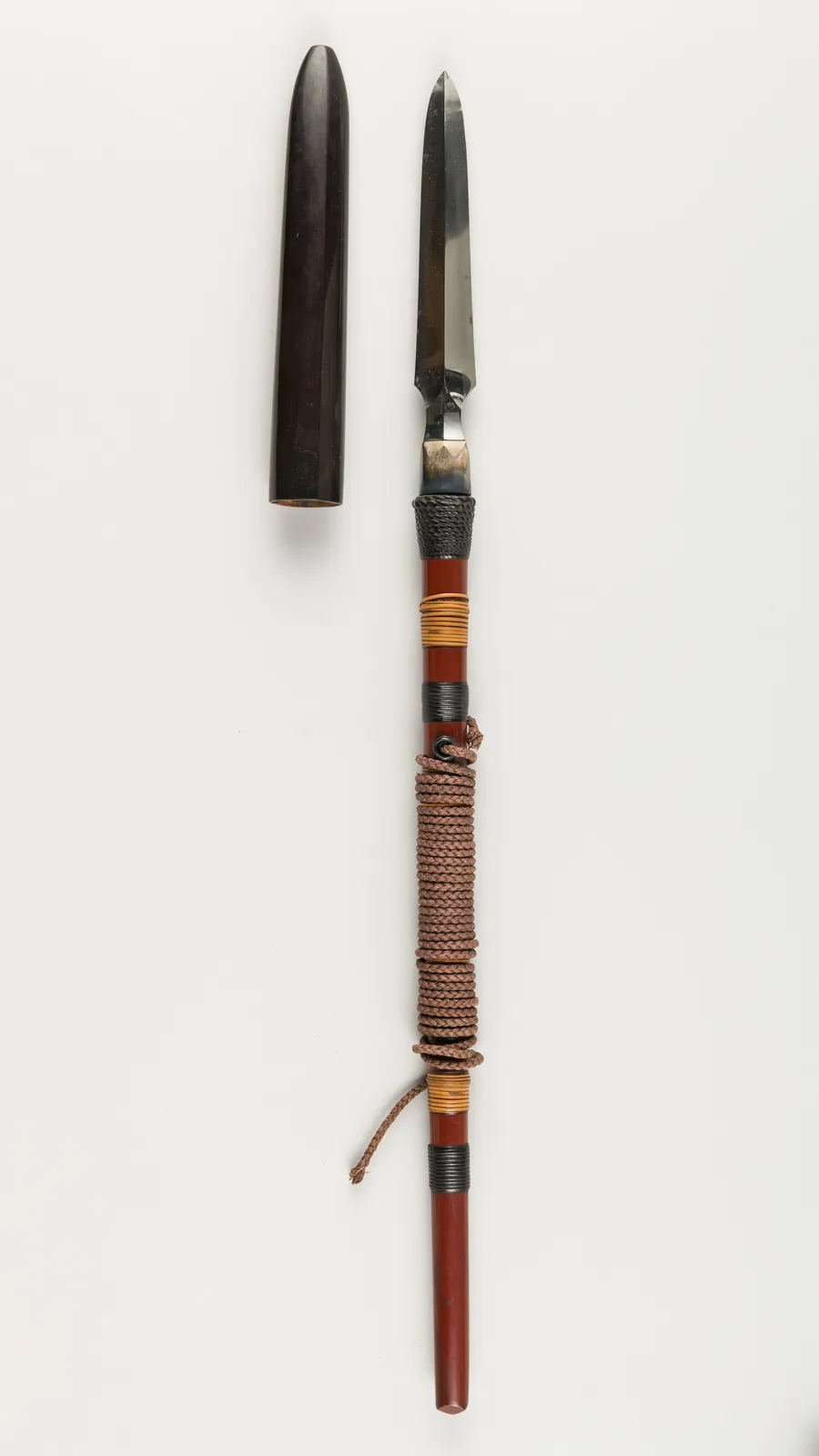
Japanese
Futsu-no-Mitama
布都御魂
A single stroke revived soldiers felled by poisonous vapors.
WeaponFirst recorded 712
Loading artifact…
Photograph: Seven straight iron swords from sixth-century Kofun-period Japan laid side by side, with rusted blades, gilt-bronze scabbard fittings and round ring pommels.
Focus the photograph, then use the arrow keys to pan and the plus and minus keys to zoom. The buttons at the lower left also move it. Press a numbered button on the photograph to zoom to that note.
草薙剣 (Kusanagi-no-Tsurugi)
Cuts the grass by itself and turns back fire.
Cast out of heaven, the storm god Susanoo came to the land of Izumo and met Yamata-no-Orochi, a great serpent with eight heads and eight tails that devoured a daughter every year. He set out eight vats of strong liquor, got the serpent drunk and hacked it to pieces. When he cut the middle tail his blade struck something and chipped, and inside he found a sword.
Susanoo named it Ame-no-Murakumo-no-Tsurugi, the sword of the gathering clouds of heaven, and presented it to his sister, the sun goddess Amaterasu.
Later, when the hero Yamato Takeru campaigned in the east, enemies set fire to the fields around him. He drew the sword, cut away the grass around him and lit a counter-fire, and the flames turned on his enemies. From then on it was called Kusanagi, the grass-cutting sword. It is said to be enshrined at Atsuta Shrine in Nagoya, but it has never been shown to the public.
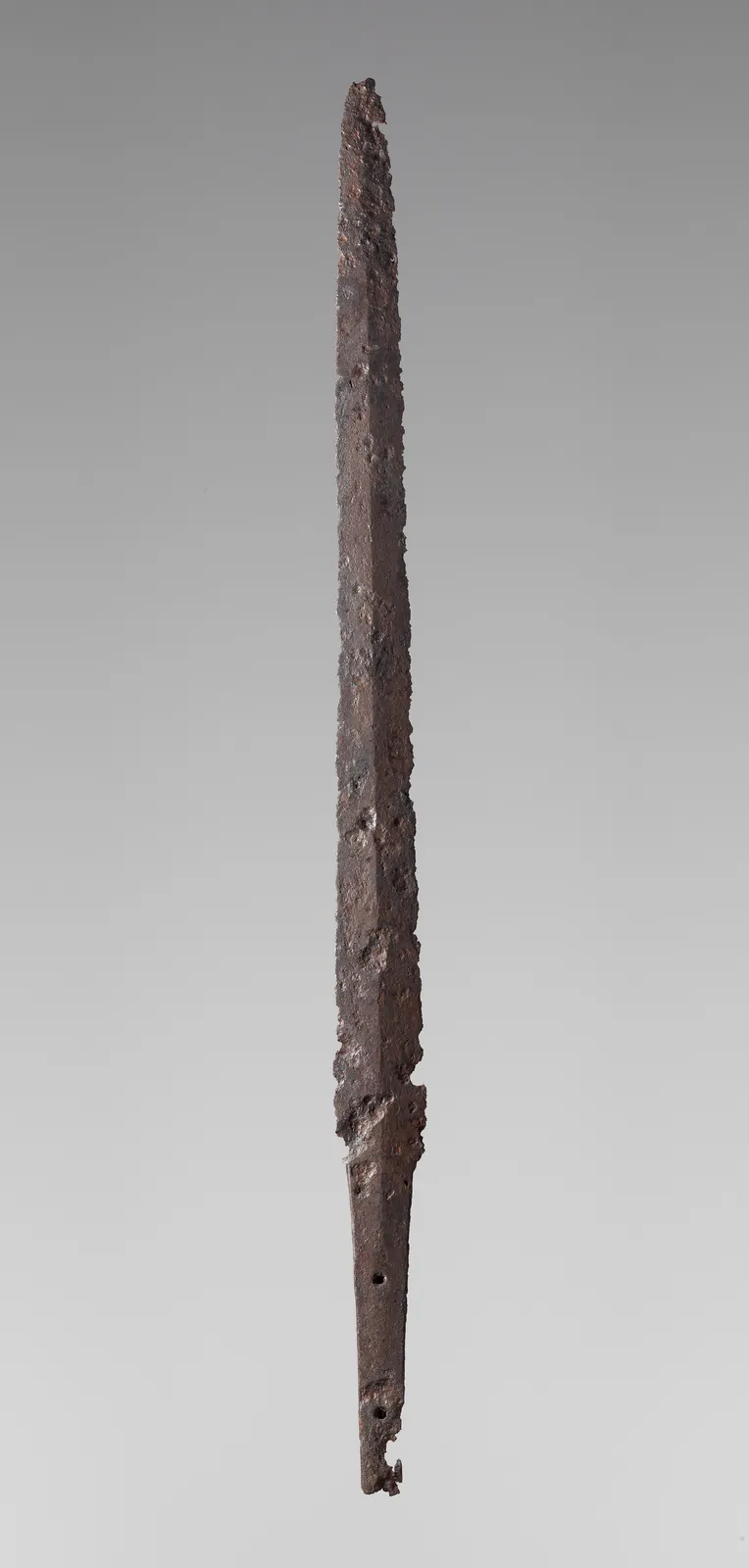
The photograph shows straight swords from Japan's Kofun period in the sixth century. Before the Kojiki was written, the swords carried by heroes of myth were straight like these rather than curved.
The photograph shows Sword with Scabbard Mounts(Japanese, 6th century), a real museum object that evokes the legendary artifact.
布都御魂
A single stroke revived soldiers felled by poisonous vapors.
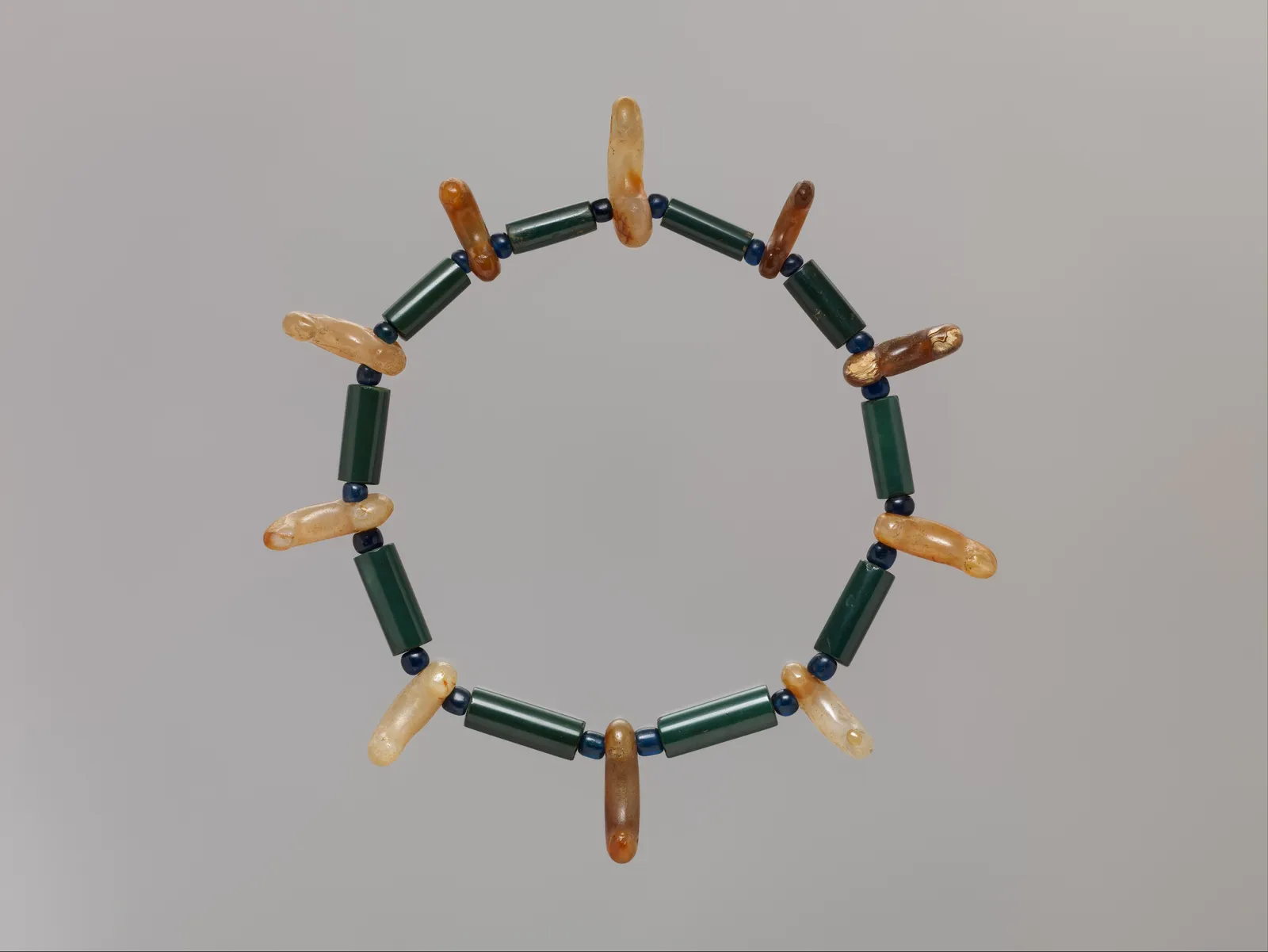
八尺瓊勾玉
One of the three sacred treasures, holding the spirit of the gods and the legitimacy of the imperial line.