Japanese
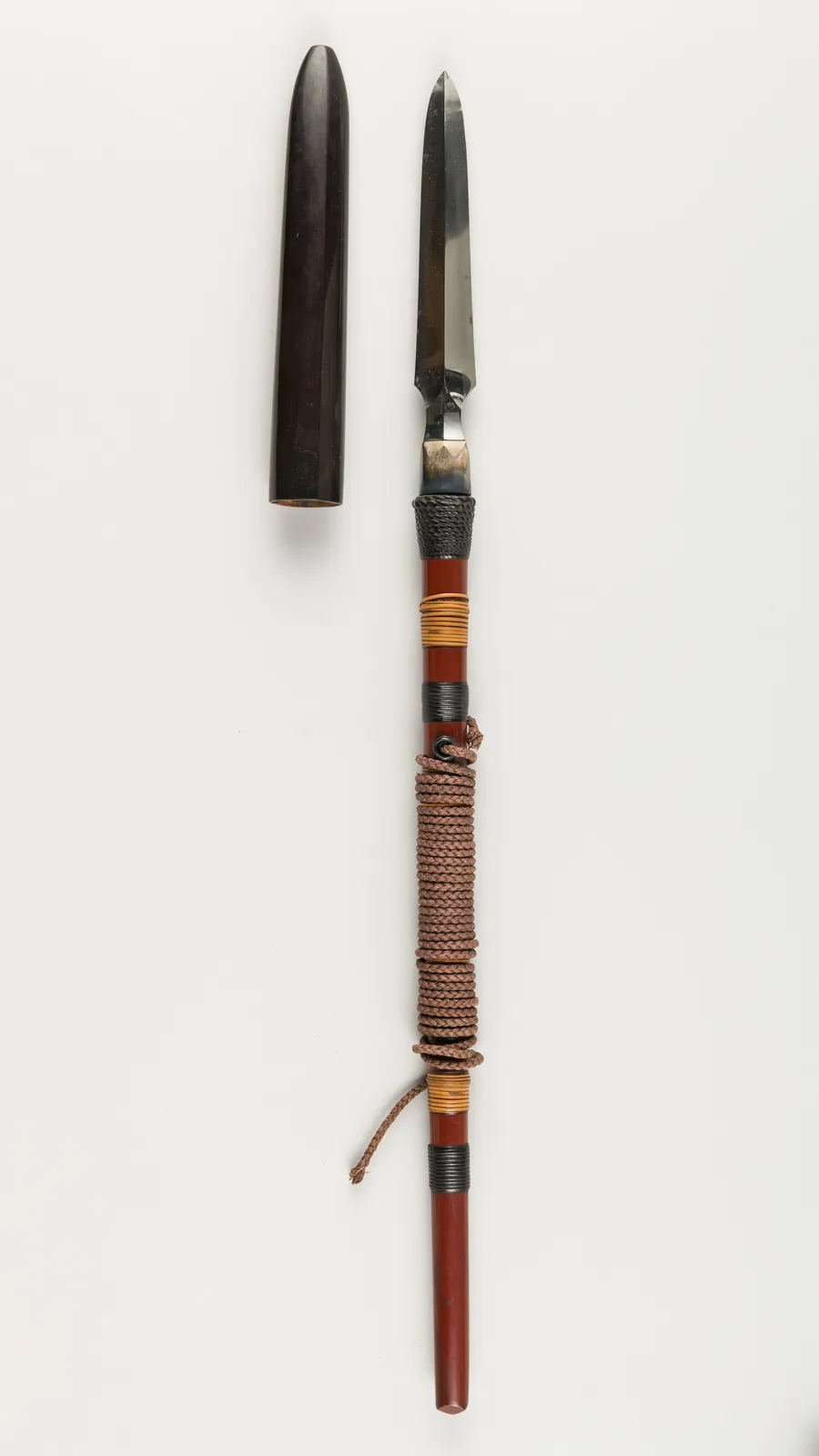
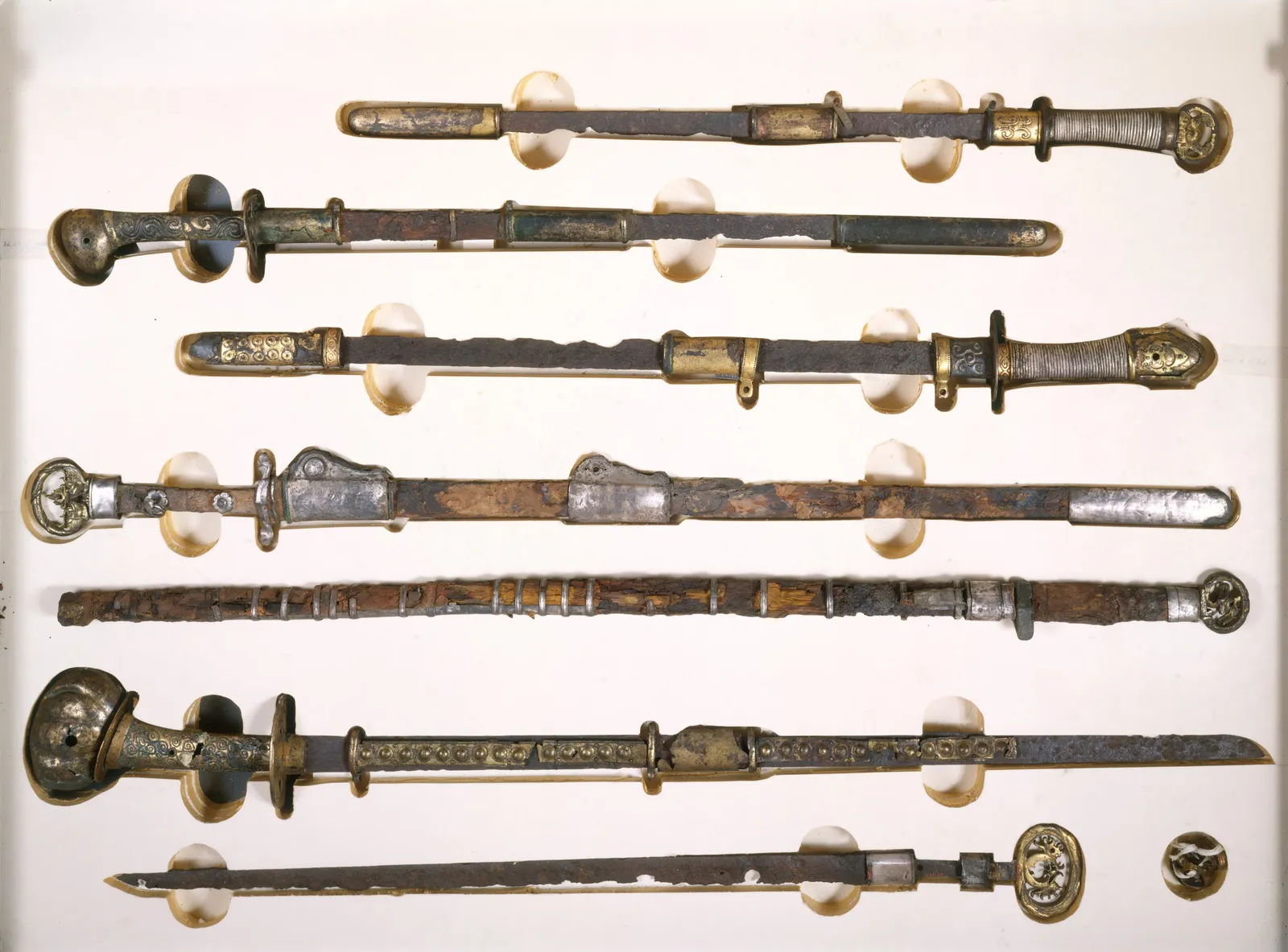
Kusanagi-no-Tsurugi
草薙剣 (Kusanagi-no-Tsurugi)
Cuts the grass by itself and turns back fire.
WeaponFirst recorded 712
Loading artifact…
Photograph: The back of a round Japanese bronze mirror of the fourth to fifth century. Squares, concentric circles, small bosses and animal designs ring a central knob, under a blue-green patina.
Focus the photograph, then use the arrow keys to pan and the plus and minus keys to zoom. The buttons at the lower left also move it. Press a numbered button on the photograph to zoom to that note.
八咫鏡 (Yata-no-Kagami)
Calls back the sun that hid in a cave.
Hurt by Susanoo's violence, the sun goddess Amaterasu entered the rock cave Ama-no-Iwato in heaven and shut the door. The world sank into darkness and every sort of calamity arose.
The gods gathered before the cave and made a plan. Ishikoridome made a mirror, Tamanooya strung curved beads and hung them on a tree. The goddess Ame-no-Uzume danced on an upturned tub and the gods roared with laughter.
Curious about the merriment outside, Amaterasu opened the door a crack. The gods held up the mirror and told her a goddess more noble than she had come. At the moment she leaned out, drawn by her own reflected light, a strong god took her hand and pulled her out, and the sun shone on the world again. The mirror is said to have later been enshrined at Ise.
The photograph shows the back of a bronze mirror from Japan's Kofun period in the fourth to fifth century, carved after Han Chinese mirrors with immortals, beasts and the cosmos. Yata-no-Kagami is thought to have resembled mirrors of this era.
The photograph shows Mirror (Shinjūkyō) Based on Han Dynasty Prototype with Cosmological Design(Japan, 4th–5th century), a real museum object that evokes the legendary artifact.
草薙剣 (Kusanagi-no-Tsurugi)
Cuts the grass by itself and turns back fire.
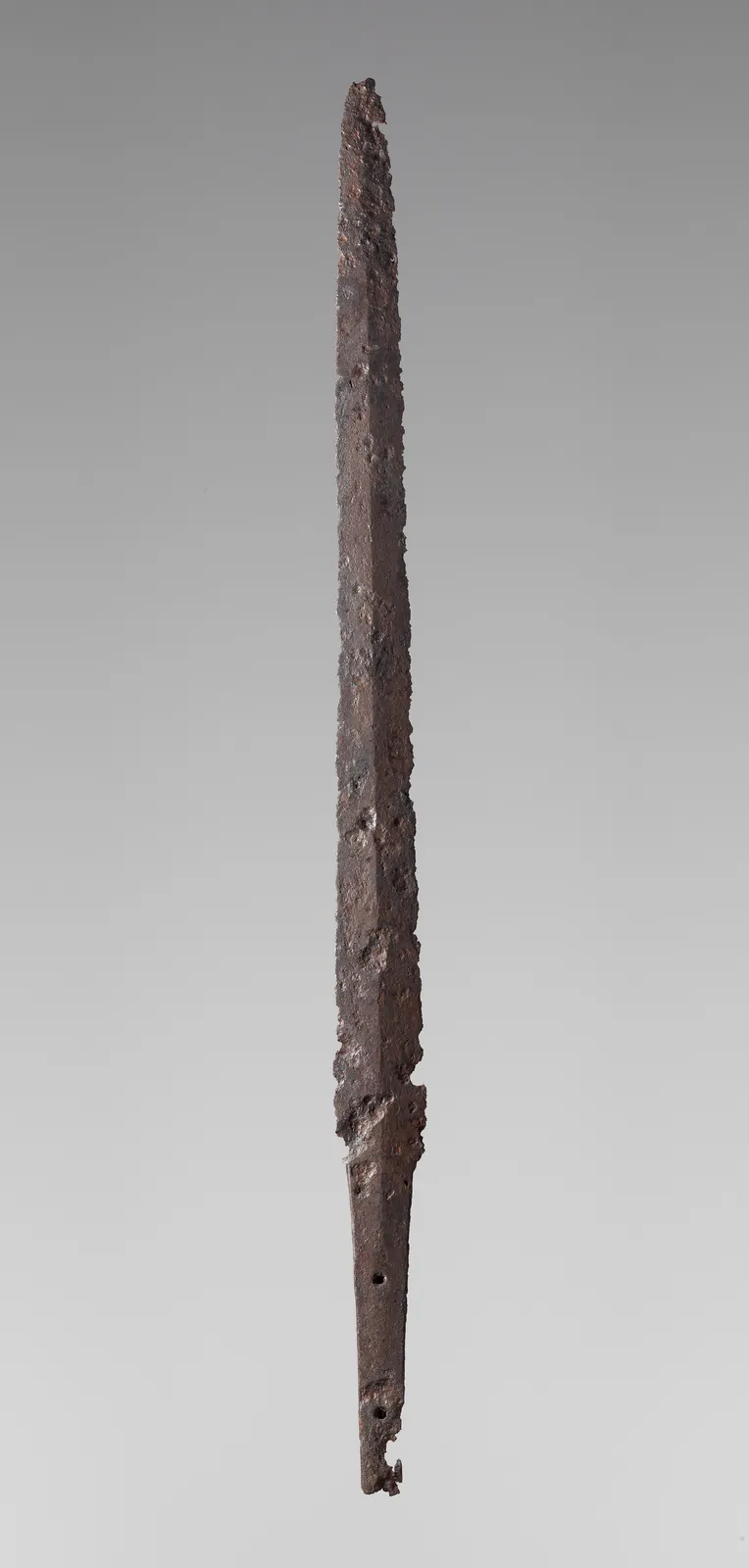
布都御魂
A single stroke revived soldiers felled by poisonous vapors.
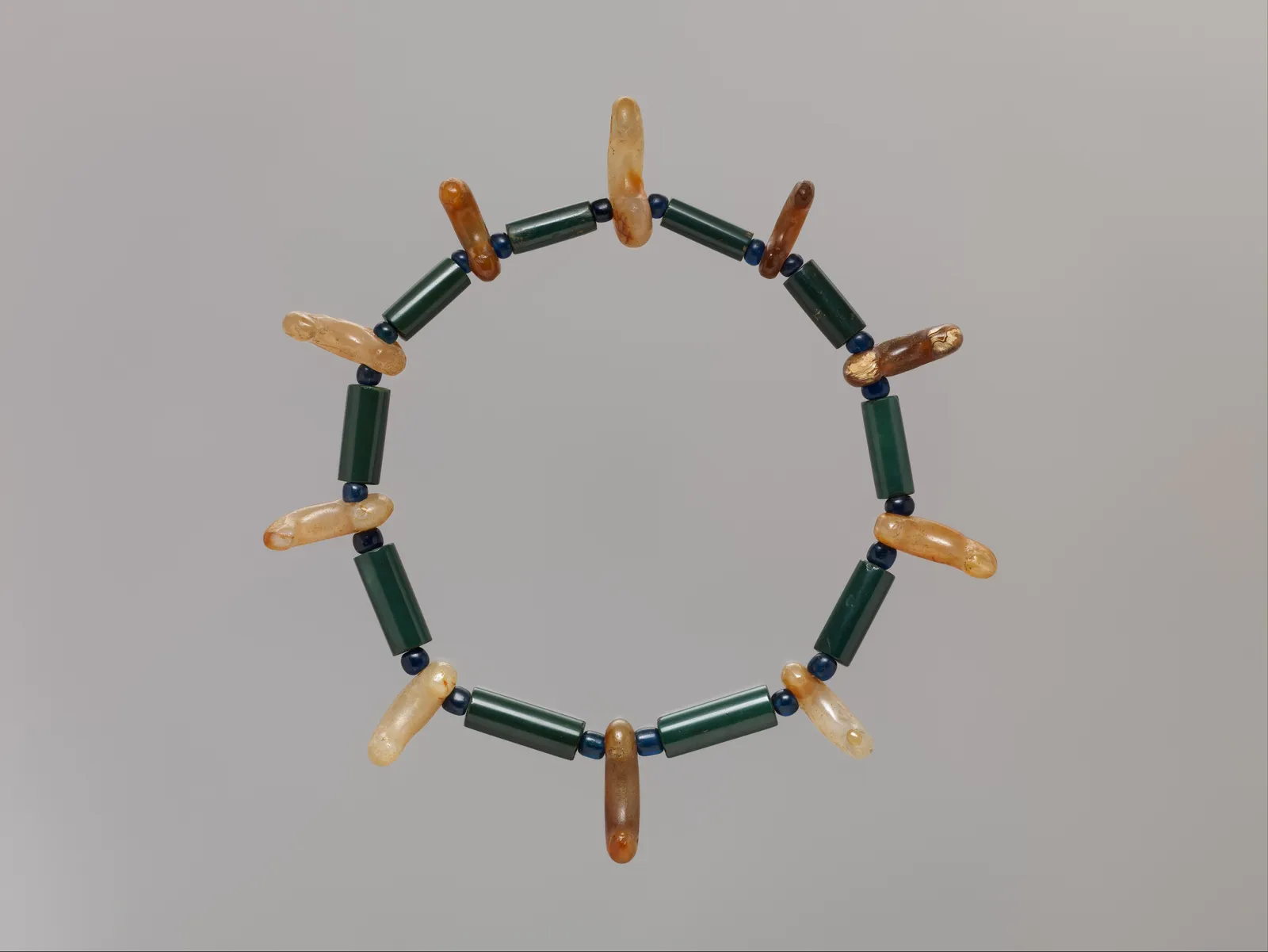
八尺瓊勾玉
One of the three sacred treasures, holding the spirit of the gods and the legitimacy of the imperial line.