Arthurian & Chivalric
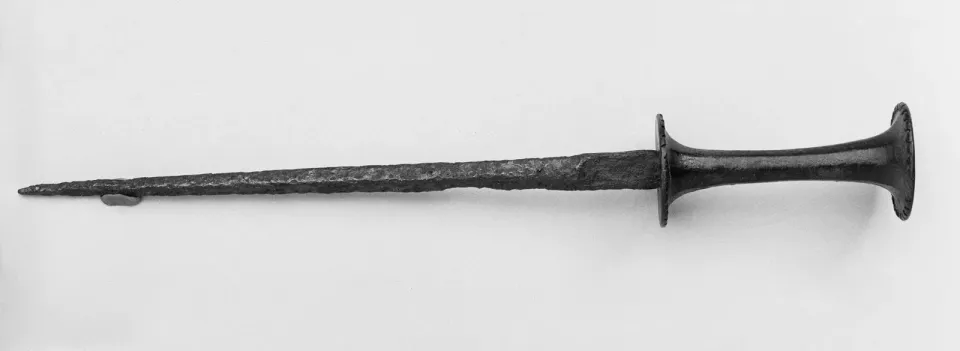
Excalibur
Excalibur
Cuts through enemy armor, and whoever wears its scabbard does not bleed.
WeaponFirst recorded 1136
Loading artifact…
Photograph: Plate 11 of Francisco Goya's print series La Tauromaquia, El Cid Campeador Spearing Another Bull (1816 edition, printed 1876). A knight in a plumed helmet drives a lance down from the saddle while a bull charges the horse with lowered head.
Focus the photograph, then use the arrow keys to pan and the plus and minus keys to zoom. The buttons at the lower left also move it. Press a numbered button on the photograph to zoom to that note.
Babieca
Legend says that even after El Cid died, Babieca carried him out of the city gates and put the enemy to flight.
In The Poem of the Cid, after taking Valencia, El Cid welcomes his wife Jimena and their daughters by riding his warhorse Babieca before them. Babieca is a horse named together with the Cid's deeds, and this poem is the first to record its name.
Later chronicles and legends added more. When the Cid died in 1099, it is said, Jimena had his body armored and set on Babieca and sent out of the city gates, and the Moorish army, believing the Cid had returned alive, fled.
Legend also says Babieca let no one ride him after the Cid's death and was buried at the monastery of San Pedro de Cardeña near Burgos. The real El Cid was an eleventh-century Castilian knight who served Christian and Muslim kings alike.
The photograph shows Bullfights: El Cid Campeador Spearing Another Bull(Spain, 1816, printed 1876), a real museum object that evokes the legendary artifact.
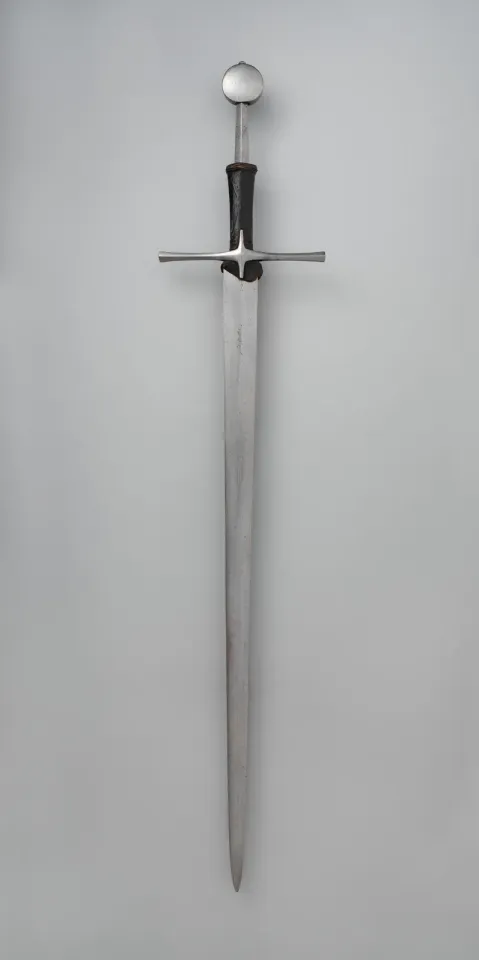
Excalibur
Cuts through enemy armor, and whoever wears its scabbard does not bleed.
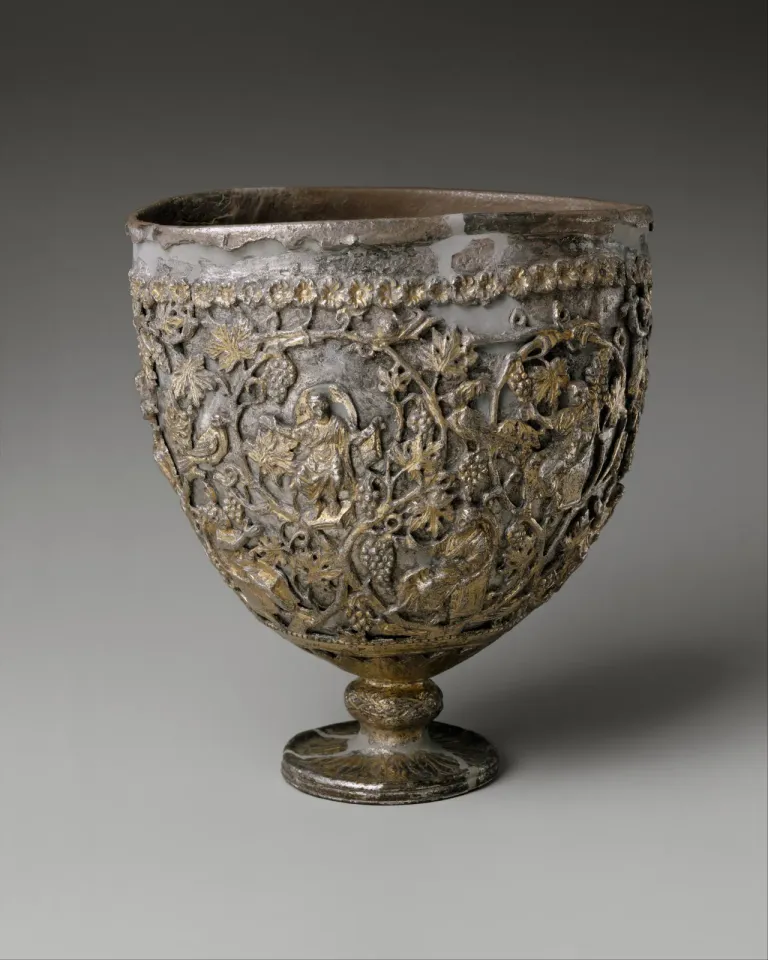
Holy Grail
Grants those who see it the food they desire, and shows itself only to the pure knight.
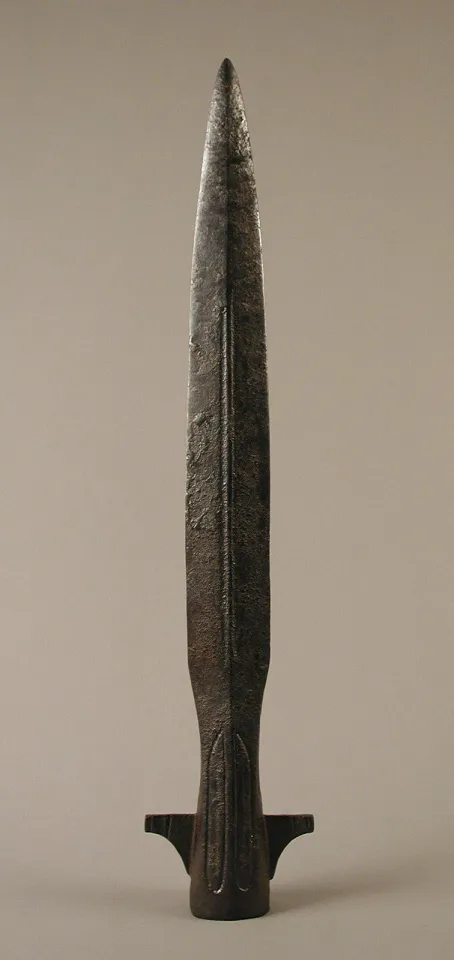
Rhongomyniad
Long and broad-bladed, said to thirst for enemy blood.