Arthurian & Chivalric
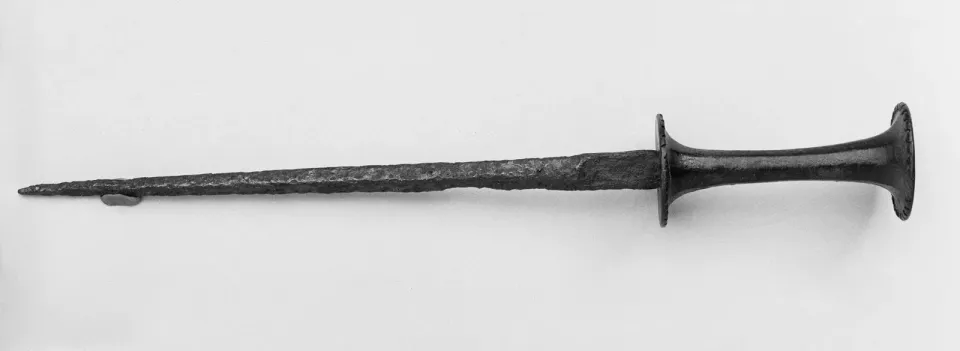
Excalibur
Excalibur
Cuts through enemy armor, and whoever wears its scabbard does not bleed.
WeaponFirst recorded 1136
Loading artifact…
Photograph: The front of a pilgrim's flask for holy oil, cast in tin and lead in Palestine about 600, in the early Byzantine period. Below a narrow neck, the flat round body bears the Crucifixion, with a Greek inscription around the edge.
Focus the photograph, then use the arrow keys to pan and the plus and minus keys to zoom. The buttons at the lower left also move it. Press a numbered button on the photograph to zoom to that note.
Baume de Fierabras
Drunk or applied, it healed any wound at once.
The hero of the twelfth-century French chanson de geste Fierabras is the giant Saracen prince Fierabras. Sacking Rome, he carried off the balm said to have been used to embalm the body of Jesus. Whoever drank it or put it on a wound was healed at once.
When Charlemagne's knight Oliver fought Fierabras in single combat, Fierabras healed his wounds with the balm as they fought. Only after Oliver seized the balm and threw it into the river could he win. Fierabras became a Christian and one of Charlemagne's knights.
The balm won fame again in Cervantes' Don Quixote. Don Quixote brewed his own 'balm of Fierabras' from oil, wine, salt and rosemary, drank it and was violently ill, and Sancho, who drank it too, fared even worse.
The photograph shows Pilgrim's Ampulla with the Crucifixion (front)(Byzantium, Palestine, early Byzantine period, early 7th Century, c. 600), a real museum object that evokes the legendary artifact.
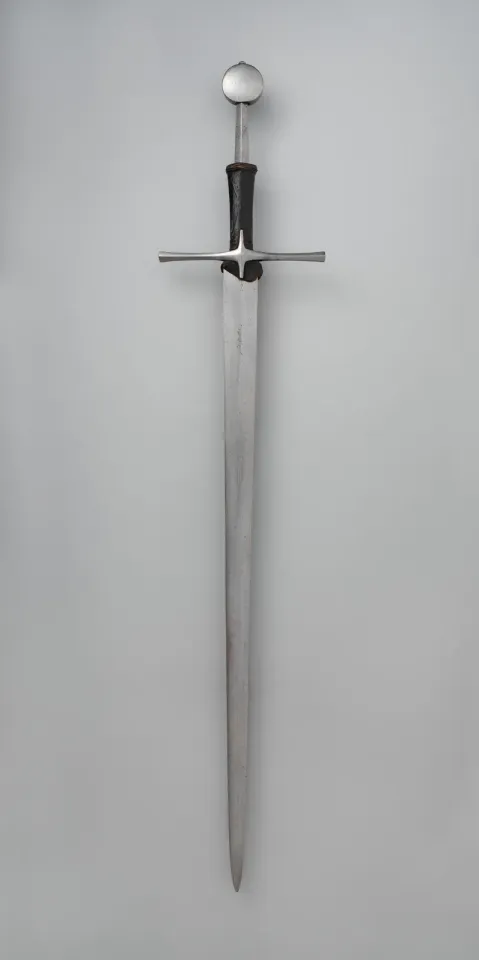
Excalibur
Cuts through enemy armor, and whoever wears its scabbard does not bleed.
Holy Grail
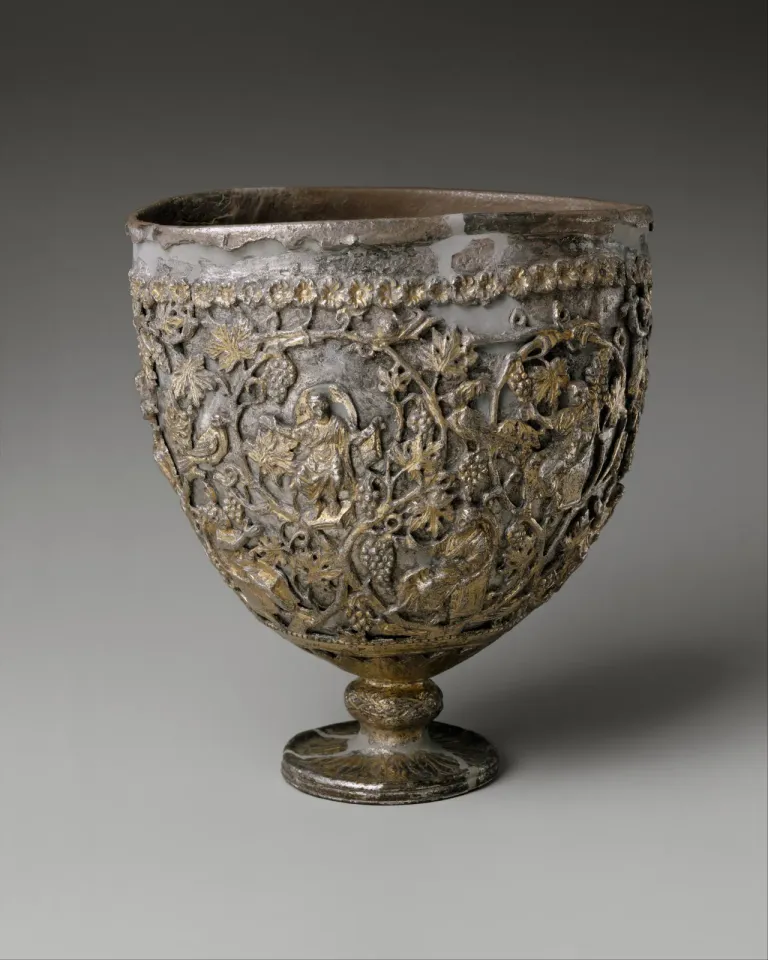
Grants those who see it the food they desire, and shows itself only to the pure knight.
Rhongomyniad
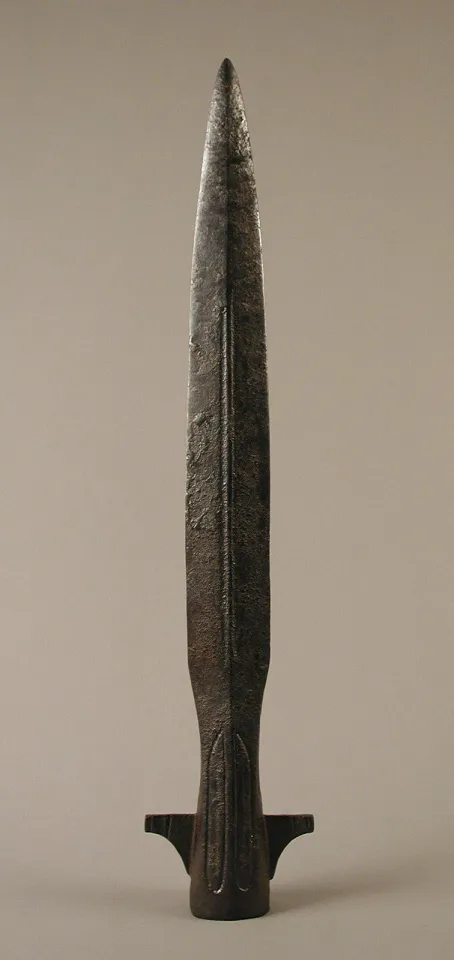
Long and broad-bladed, said to thirst for enemy blood.