Arthurian & Chivalric
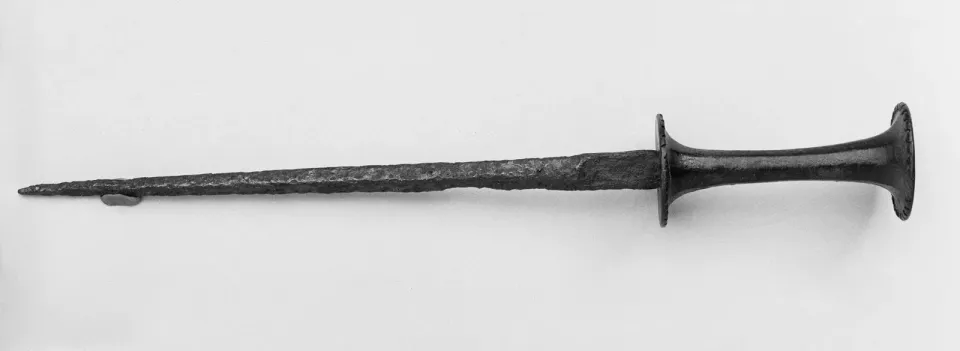
Excalibur
Excalibur
Cuts through enemy armor, and whoever wears its scabbard does not bleed.
WeaponFirst recorded 1136
Loading artifact…
Photograph: A bronze horse made by the Florentine sculptor Giambologna around 1587–91. The dark brown horse walks with its head bowed and one foreleg and one hind leg raised, standing on an oval base.
Focus the photograph, then use the arrow keys to pan and the plus and minus keys to zoom. The buttons at the lower left also move it. Press a numbered button on the photograph to zoom to that note.
Bayard
His back lengthens to fit his riders, so he can carry all four brothers at once and still outrun any horse.
Renaud de Montauban was the eldest of the four sons of Duke Aymon. During a game of chess with Charlemagne's nephew a quarrel broke out, and Renaud killed him with the chessboard; from then on the four brothers were hunted by the emperor. What protected them was Bayard, a horse found for them by their cousin, the enchanter Maugis.
Bayard's back grew longer to fit his riders, so he could carry all four brothers at once and still run faster than any horse. He understood human speech and could leap across a valley in a single bound. The "Bayard Rock" that towers beside the Meuse at Dinant in Belgium is said to have been split by his hoof as he leaped.
After a long war, Renaud gave Bayard to the emperor as the price of peace. Charlemagne had a millstone tied to Bayard's neck and threw him into the Meuse, but Bayard broke the stone with his hooves, swam ashore and fled into the Ardennes forest. They say he still runs somewhere in those woods.
The photograph shows Trotting horse(Giambologna, probably 1587–91), a real museum object that evokes the legendary artifact.
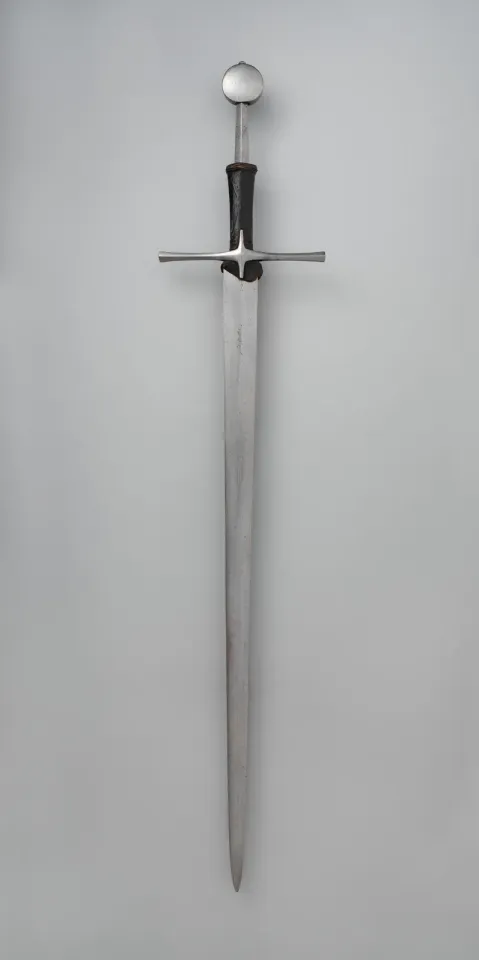
Excalibur
Cuts through enemy armor, and whoever wears its scabbard does not bleed.
Holy Grail
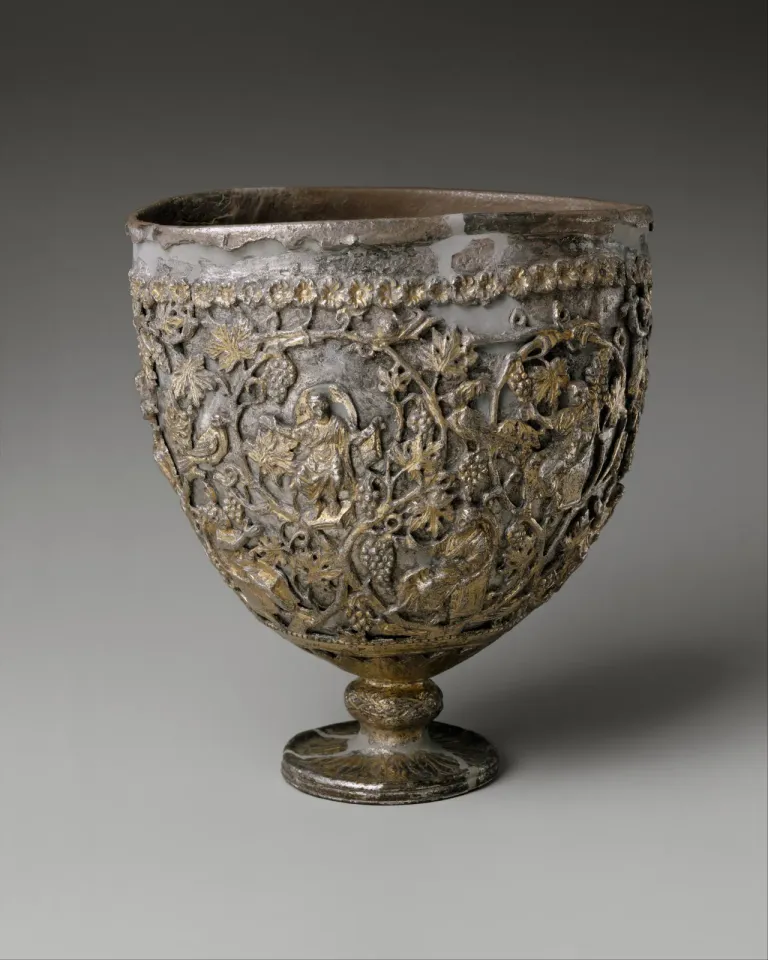
Grants those who see it the food they desire, and shows itself only to the pure knight.
Rhongomyniad
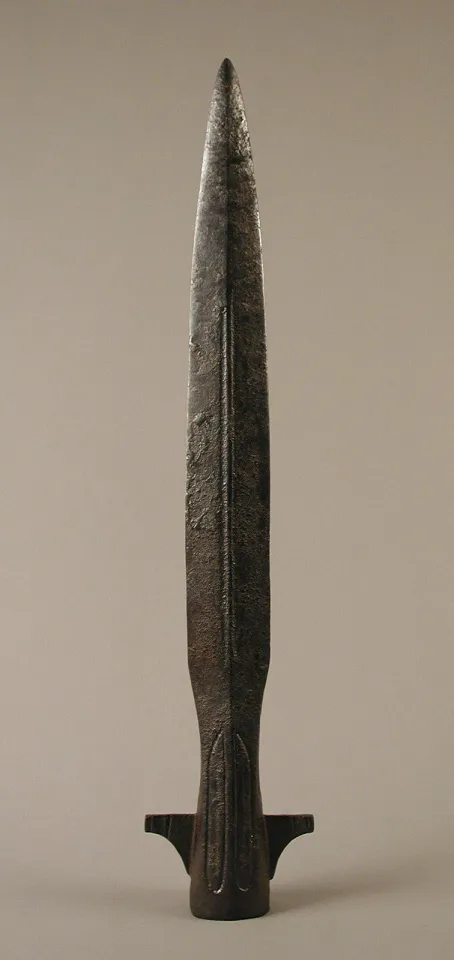
Long and broad-bladed, said to thirst for enemy blood.