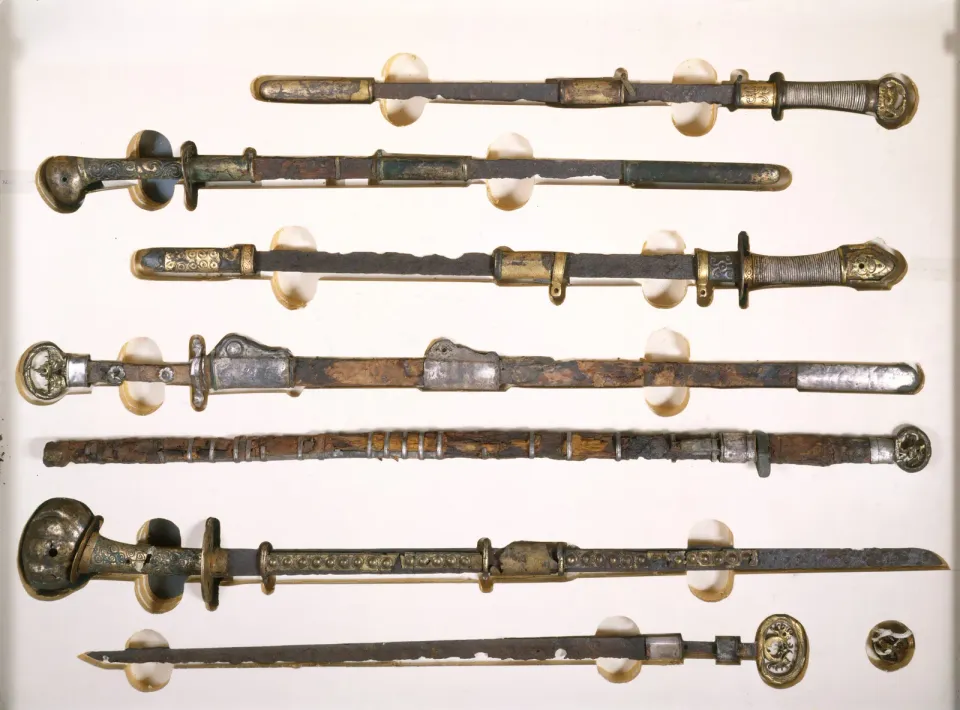
Japanese
Kusanagi-no-Tsurugi
草薙剣 (Kusanagi-no-Tsurugi)
Cuts the grass by itself and turns back fire.
WeaponFirst recorded 712
Loading artifact…
Photograph: A gilt-bronze begging bowl from Heian-period Japan, around the tenth century. The outside of the round bowl, whose mouth curves slightly inward, is engraved with fine flowers and vines, and the gilding is worn in places.
Focus the photograph, then use the arrow keys to pan and the plus and minus keys to zoom. The buttons at the lower left also move it. Press a numbered button on the photograph to zoom to that note.
仏の御石の鉢
The true bowl the Buddha used was said to give off a soft light.
An old bamboo cutter found a girl no bigger than a finger inside a shining stalk of bamboo. In three months she grew into a beautiful young woman and was called Kaguya-hime, "the shining princess," and five nobles wooed her persistently. The princess told each of them she would marry him if he brought her a treasure not to be found in this world.
The task she set Prince Ishitsukuri was the Buddha's stone begging bowl, said to be in Tenjiku, that is, India. A legend says that when the Buddha attained enlightenment, the four heavenly kings each offered him a stone bowl, and the Buddha stacked the four into one. The true bowl was said to give off a soft light.
Not daring to go all the way to India, the prince waited about three years and then presented a soot-blackened old bowl from a mountain temple in Yamato, wrapped in a brocade bag. Seeing that it gave off no light at all, the princess sent it back, and the prince threw the bowl away at her gate and went on pleading. The Tale of the Bamboo Cutter jokes that a Japanese expression for shamelessness comes from this.
The photograph shows Alms Bowl(Japan, Heian period (794–1185), c. 900s), a real museum object that evokes the legendary artifact.
草薙剣 (Kusanagi-no-Tsurugi)
Cuts the grass by itself and turns back fire.
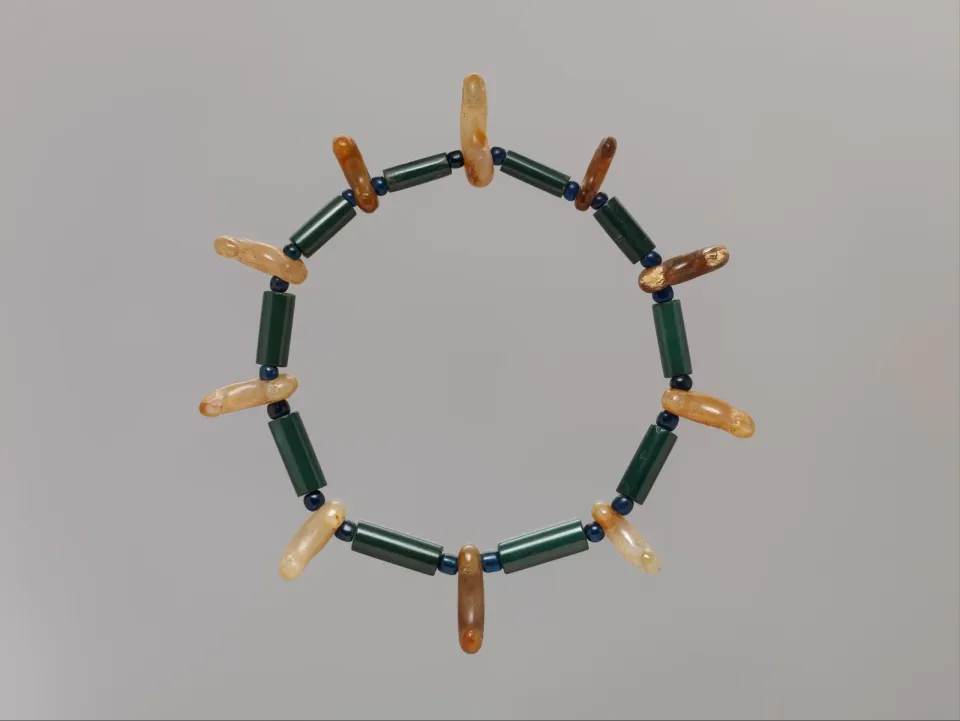
八尺瓊勾玉
One of the three sacred treasures, holding the spirit of the gods and the legitimacy of the imperial line.
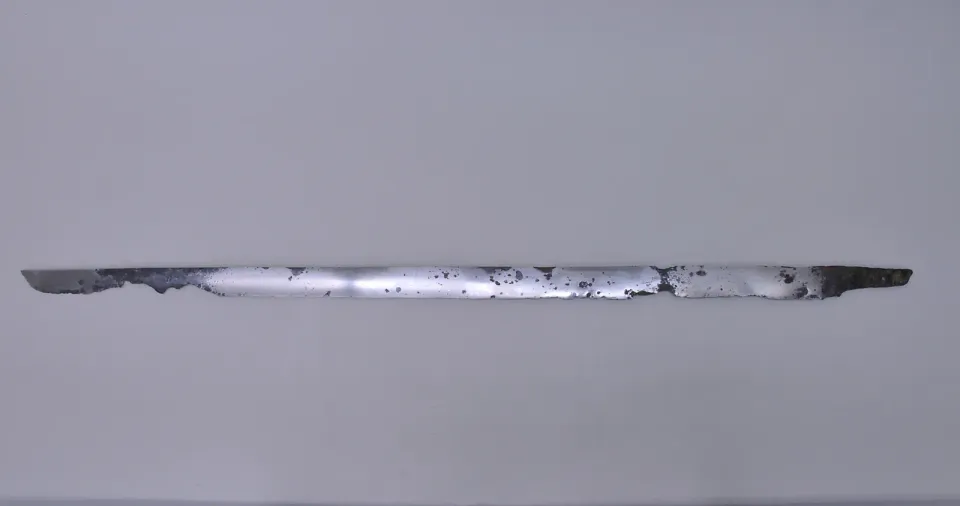
十拳剣
A great sword ten fists long, which cut the eight-headed serpent to pieces.
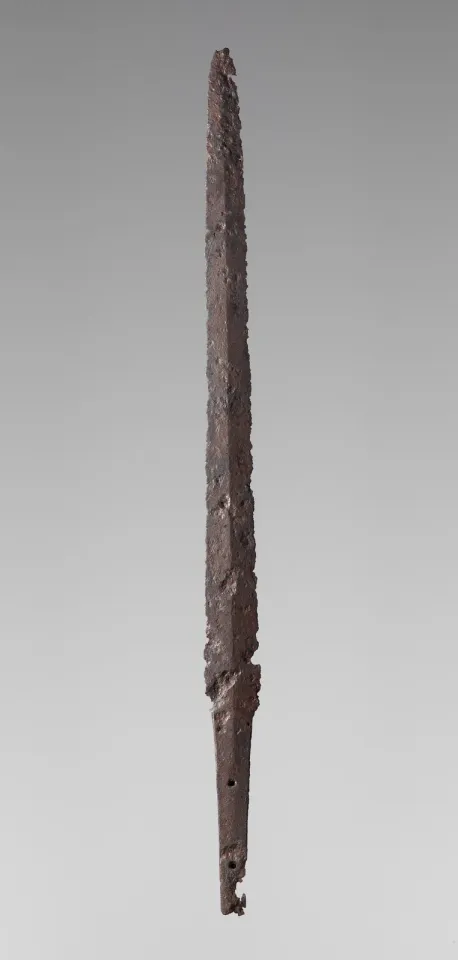
布都御魂
A single stroke revived soldiers felled by poisonous vapors.