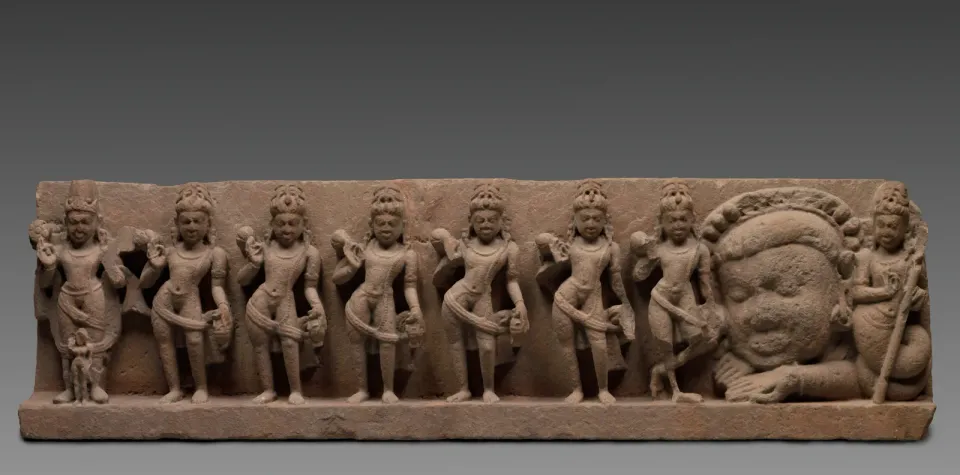
Indian
Soma
Soma
The hymns sing that whoever drinks it is filled with strength and inspiration and becomes immortal.
ElixirFirst recorded c. 1200 BCE
Loading artifact…
Photograph: Ravana Shaking Mount Kailasa, a sandstone relief carved in Madhya Pradesh, central India, in the eighth century. Above, Shiva and Parvati sit side by side on the mountain; below, many-headed, many-armed Ravana lifts and shakes the mountain, surrounded by densely carved attendants.
Focus the photograph, then use the arrow keys to pan and the plus and minus keys to zoom. The buttons at the lower left also move it. Press a numbered button on the photograph to zoom to that note.
Candrahāsa
The sword Shiva granted Ravana; its name means 'laughter of the moon.'
According to the last book of the Ramayana, Ravana, the demon king of Lanka, defeated his half-brother Kubera, seized his flying chariot Pushpaka and tried to pass over Mount Kailasa. When the mountain blocked the chariot, Ravana in his rage lifted the whole mountain and shook it.
Shiva, who sat on the mountain, pressed it down with one toe, and Ravana, his arms pinned beneath it, roared aloud. Because that roar shook the world, he got the name Ravana, 'the one who roars.' Ravana sang Shiva's praises for a long time.
Shiva released him and granted him the sword Chandrahasa. The name, 'laughter of the moon,' is taken to refer to a blade curved like a crescent moon. Ravana fought many battles with this sword, but in the end, for abducting Sita, he fell to Rama's arrows.
The photograph shows Ravana Shaking Mount Kailasa(Central India, Madhya Pradesh, Chandela Dynasty, 8th century, 700s), a real museum object that evokes the legendary artifact.
Soma
The hymns sing that whoever drinks it is filled with strength and inspiration and becomes immortal.
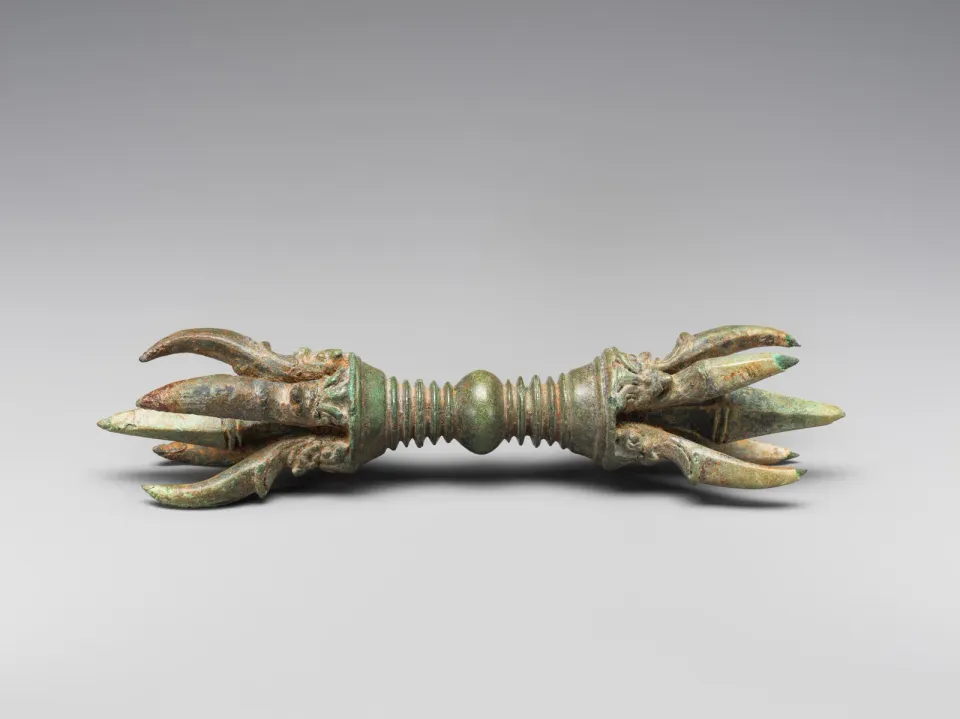
Vajra (वज्र)
Unbreakable as diamond and striking like lightning. It slew Vritra, the serpent of drought.
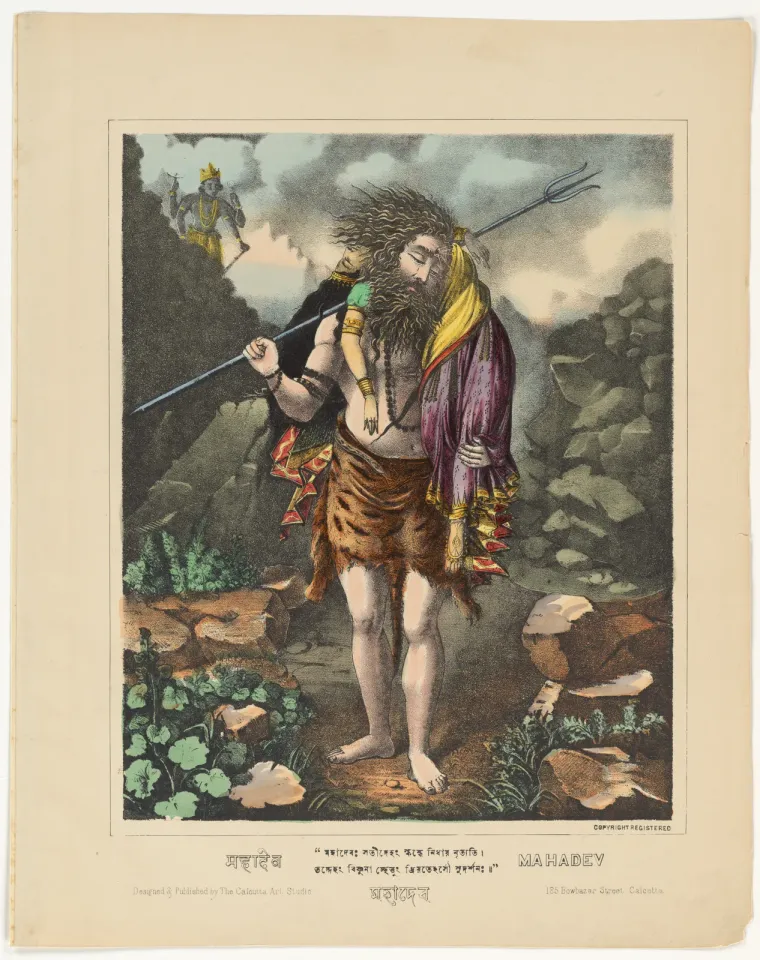
Trishula (त्रिशूल)
Its three prongs govern creation, preservation and destruction, or past, present and future.