Arthurian & Chivalric
Excalibur
Excalibur
Cuts through enemy armor, and whoever wears its scabbard does not bleed.
WeaponFirst recorded 1136
Loading artifact…
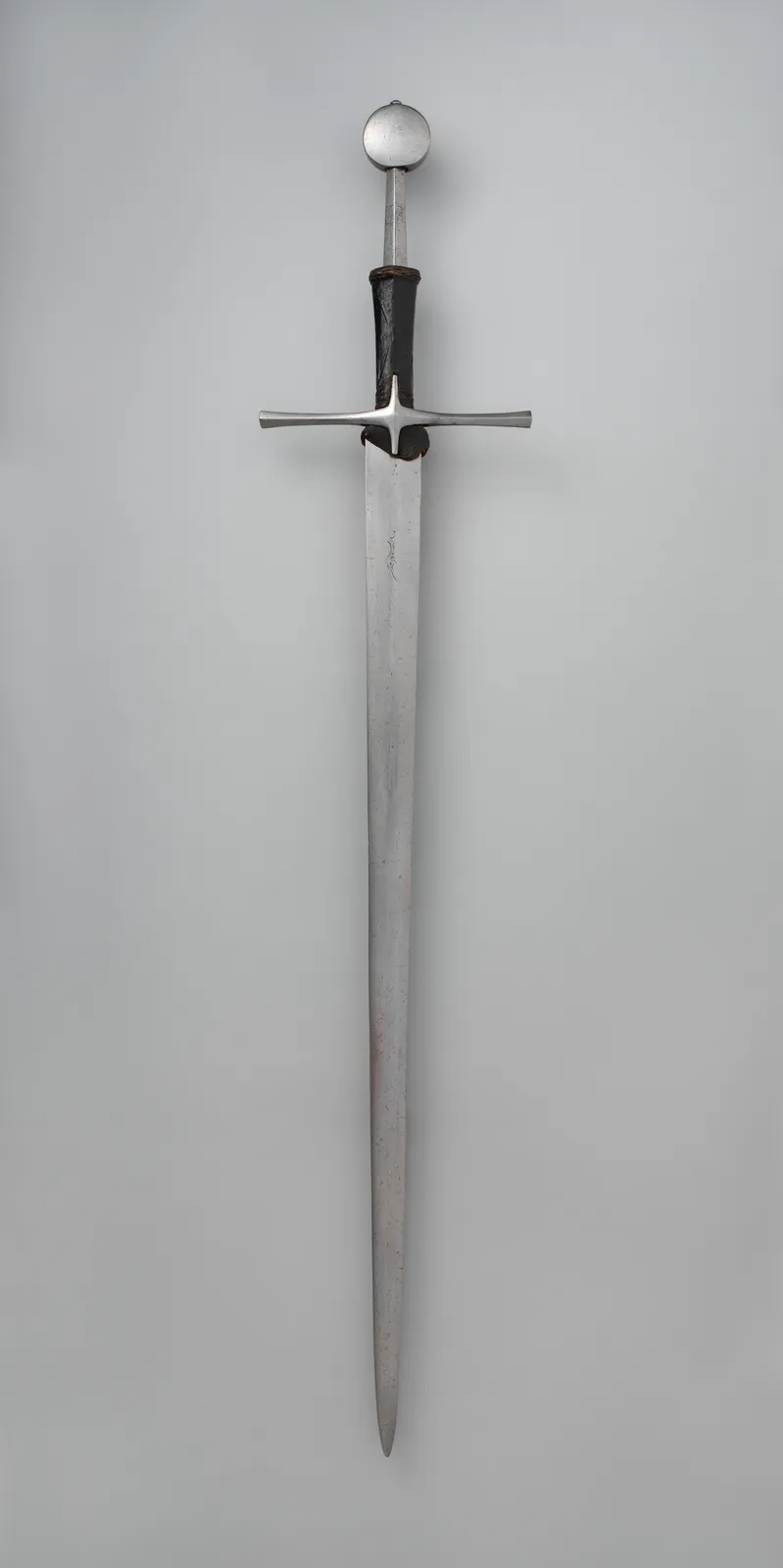
Photograph: An Italian two-handed sword of the fifteenth to sixteenth century with a long straight blade, a wide cross guard with a ring-shaped hand guard, a black grip and a round pommel.
Focus the photograph, then use the arrow keys to pan and the plus and minus keys to zoom. The buttons at the lower left also move it. Press a numbered button on the photograph to zoom to that note.
Clarent
A sword of peace used to dub knights, which became the blade that felled a king.
The late fourteenth-century English poem known as the Alliterative Morte Arthure says Arthur had another sword besides Excalibur. Clarent was a "sword of peace" used for dubbing knights and at feasts, and it was carefully stored in the treasury at Wallingford Castle.
While Arthur was away campaigning against Rome, his nephew Mordred, left in charge of the kingdom, seized the throne and took this sword as well. When the two met at the battle of Camlann, Mordred struck Arthur with Clarent, and Arthur fell from the wound.
That a sword made for peace became the sword that killed the king is counted among the bitterest touches at the end of the Arthurian story.
The photograph shows Two-Handed Sword(Italian, 15th–16th century), a real museum object that evokes the legendary artifact.
Excalibur
Cuts through enemy armor, and whoever wears its scabbard does not bleed.
Holy Grail
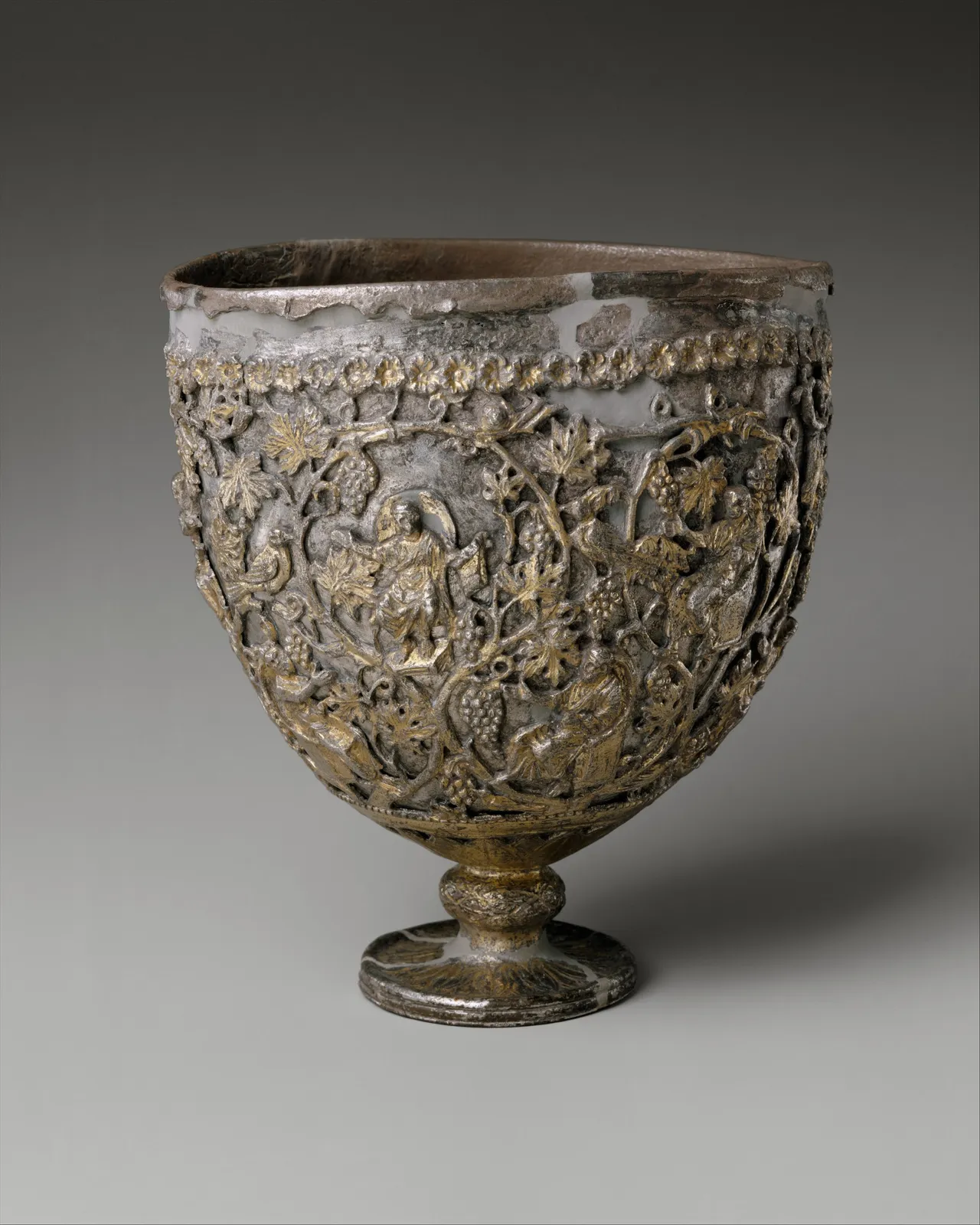
Grants those who see it the food they desire, and shows itself only to the pure knight.