Indian
Soma
Soma
The hymns sing that whoever drinks it is filled with strength and inspiration and becomes immortal.
ElixirFirst recorded c. 1200 BCE
Loading artifact…
Photograph: A page from the Razmnama, the Persian Mahabharata, painted in Mughal India in 1598: Yaja and Upayaja perform a sacrifice for Dhrishtadyumna to emerge from the fire. From the flames of a roofed altar an armored youth appears, with Brahmins around and people gathered below.
Focus the photograph, then use the arrow keys to pan and the plus and minus keys to zoom. The buttons at the lower left also move it. Press a numbered button on the photograph to zoom to that note.
Draupadī's Sari
However hard it was pulled, the cloth went on without end and saved Draupadi from disgrace.
In the Mahabharata, Yudhishthira, eldest of the five Pandava brothers, plays at dice with his cousins the Kauravas and loses his kingdom, his wealth, his brothers and himself, and at last stakes and loses their wife Draupadi too.
Duhshasana, second of the Kaurava brothers, drags Draupadi into the gambling hall and tries to strip off her garment before everyone. Draupadi prays to the gods, and the cloth he pulls goes on without end; though the fabric piles up like a mountain, Duhshasana cannot unclothe her. Later versions say that Krishna protected her.
This humiliation became the seed of the great war in which the Pandavas and Kauravas clashed at Kurukshetra. Draupadi is said to have been born from the fire of a sacrifice offered by Drupada, king of Panchala, after her brother Dhrishtadyumna.
The photograph shows Yaja and Upayaja perform a sacrifice for the emergence of Dhrishtadyumna from the fire, from Adi-parva (volume one) of the Razm-nama (Book of Wars) adapted and translated into Persian by Mir Ghiyath al-Din Ali Qazvini, known as Naqib Khan (Persian, d. 1614) from the Sanskrit Mahabharata(Mughal India; made for Abd al-Rahim the Khan Khanan, 1598), a real museum object that evokes the legendary artifact.
Soma
The hymns sing that whoever drinks it is filled with strength and inspiration and becomes immortal.
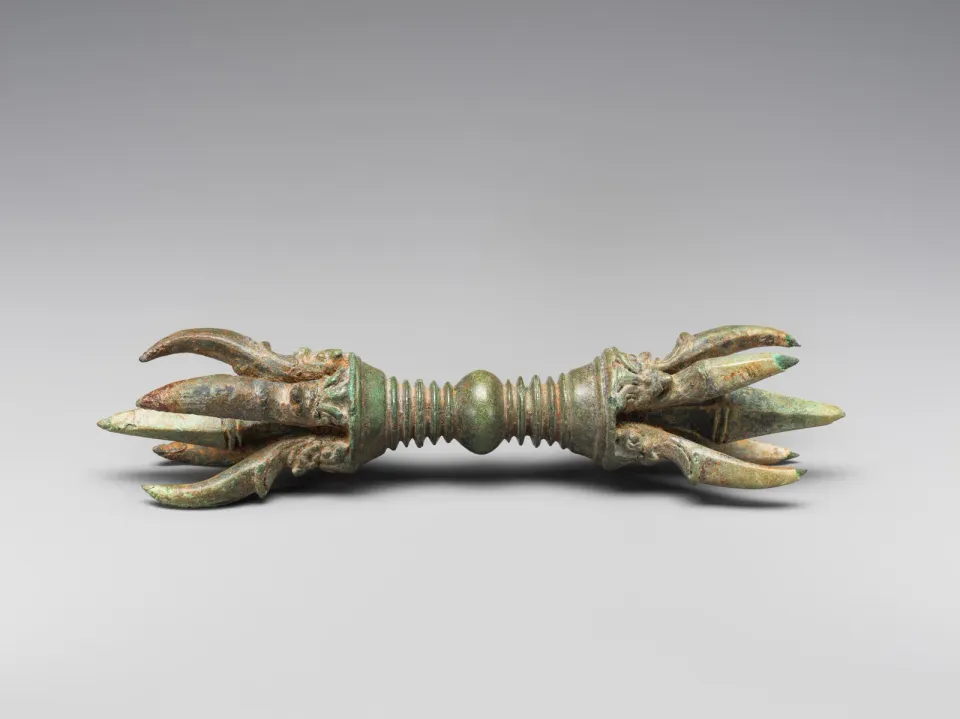
Vajra (वज्र)
Unbreakable as diamond and striking like lightning. It slew Vritra, the serpent of drought.
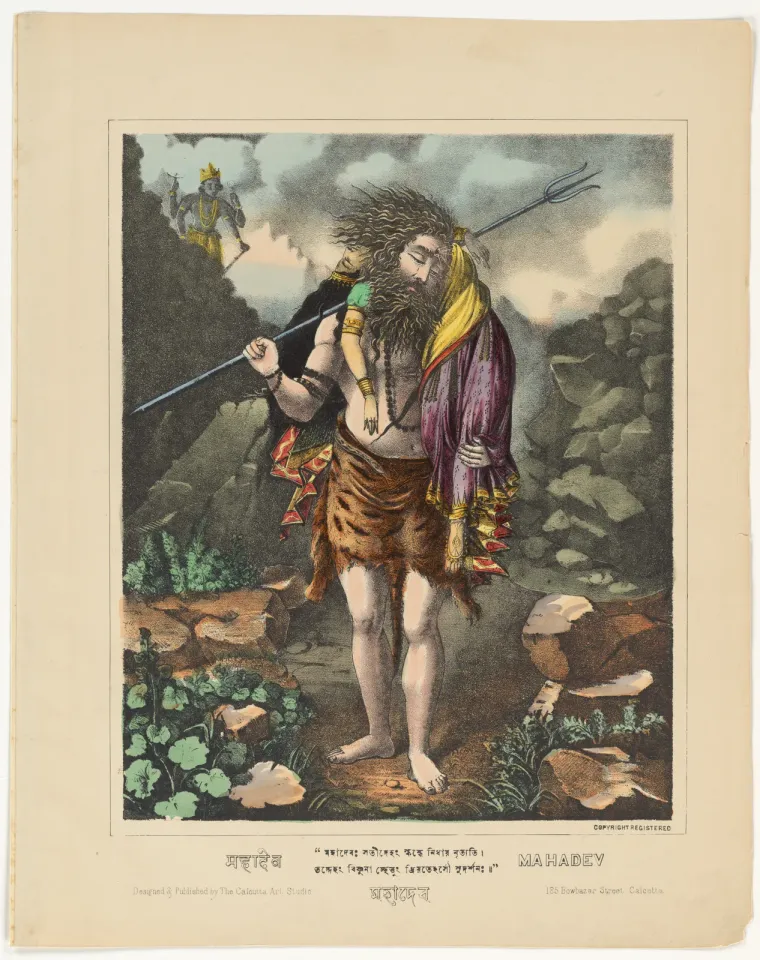
Trishula (त्रिशूल)
Its three prongs govern creation, preservation and destruction, or past, present and future.