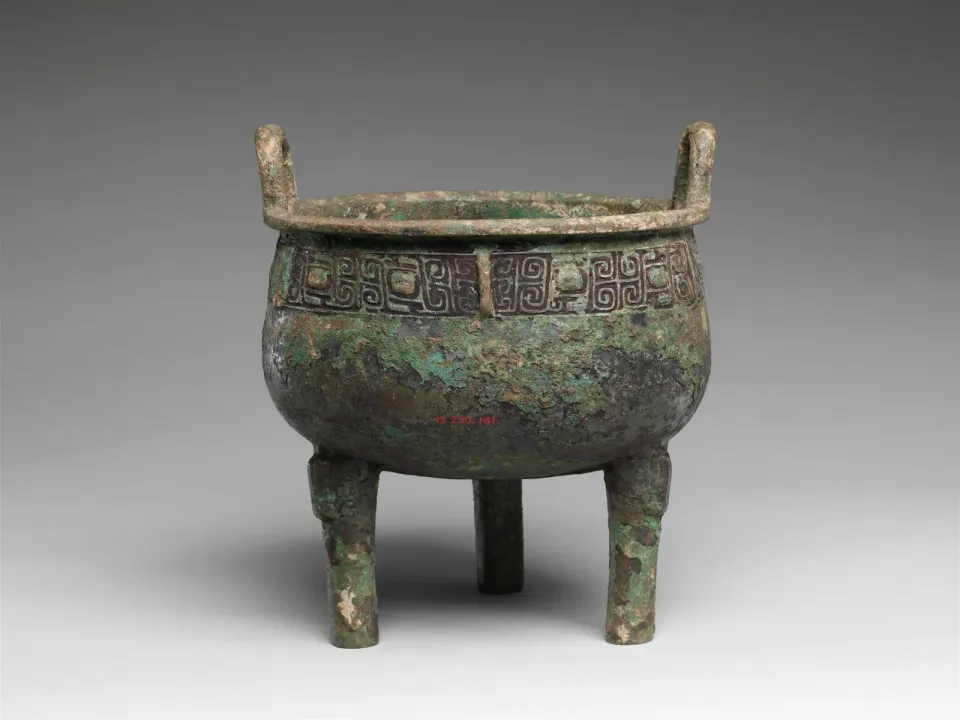
Chinese
Nine Tripod Cauldrons
九鼎
The legitimacy to rule all under heaven. They rest with dynasties of virtue.
VesselFirst recorded c. 400 BCE
Loading artifact…
Photograph: A bronze mirror with the Lunar Palace from the Jin dynasty, twelfth to thirteenth century. The back of the round mirror is cast in relief with a hall among clouds, a large tree, a bridge and waves, and standing figures, around a central knob.
Focus the photograph, then use the arrow keys to pan and the plus and minus keys to zoom. The buttons at the lower left also move it. Press a numbered button on the photograph to zoom to that note.
不死之藥 (姮娥)
Whoever takes it does not die; the body grows light and floats up to the sky.
Yi the archer went to the Queen Mother of the West on Mount Kunlun and obtained a medicine against death. But Yi's wife Chang'e secretly took the elixir and fled to the moon. The Huainanzi, compiled in 139 BCE, records it briefly: "Yi asked the Queen Mother of the West for the elixir of immortality, and Chang'e stole it and fled to the moon."
Zhang Heng of the Eastern Han said that Chang'e entrusted herself to the moon and became a toad, and later stories say she lives alone in the cold palace of the moon, the Guanghan Palace. On the moon live the Jade Rabbit, pounding the elixir of immortality, and Wu Gang, chopping at a cassia tree that grows back whole however often it is cut.
On the Mid-Autumn Festival, the fifteenth day of the eighth lunar month, Chinese people look at the moon and remember Chang'e. Since 2007 China has launched its lunar probes under the name Chang'e.
The photograph shows Octafoil Mirror with Lunar Palace(China, Jin dynasty (1115–1234), early 1100s–mid-1200s), a real museum object that evokes the legendary artifact.
九鼎
The legitimacy to rule all under heaven. They rest with dynasties of virtue.
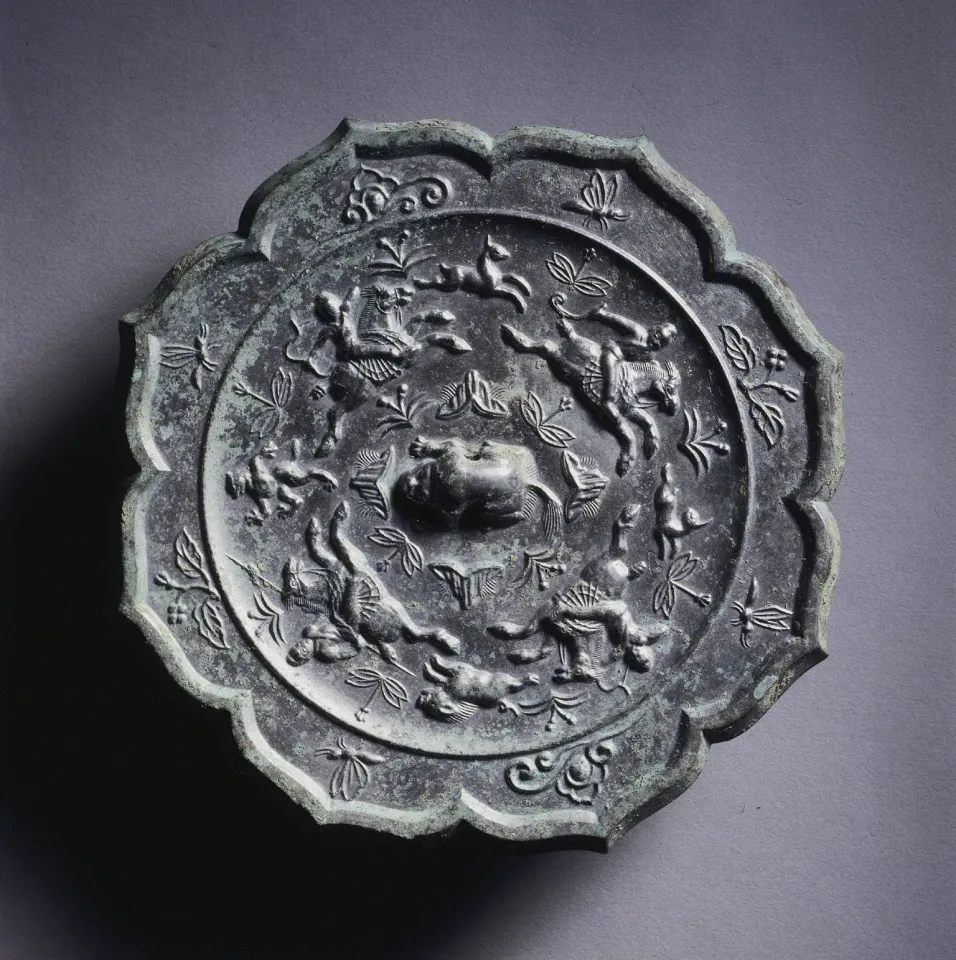
彤弓 (羿)
A red bow strong enough to shoot suns out of the sky.
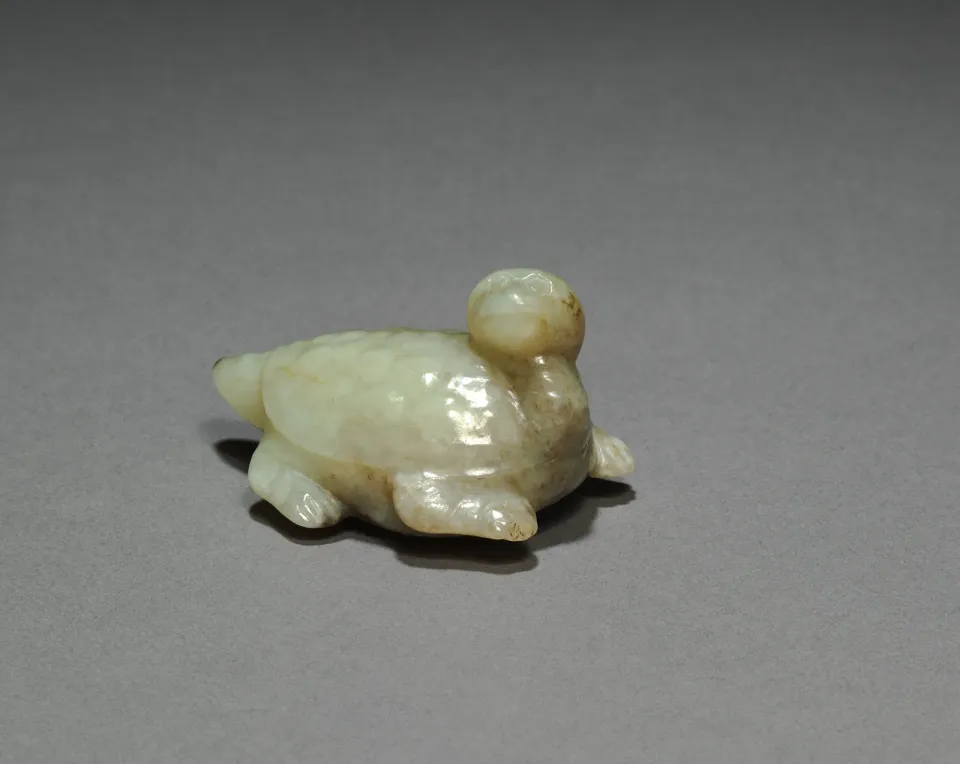
河圖洛書
From the dot patterns on their backs came the eight trigrams and the nine great laws of government.
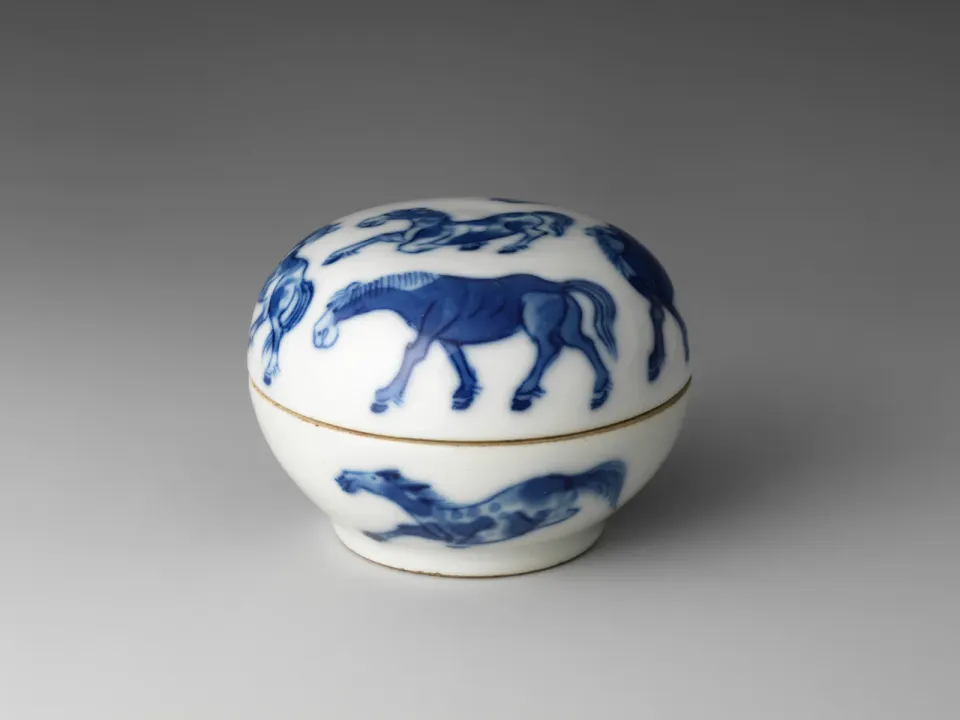
穆王八駿
Eight fine horses that ran a thousand li a day and carried King Mu to the far west.