Chinese
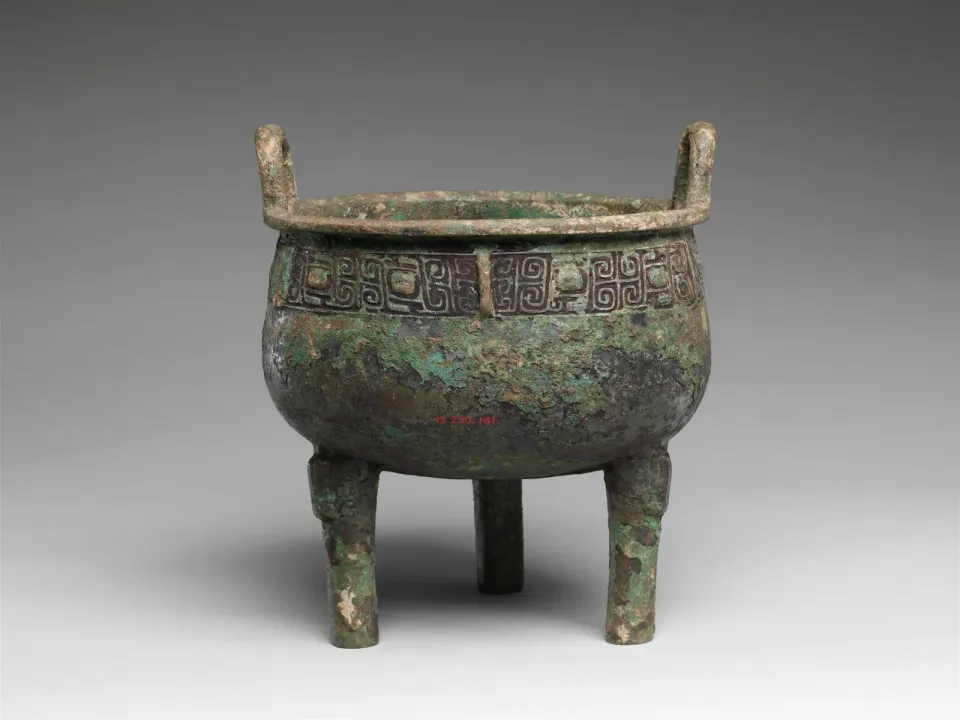
Nine Tripod Cauldrons
九鼎
The legitimacy to rule all under heaven. They rest with dynasties of virtue.
VesselFirst recorded c. 400 BCE
Loading artifact…
Photograph: A jade tortoise of the Ming dynasty, 1368–1644. A small tortoise carved from yellowish-green jade lies with its head raised, with brown markings here and there.
Focus the photograph, then use the arrow keys to pan and the plus and minus keys to zoom. The buttons at the lower left also move it. Press a numbered button on the photograph to zoom to that note.
河圖洛書
From the dot patterns on their backs came the eight trigrams and the nine great laws of government.
The "Great Treatise" of the Book of Changes says, "The Yellow River brought forth a chart and the Luo River brought forth a writing, and the sages took them as models." According to legend, in the time of Fuxi a dragon-horse, with a dragon's head and a horse's body, rose from the Yellow River bearing a pattern of dots on its back. From this Hetu, "River Chart," Fuxi drew the eight trigrams.
When Yu the Great was taming the floods, a divine tortoise rose from the Luo River with another dot pattern on its shell. This is the Luoshu, "Luo Writing." From it, it is said, Yu established the nine great laws for governing the realm.
Song dynasty scholars drew the Hetu and Luoshu as diagrams of dots. The Luoshu arranges the numbers one to nine in a three-by-three grid so that every line adds up to fifteen: a magic square. The four trigrams on the Korean flag also come from Fuxi's eight trigrams.
The photograph shows Tortoise(China, Ming dynasty (1368–1644), 1368–1644), a real museum object that evokes the legendary artifact.
九鼎
The legitimacy to rule all under heaven. They rest with dynasties of virtue.
彤弓 (羿)
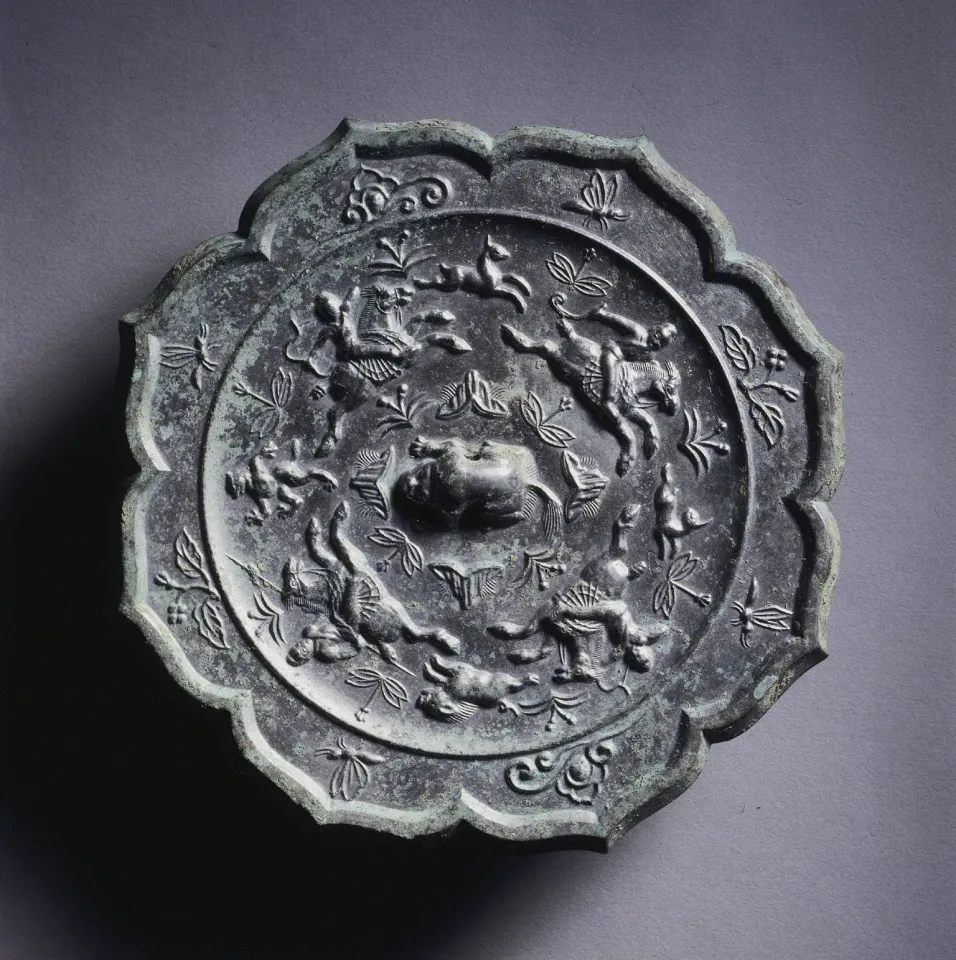
A red bow strong enough to shoot suns out of the sky.
穆王八駿
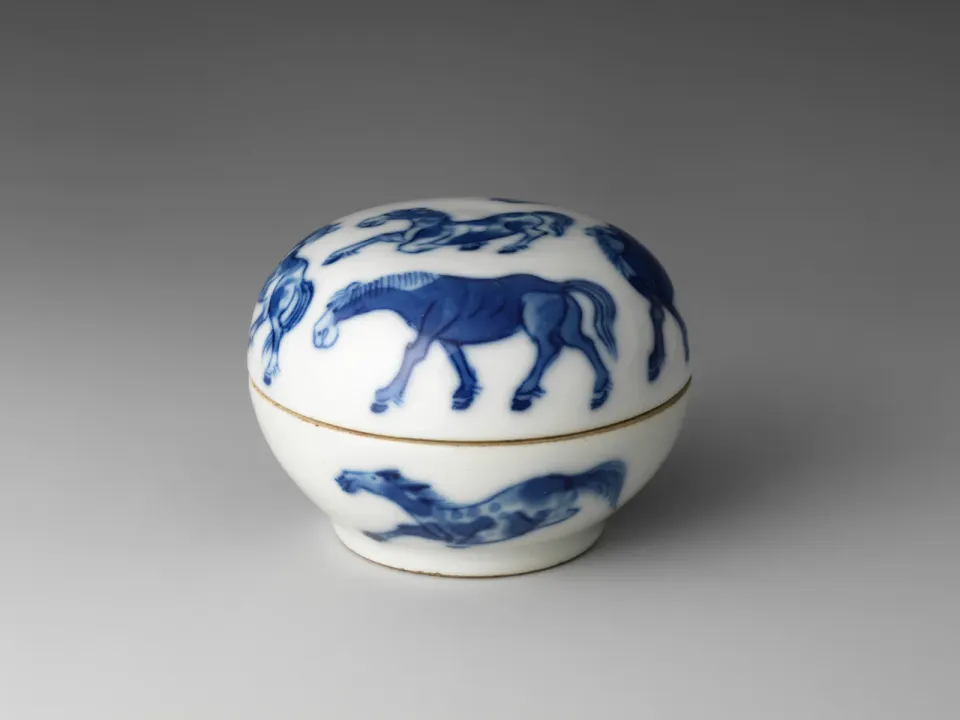
Eight fine horses that ran a thousand li a day and carried King Mu to the far west.
和氏璧
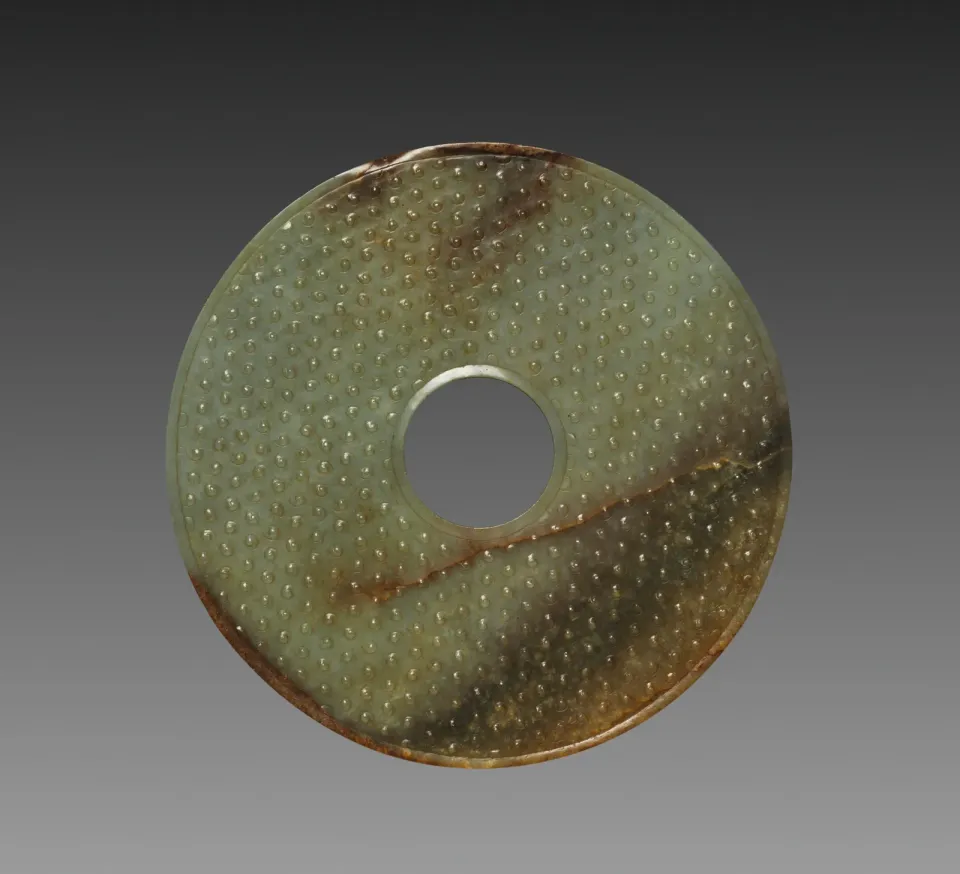
The finest jade under heaven, for which the king of Qin offered fifteen cities.