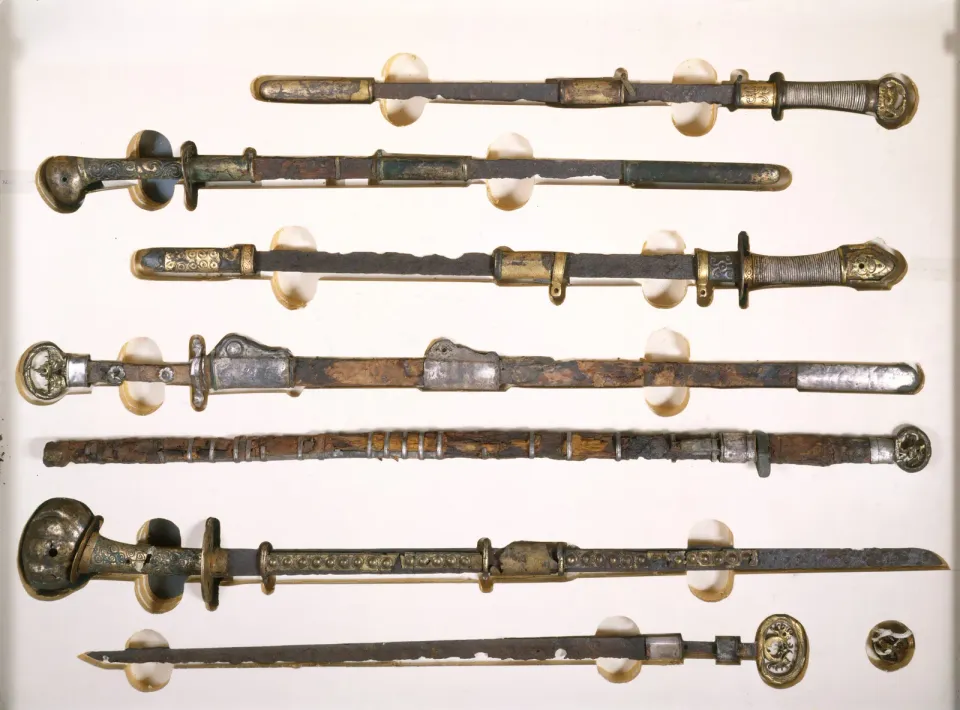
Japanese
Kusanagi-no-Tsurugi
草薙剣 (Kusanagi-no-Tsurugi)
Cuts the grass by itself and turns back fire.
WeaponFirst recorded 712
Loading artifact…
Photograph: A lacquered medicine case (inro) of the Edo period, about 1785. A rooster is painted on the outside of the small case of stacked compartments, with a cord and a round cord bead above and tassels hanging below.
Focus the photograph, then use the arrow keys to pan and the plus and minus keys to zoom. The buttons at the lower left also move it. Press a numbered button on the photograph to zoom to that note.
不死の薬
Whoever takes it does not die. The emperor had it burned on the mountain nearest to heaven.
Princess Kaguya was in truth a person of the moon. As the full moon of the eighth month drew near, she wept as she gazed at the moon and confessed that on that night the people of the moon would come for her. The emperor sent two thousand soldiers to guard the old man's house, but before the people of the moon, who came down from the sky riding on clouds, the soldiers could not even draw their bows.
Before she left, the princess wrote a letter to the emperor and left him, with it, a jar of the elixir of immortality the people of the moon had brought. When she put on the heavenly feather robe, she forgot all her earthly sorrows and rose into the sky.
Reading her letter, the emperor asked what use a medicine against death was if he could never see her again, and had the letter and the elixir burned on the summit of the mountain in Suruga nearest to heaven. Because a great many soldiers climbed it, the mountain came to be called Fuji, "rich in soldiers," and the smoke, they say, still rises into the clouds.
The photograph shows Inro(Japan, Edo period (1615–1868), c. 1785), a real museum object that evokes the legendary artifact.
草薙剣 (Kusanagi-no-Tsurugi)
Cuts the grass by itself and turns back fire.
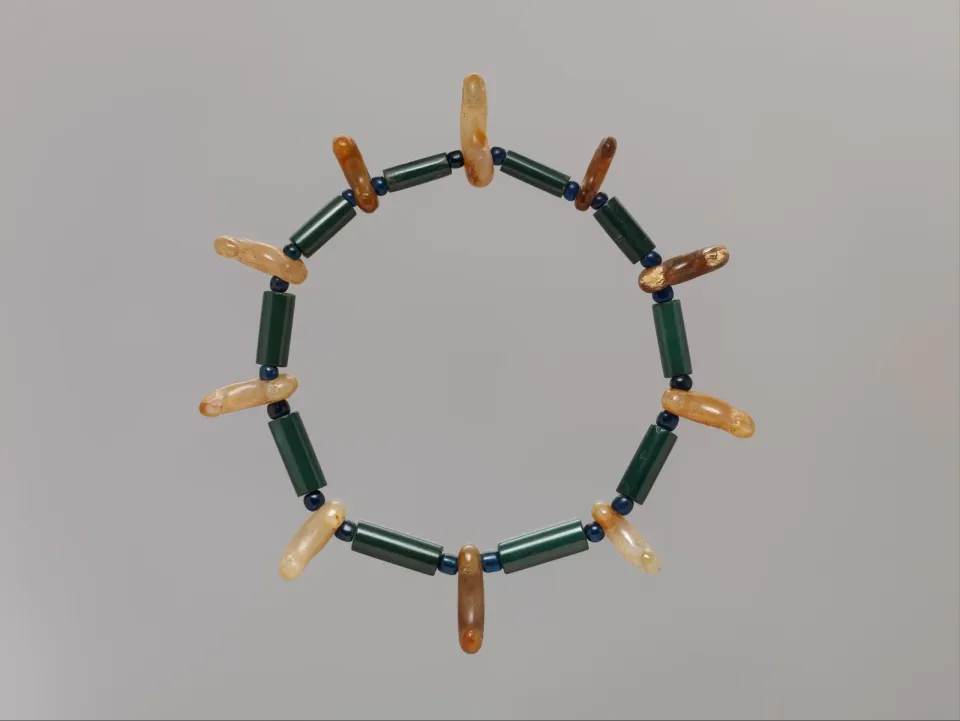
八尺瓊勾玉
One of the three sacred treasures, holding the spirit of the gods and the legitimacy of the imperial line.
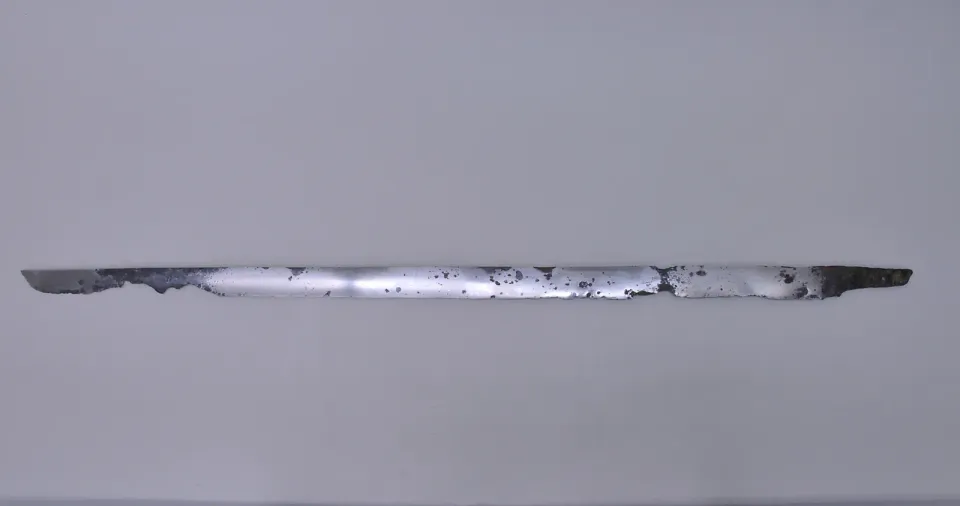
十拳剣
A great sword ten fists long, which cut the eight-headed serpent to pieces.
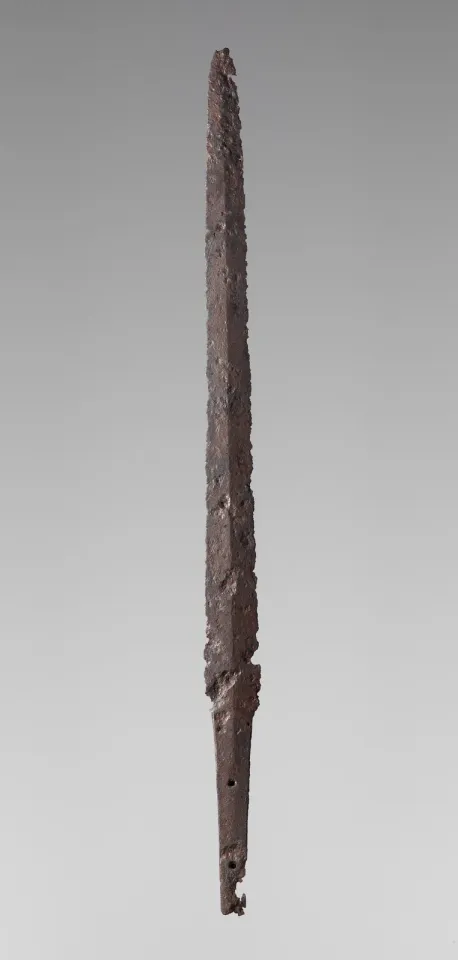
布都御魂
A single stroke revived soldiers felled by poisonous vapors.