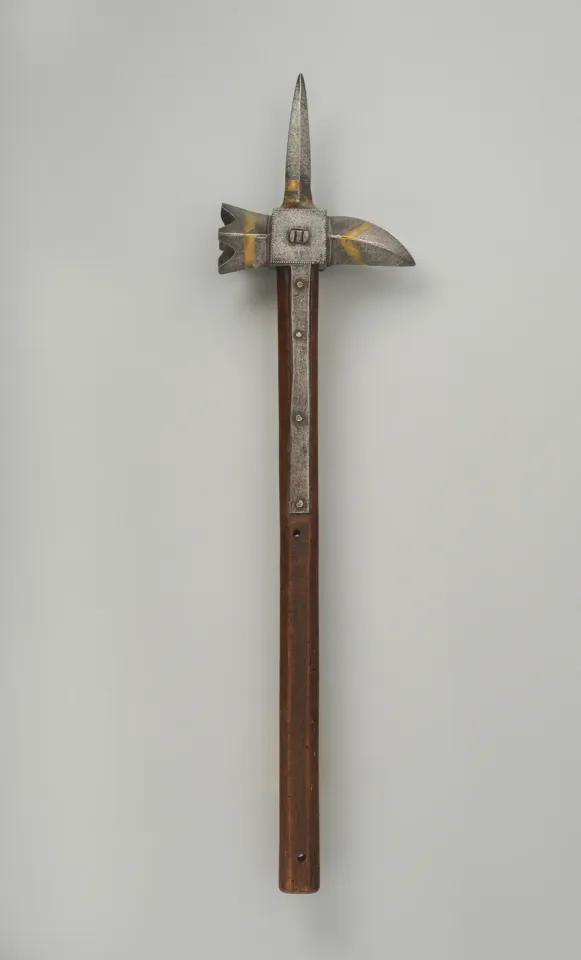
Norse & Germanic
Mjölnir
Mjölnir
Smashes anything, and returns to its owner's hand when thrown.
WeaponFirst recorded 1220
Loading artifact…
Photograph: White Falcon, a sixteenth-century Korean hanging scroll on silk from the Joseon dynasty. Beneath a flowering tree a white falcon perches on a rock with wings spread and head bowed, painted feather by feather, while the trees and grasses are drawn with free, calligraphic lines.
Focus the photograph, then use the arrow keys to pan and the plus and minus keys to zoom. The buttons at the lower left also move it. Press a numbered button on the photograph to zoom to that note.
Valshamr Freyju
Whoever put it on became a falcon and could fly.
In Þrymskviða in the Poetic Edda, Thor wakes one morning to find his hammer Mjölnir gone. Loki borrows Freyja's falcon cloak, flies as a falcon to the land of the giants, and learns that the giant Thrym has buried the hammer deep in the earth. Thrym will return it only if he is given Freyja as his wife.
Freyja flew into a rage, and in the end Thor dressed as the bride, with Loki as his maid, and won back the hammer. In Snorri's Prose Edda too, Loki borrows this cloak to rescue the goddess Idun, carried off by the giant Thiazi.
Freyja is the goddess of love and magic, and she receives half of those who die in battle into her own hall. She rode in a chariot drawn by two cats.
The photograph shows White Falcon(Korea, Joseon dynasty (1392–1910), 1500s), a real museum object that evokes the legendary artifact.
Mjölnir
Smashes anything, and returns to its owner's hand when thrown.
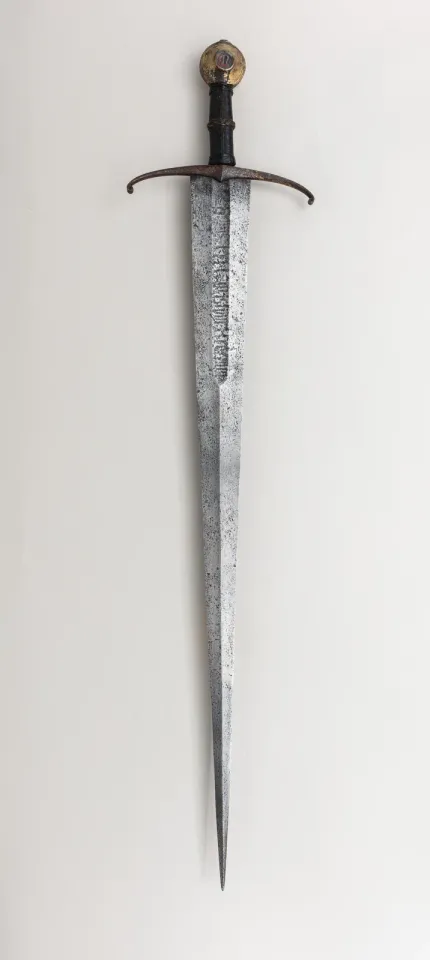
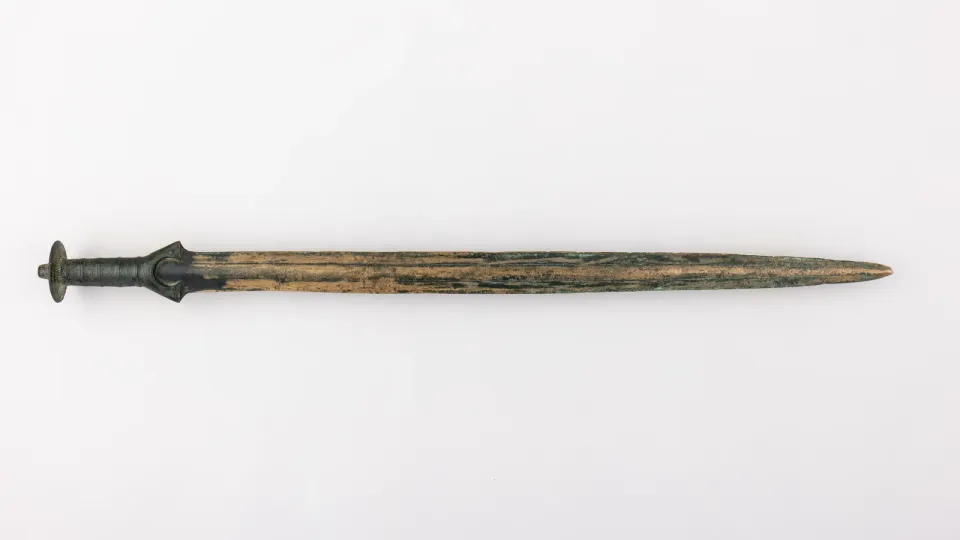
Hrunting
A patterned steel blade steeped in venom. It had never failed in battle.
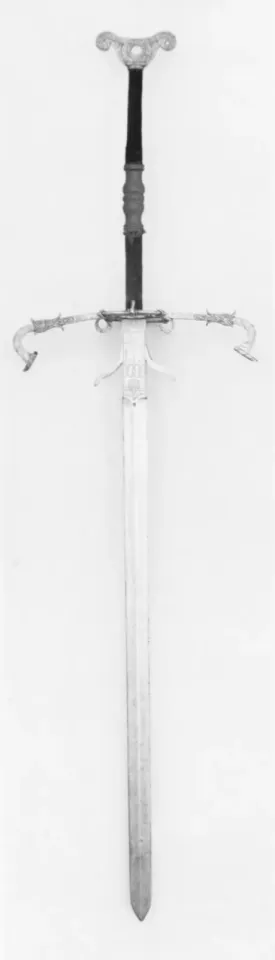
Ealdsweord eotenisc
So large an ordinary man could not lift it. Its blade melted in the monster's blood.