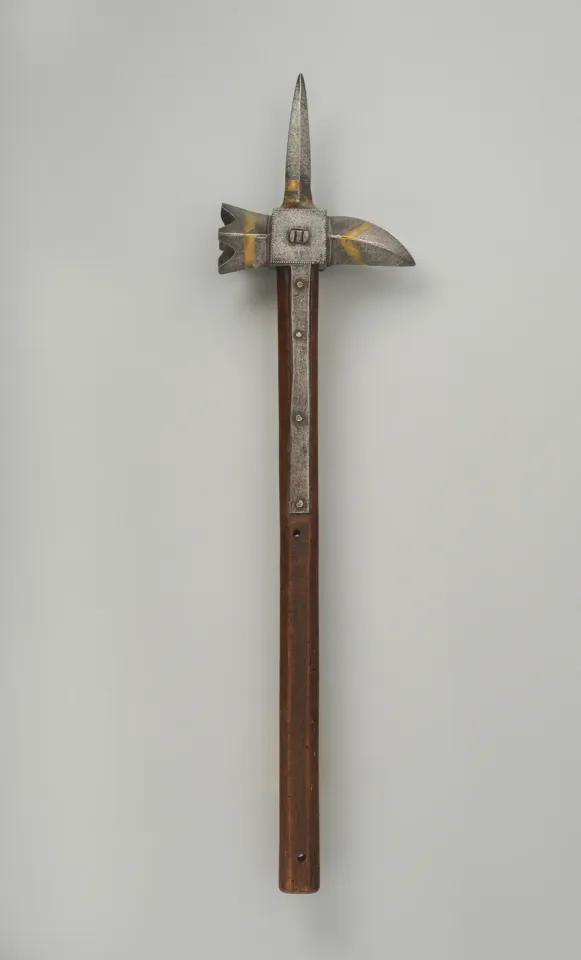
Norse & Germanic
Mjölnir
Mjölnir
Smashes anything, and returns to its owner's hand when thrown.
WeaponFirst recorded 1220
Loading artifact…
Photograph: A bronze horse made in Germany in the 1630s or later. It stands squarely on four legs with its head slightly lowered, its mane and muscles smoothly finished.
Focus the photograph, then use the arrow keys to pan and the plus and minus keys to zoom. The buttons at the lower left also move it. Press a numbered button on the photograph to zoom to that note.
Grani
He carried the dragon's gold and leaped the wall of fire with Sigurd on his back.
In the Völsunga saga, young Sigurd goes to choose a horse and meets an old man with a long beard. The old man drives the horses into a river and tells him to choose the one that swims across. That horse was Grani, and the old man told Sigurd that Grani was of the line of Sleipnir, Odin's horse. The old man was Odin himself.
After killing the dragon Fafnir, Sigurd loaded its treasure on Grani's back. Later, in place of his brother-in-law Gunnar, Sigurd rode Grani through the wall of fire surrounding Brynhild's dwelling. Gunnar's horse shied at the flames, and Grani would not carry Gunnar.
When Sigurd died, the Poetic Edda says, Grani hung his head. Snorri's Prose Edda also records the poets' habit of calling gold 'Grani's burden.' Medieval carvings of Sigurd and Grani survive across Scandinavia, such as the portal of Hylestad church in Norway.
The photograph shows Horse(Germany, 1630s or later), a real museum object that evokes the legendary artifact.
Mjölnir
Smashes anything, and returns to its owner's hand when thrown.
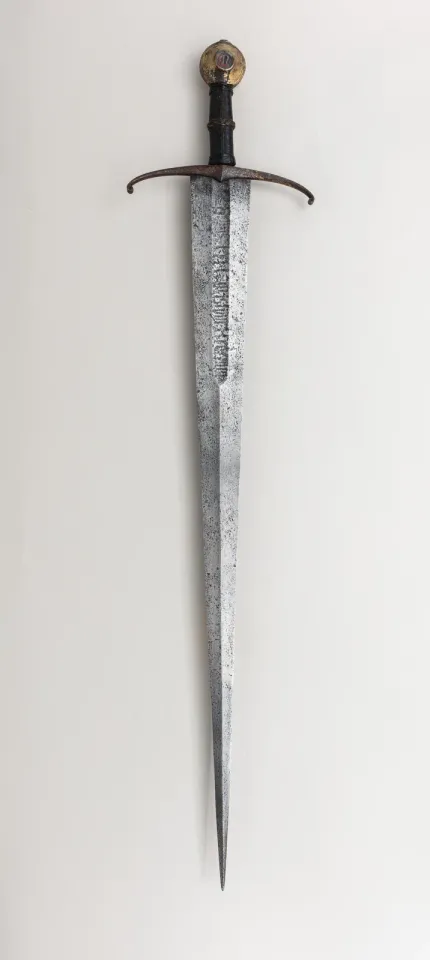
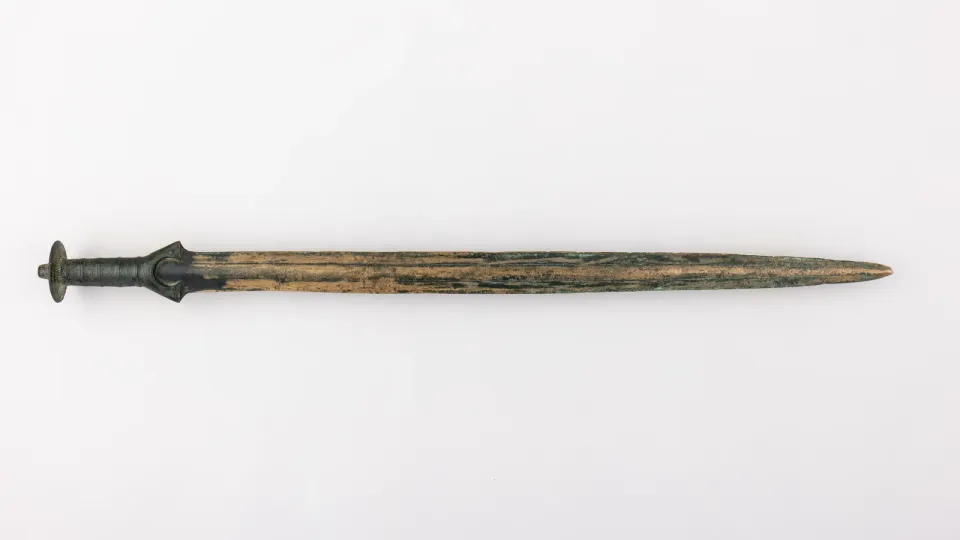
Hrunting
A patterned steel blade steeped in venom. It had never failed in battle.
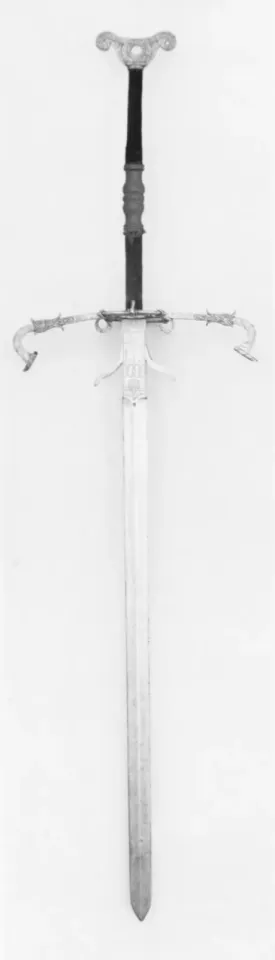
Ealdsweord eotenisc
So large an ordinary man could not lift it. Its blade melted in the monster's blood.