Arthurian & Chivalric
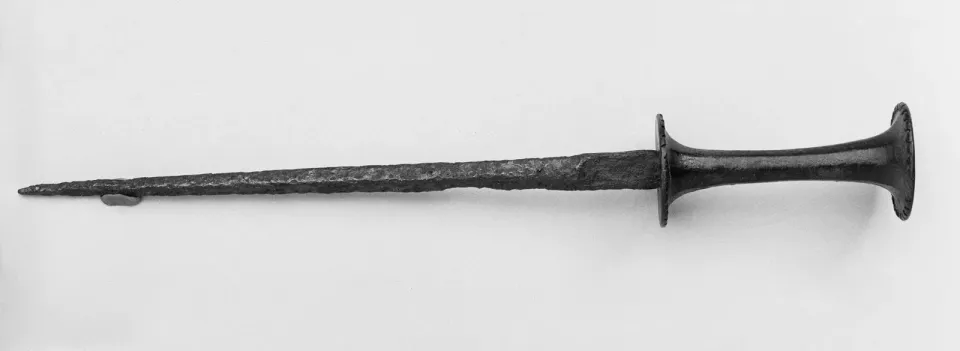
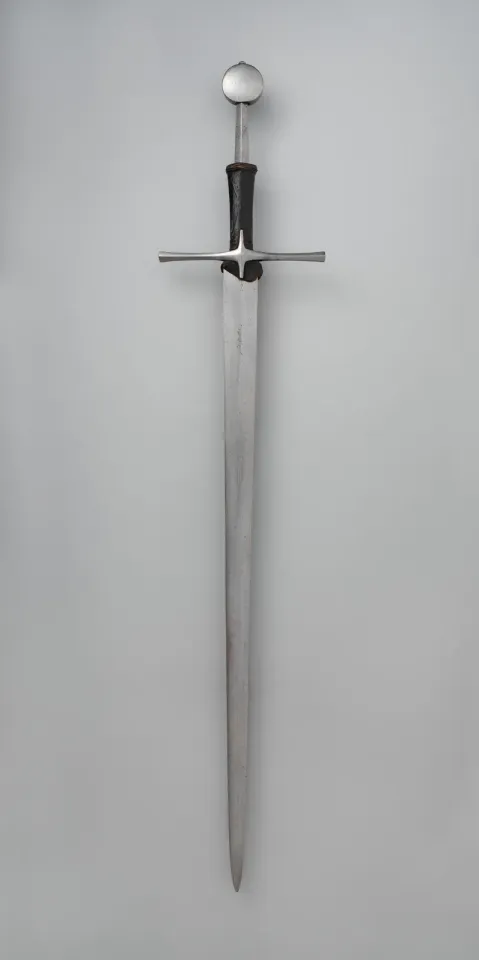
Excalibur
Excalibur
Cuts through enemy armor, and whoever wears its scabbard does not bleed.
WeaponFirst recorded 1136
Loading artifact…
Photograph: A lady's belt probably made in Siena, Italy, around 1375–1400. Silver plaques covered with translucent enamel are set along a narrow band of woven silver thread, with a gilt-silver buckle at the top.
Focus the photograph, then use the arrow keys to pan and the plus and minus keys to zoom. The buttons at the lower left also move it. Press a numbered button on the photograph to zoom to that note.
The Green Girdle
Whoever wears it, she said, cannot be slain by any blade on earth.
At the height of the New Year feast in Camelot, a giant knight green from head to foot rode in with an axe and proposed a game. Anyone might strike his neck now, on condition that he receive the same blow a year and a day later. Gawain stepped forward and cut off his head, but the knight picked it up and rode away, saying he would wait at the Green Chapel.
The following year Gawain set out and stayed at a castle. For three days the lord's wife tried to seduce him, and on the last day she gave him a green silk girdle, saying that no one could kill the man who wore it. Gawain broke his promise to exchange all his day's winnings with the lord and hid the girdle.
At the Green Chapel the Green Knight twice stopped his axe, and on the third stroke only nicked Gawain's neck. He was the lord, Bertilak, and the small wound was the penalty for hiding the girdle. Ashamed, Gawain vowed to wear the girdle all his life, and Arthur's court resolved that everyone would wear a green band in his honor.
The photograph shows Belt for a Lady's Dress(Italy, Siena(?), c. 1375–1400), a real museum object that evokes the legendary artifact.
Excalibur
Cuts through enemy armor, and whoever wears its scabbard does not bleed.
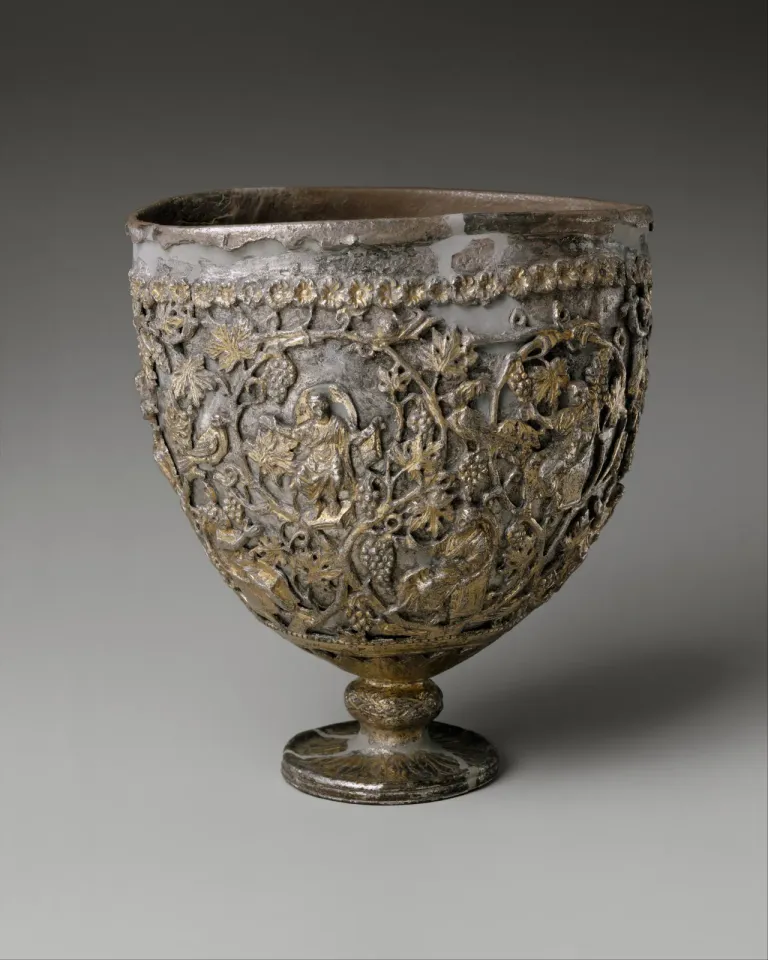
Holy Grail
Grants those who see it the food they desire, and shows itself only to the pure knight.
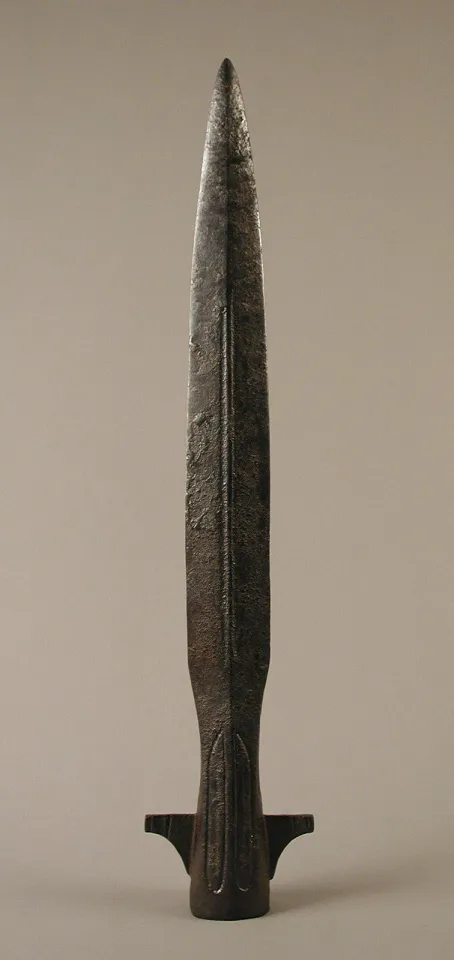
Rhongomyniad
Long and broad-bladed, said to thirst for enemy blood.