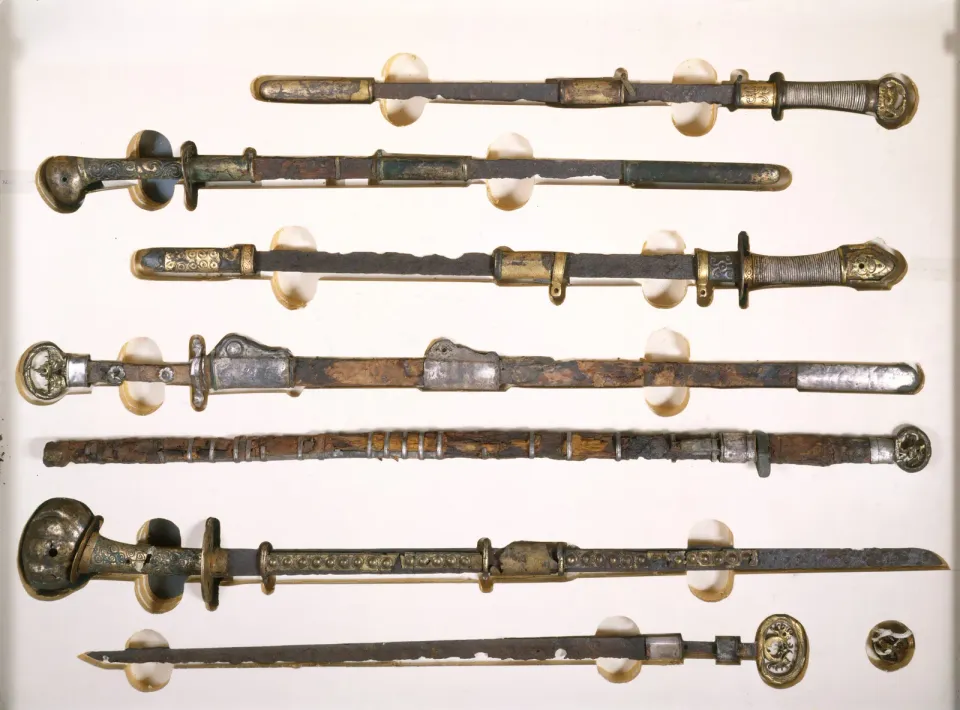
Japanese
Kusanagi-no-Tsurugi
草薙剣 (Kusanagi-no-Tsurugi)
Cuts the grass by itself and turns back fire.
WeaponFirst recorded 712
Loading artifact…
Photograph: A two-panel kabuki actor print made in Japan in 1834: Arashi Rikan II as Inuzuka Shino and Nakamura Utaemon III as Inukai Genpachi in battle. Two warriors with swords grapple on a tiled roof, with the roles and story written in the panels above.
Focus the photograph, then use the arrow keys to pan and the plus and minus keys to zoom. The buttons at the lower left also move it. Press a numbered button on the photograph to zoom to that note.
仁義八行の玉
Each bore one of eight virtues, such as benevolence, loyalty and filial piety, and they bound the eight scattered warriors together.
In Nansō Satomi Hakkenden, Satomi Yoshizane, lord of Awa, besieged in his castle, says half in jest that he will give his daughter Princess Fuse to whoever brings him the head of the enemy general. His dog Yatsufusa really does bring back the enemy general's head in its jaws, and Princess Fuse, bound to keep the promise, goes with the dog deep into the mountains.
In the mountains Princess Fuse became pregnant through the dog's spirit, and in shame she took her own life. At that moment the eight large beads of the rosary she carried scattered into the sky. On each bead appeared one of the characters for the eight virtues: benevolence, righteousness, courtesy, wisdom, loyalty, faith, filial piety and brotherly duty.
The beads came to rest, one each, in eight children born in different places. These children, whose names all contained the character for 'dog,' grew up, recognized one another and gathered, becoming the Eight Dog Warriors who fought for the Satomi clan.
The photograph shows Arashi Rikan II as Inuzuka Shino Moritaka and Nakamura Utaemon III as Inukai Kenpachi Michinobu Battling (from the series The Eight Heroes of the Satomi Clan)(Japan, Edo period (1615–1868), 1834), a real museum object that evokes the legendary artifact.
草薙剣 (Kusanagi-no-Tsurugi)
Cuts the grass by itself and turns back fire.
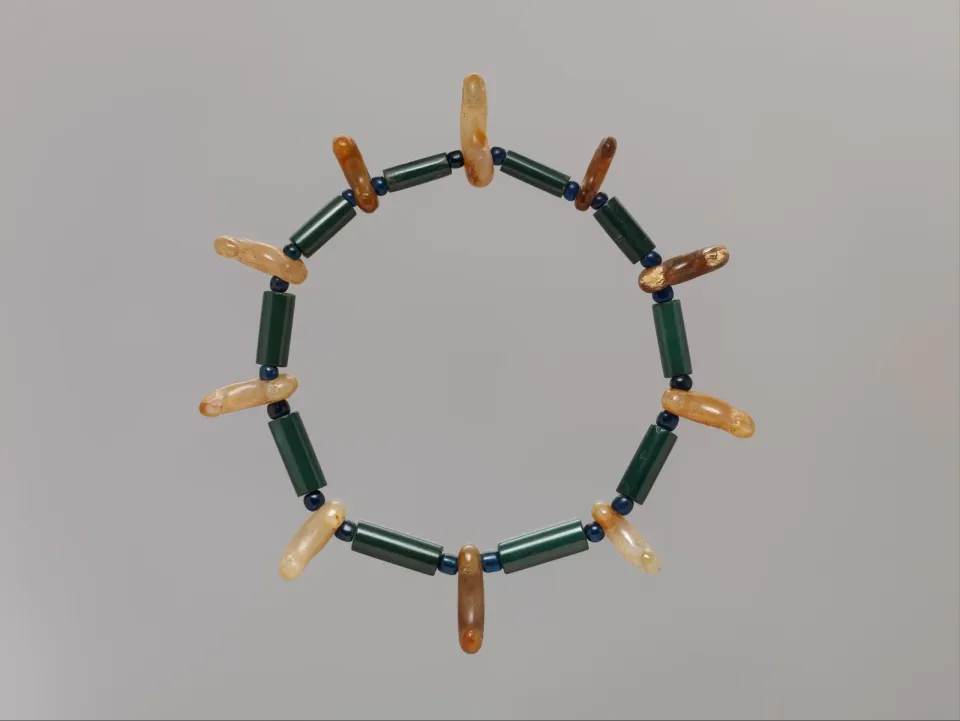
八尺瓊勾玉
One of the three sacred treasures, holding the spirit of the gods and the legitimacy of the imperial line.
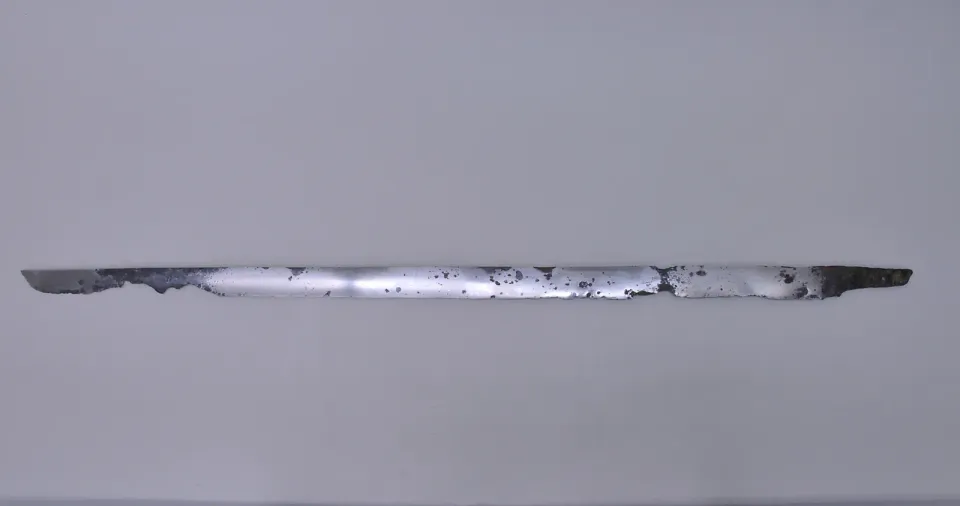
十拳剣
A great sword ten fists long, which cut the eight-headed serpent to pieces.
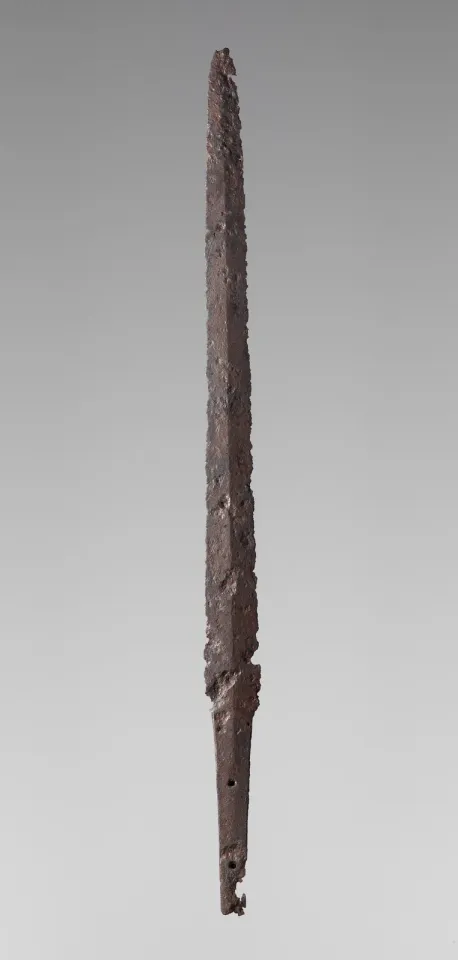
布都御魂
A single stroke revived soldiers felled by poisonous vapors.