Arthurian & Chivalric
Excalibur
Excalibur
Cuts through enemy armor, and whoever wears its scabbard does not bleed.
WeaponFirst recorded 1136
Loading artifact…
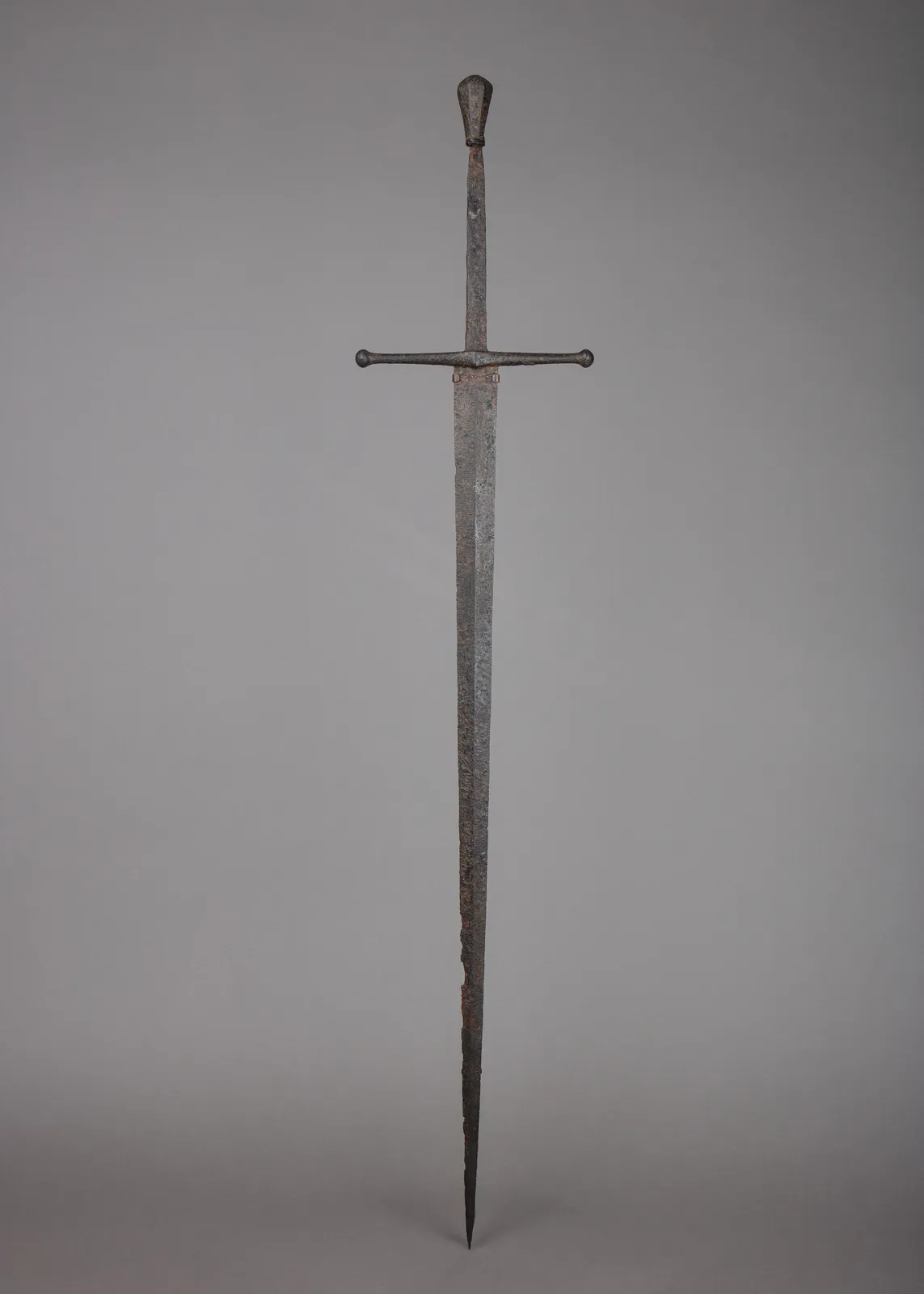
Photograph: A Western European steel sword of about 1400 with a straight double-edged blade, a cross guard extending sideways and a round pommel.
Focus the photograph, then use the arrow keys to pan and the plus and minus keys to zoom. The buttons at the lower left also move it. Press a numbered button on the photograph to zoom to that note.
Hauteclere
A “high and clear” blade to rival Roland's Durendal.
If Roland is brave in The Song of Roland, his friend Oliver is wise. Hauteclere, whose name means "high and clear," is Oliver's sword, with a golden hilt and a pommel of crystal.
When the great Saracen host poured into the pass of Roncevaux, Oliver asked three times that the horn be blown to call Charlemagne. Roland refused for honor's sake. Oliver fought with Hauteclere to the last and, blinded by blood, struck his friend Roland by mistake, then died begging forgiveness.
Named in the same poem with Roland's Durendal and Charlemagne's Joyeuse, it is one of the three swords of Frankish chivalry.
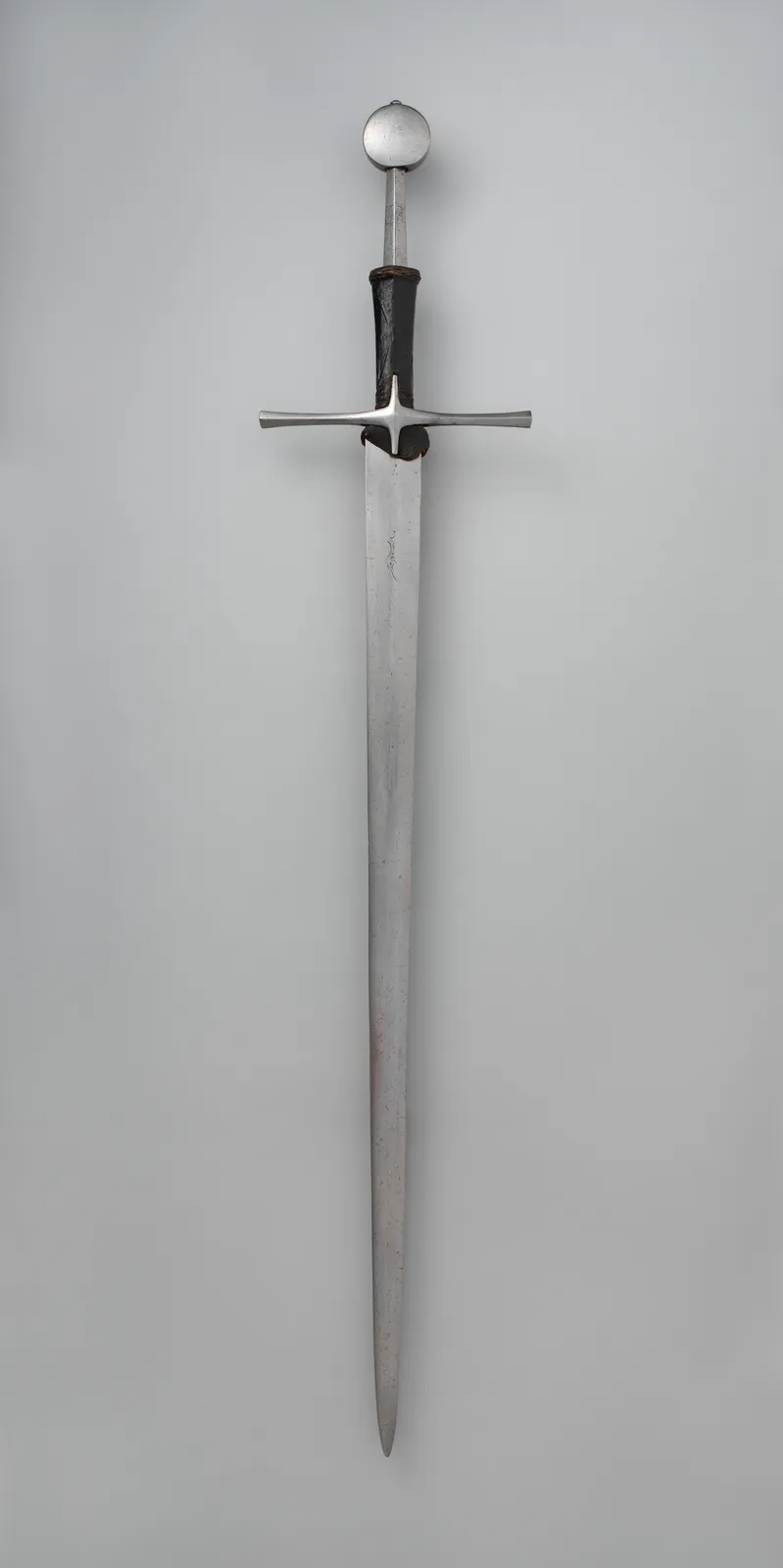
The photograph shows Sword(Western European, ca. 1400), a real museum object that evokes the legendary artifact.
Excalibur
Cuts through enemy armor, and whoever wears its scabbard does not bleed.
Holy Grail
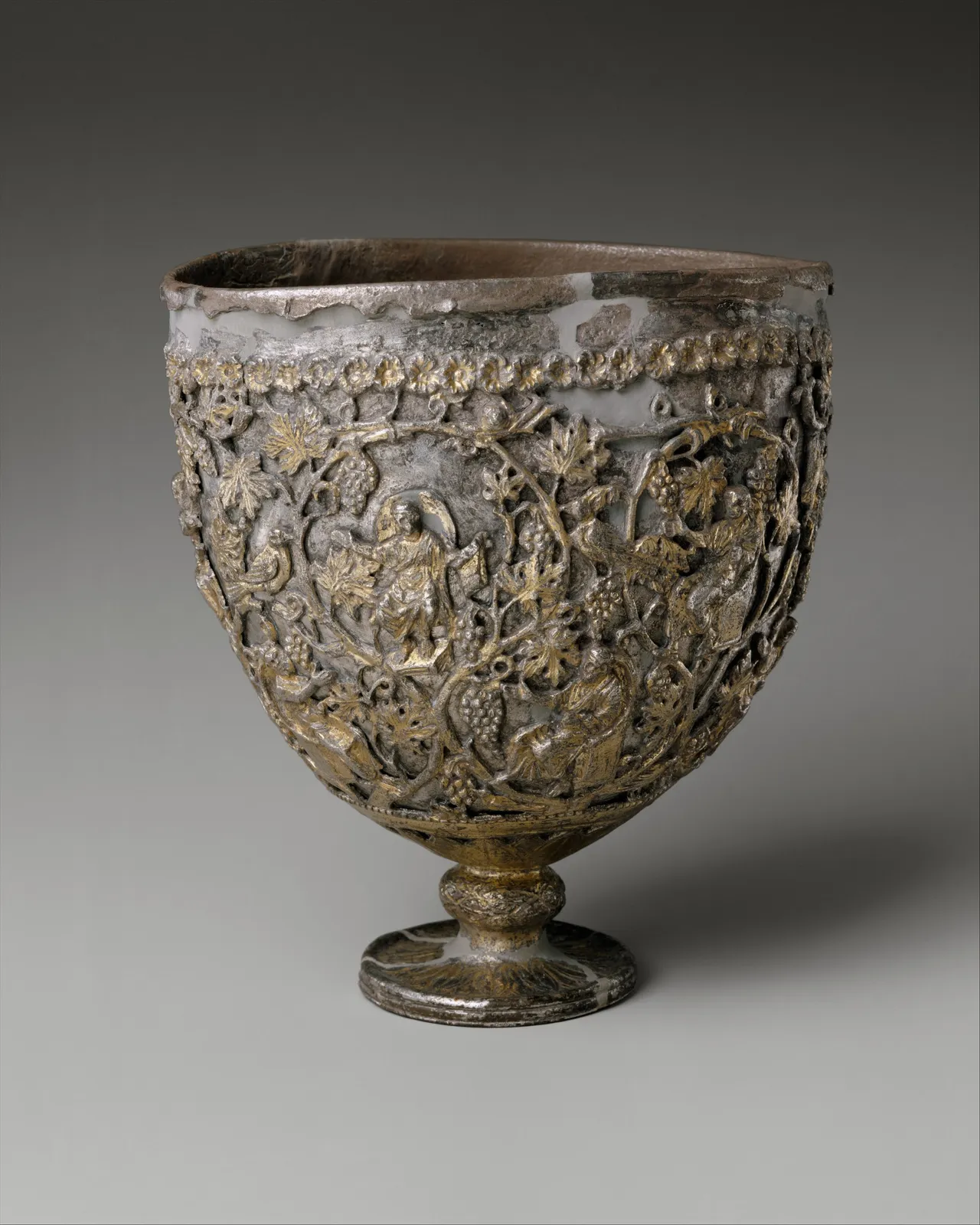
Grants those who see it the food they desire, and shows itself only to the pure knight.