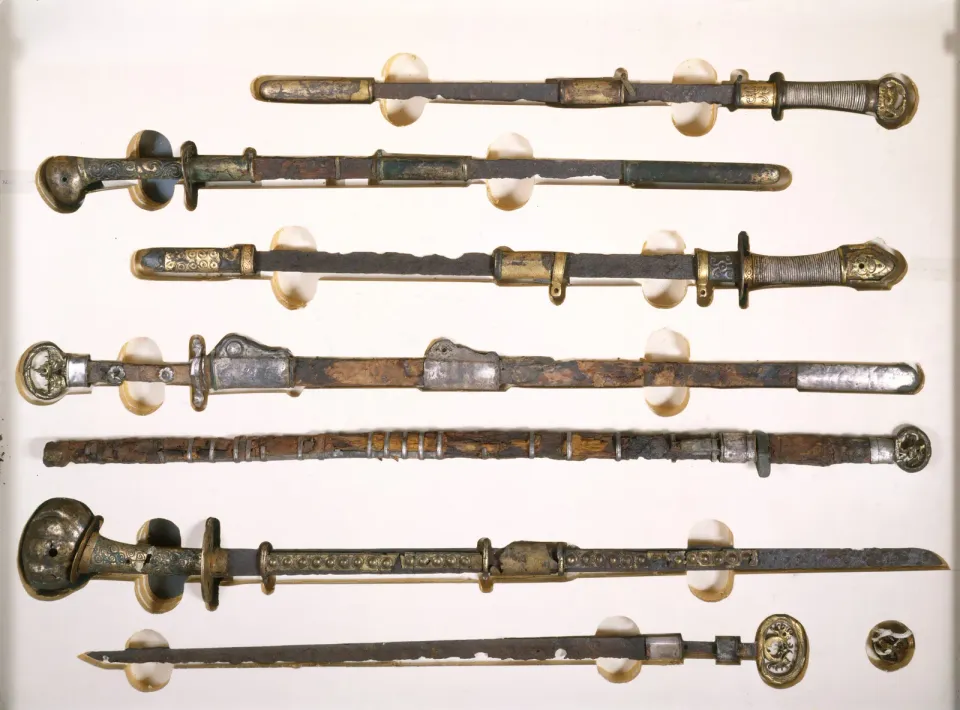
Japanese
Kusanagi-no-Tsurugi
草薙剣 (Kusanagi-no-Tsurugi)
Cuts the grass by itself and turns back fire.
WeaponFirst recorded 712
Loading artifact…
Photograph: Nakamura Nakazo I as Watanabe no Tsuna, a color woodblock print by Katsukawa Shunzan, 1781. A kabuki actor in a red outer robe stands glaring, with the hilt of a long sword rising behind his shoulder.
Focus the photograph, then use the arrow keys to pan and the plus and minus keys to zoom. The buttons at the lower left also move it. Press a numbered button on the photograph to zoom to that note.
髭切 (鬼切)
Tested on a criminal, it cut cleanly through his beard and was named Beard-Cutter; after it cut off a demon's arm, it became Demon-Cutter.
The Heian warrior Minamoto no Yorimitsu had four retainers called the Four Heavenly Kings. One night, as the foremost of them, Watanabe no Tsuna, crossed the Ichijo Modoribashi bridge in Kyoto, a beautiful woman asked him to escort her. When Tsuna put her on his horse, she turned into a terrible oni, seized his topknot and flew off toward Mount Atago.
Tsuna drew Higekiri, the treasured sword of the Minamoto at his waist, and cut off the oni's arm. The sword had been called Beard-Cutter because, when tested on a criminal, it cut cleanly even through his beard; after this it was called Demon-Cutter.
Tsuna kept the severed arm in a box and, on the advice of the yin-yang master Abe no Seimei, shut himself in for seven days. On the sixth night his foster mother came to visit and Tsuna let her in; asking to see the arm, she turned into the oni, snatched it and flew out through the smoke hole in the roof.
The photograph shows Nakamura Nakazo I as Watanabe no Tsuna(Japan, Edo period (1615–1868), 1781), a real museum object that evokes the legendary artifact.
草薙剣 (Kusanagi-no-Tsurugi)
Cuts the grass by itself and turns back fire.
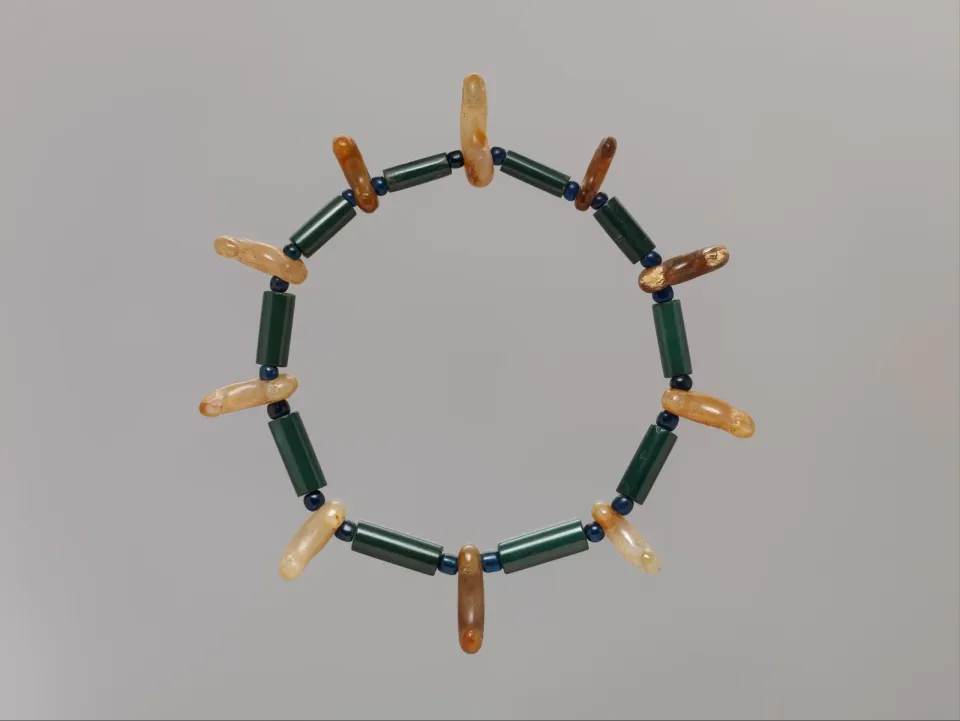
八尺瓊勾玉
One of the three sacred treasures, holding the spirit of the gods and the legitimacy of the imperial line.
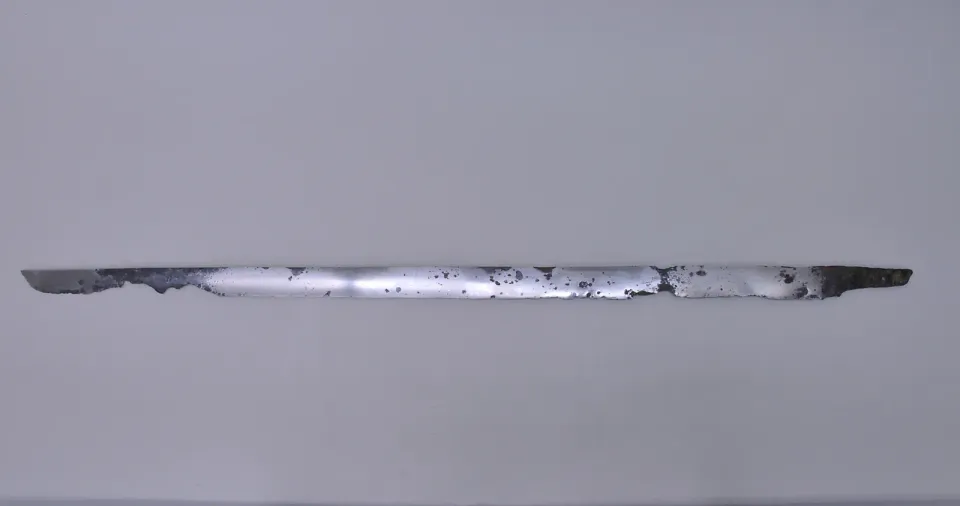
十拳剣
A great sword ten fists long, which cut the eight-headed serpent to pieces.
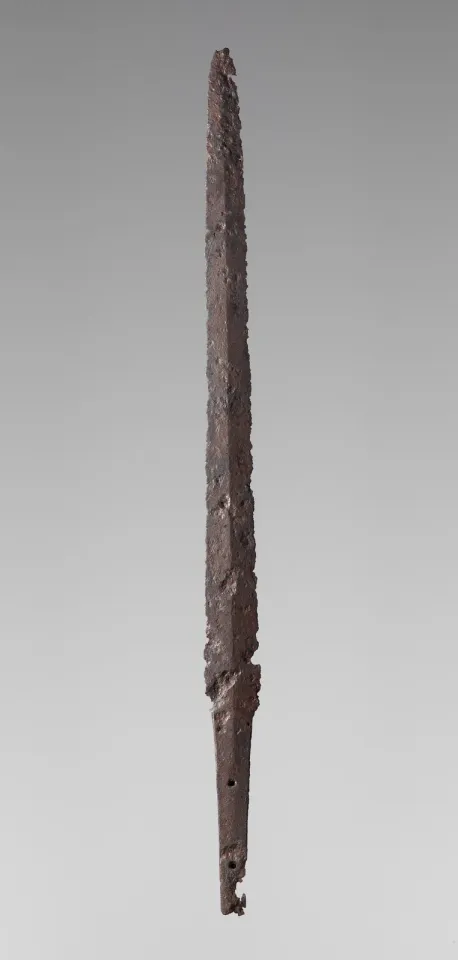
布都御魂
A single stroke revived soldiers felled by poisonous vapors.