Arthurian & Chivalric
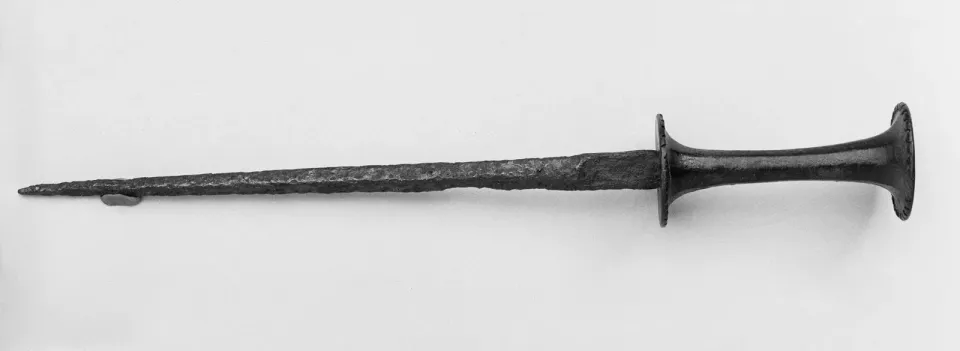
Excalibur
Excalibur
Cuts through enemy armor, and whoever wears its scabbard does not bleed.
WeaponFirst recorded 1136
Loading artifact…
Photograph: An ivory horn carved in southern Italy or Sicily in the twelfth century, the so-called Horn of Saint Blaise. Bands of animals and scrolls encircle the wide mouth and the narrow tip, and the middle is left smooth.
Focus the photograph, then use the arrow keys to pan and the plus and minus keys to zoom. The buttons at the lower left also move it. Press a numbered button on the photograph to zoom to that note.
Corno di Astolfo
One blast made every man and beast that heard it flee in terror.
In Ariosto's Orlando Furioso, the English knight Astolfo is bewitched by the sorceress Alcina and turned into a myrtle tree before he is set free. Alcina's sister, the good fairy Logistilla, sends him home with two gifts: a book telling how to break enchantments, and a horn.
When the horn was blown, every man and beast that heard it was seized with terror and fled. With it Astolfo defeated the man-eating giant Caligorante, and he drove the Harpies that fouled the Ethiopian king's table all the way to the mouth of Hell.
Later Astolfo rode the hippogriff to the Earthly Paradise, then went up to the Moon in Elijah's chariot of fire and brought back the lost wits of the mad Orlando in a flask.
The photograph shows The So-called Horn of Saint Blaise(South Italy or Sicily, 12th century, 1100–1200), a real museum object that evokes the legendary artifact.
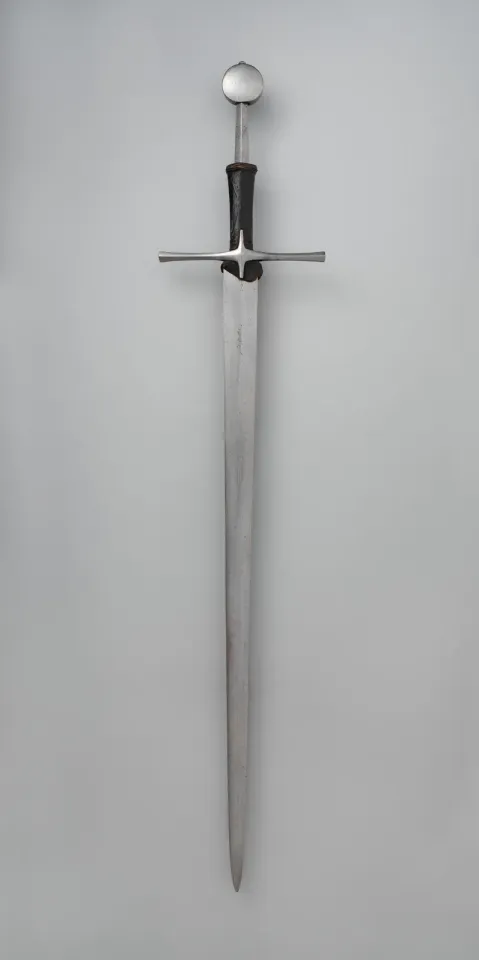
Excalibur
Cuts through enemy armor, and whoever wears its scabbard does not bleed.
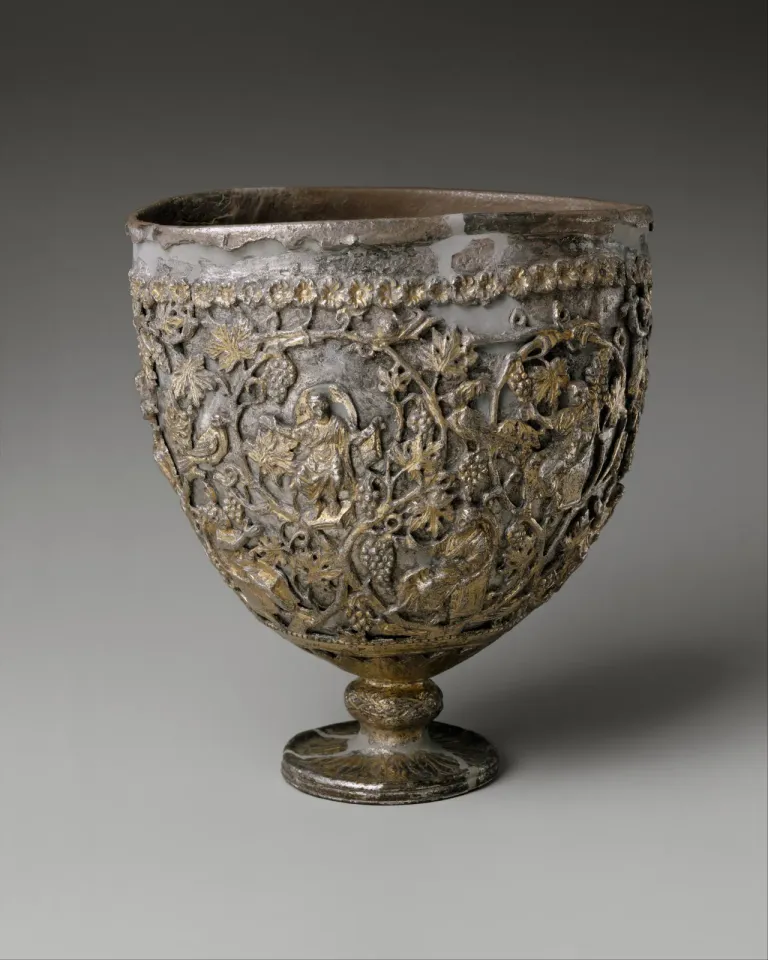
Holy Grail
Grants those who see it the food they desire, and shows itself only to the pure knight.
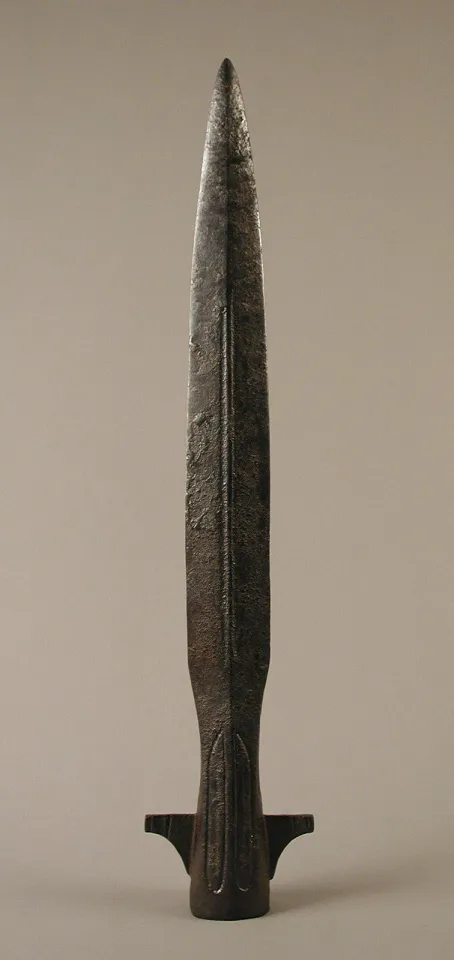
Rhongomyniad
Long and broad-bladed, said to thirst for enemy blood.