Arthurian & Chivalric
Excalibur
Excalibur
Cuts through enemy armor, and whoever wears its scabbard does not bleed.
WeaponFirst recorded 1136
Loading artifact…
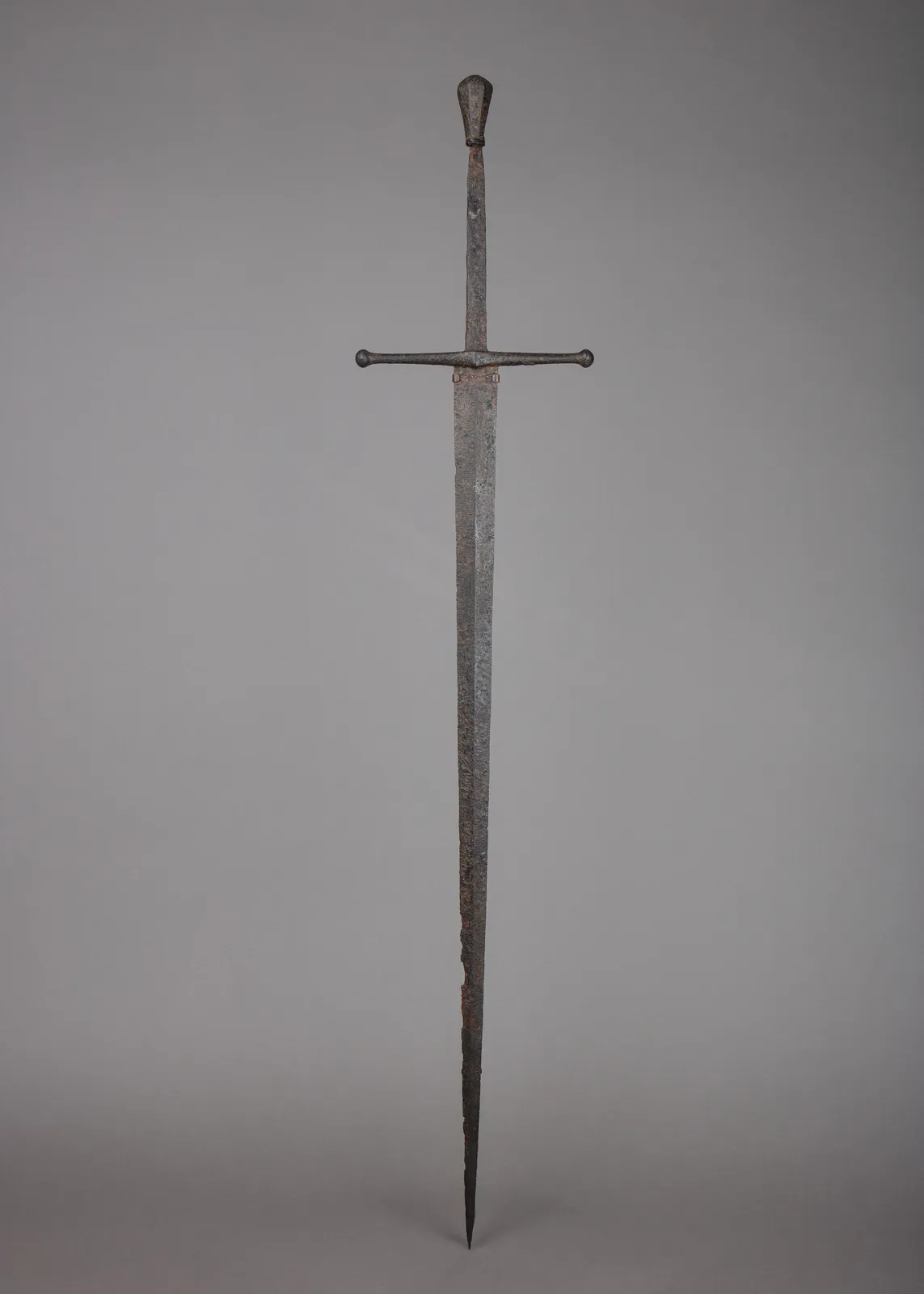
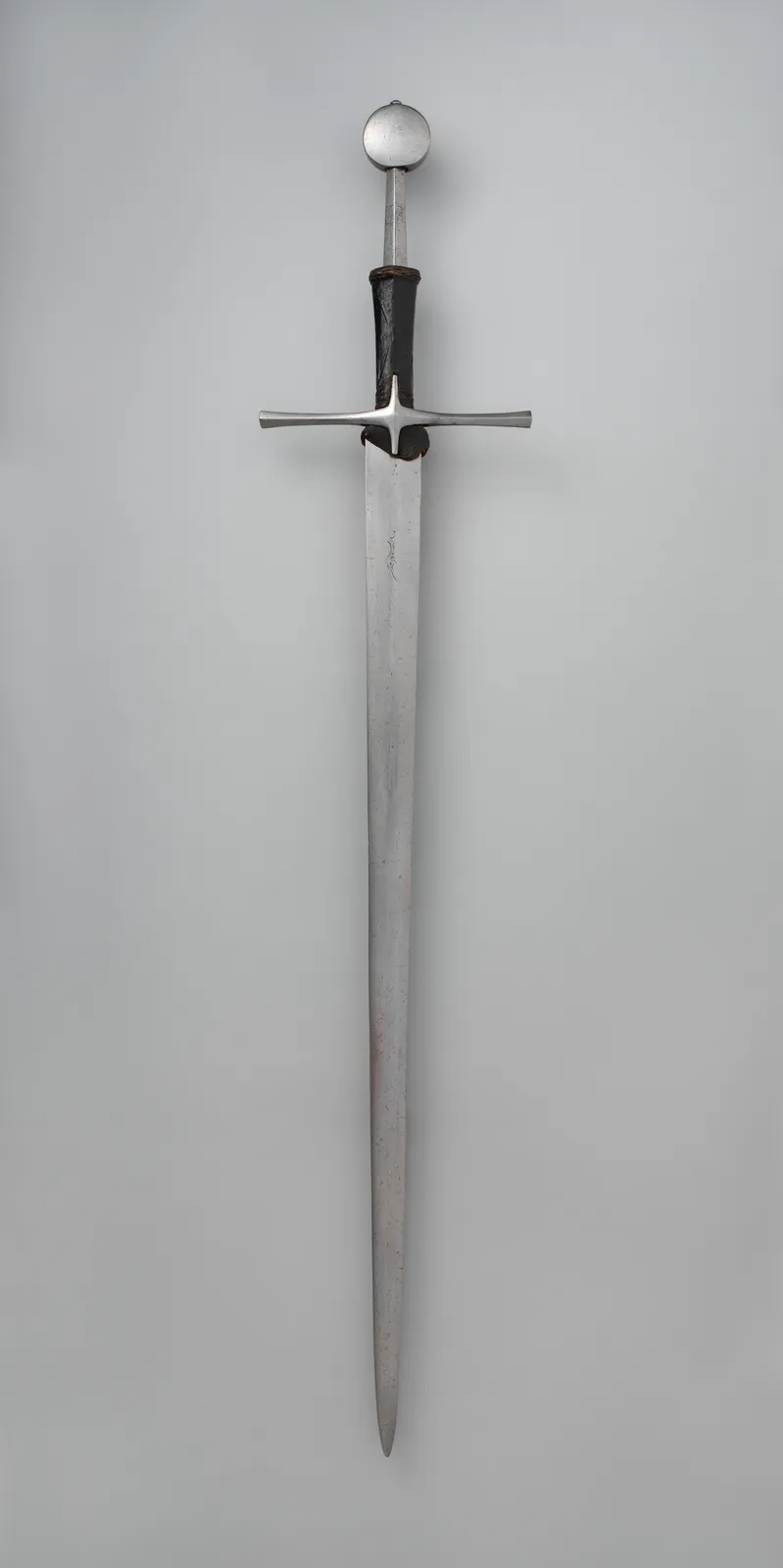
Photograph: A cross-hilted sword with a hilt made in London and a blade from Solingen in the early seventeenth century. Silver-decorated guard, wire-wrapped grip and gold lettering on the upper blade are visible.
Focus the photograph, then use the arrow keys to pan and the plus and minus keys to zoom. The buttons at the lower left also move it. Press a numbered button on the photograph to zoom to that note.
Joyeuse
Changes color thirty times a day, and holds the point of the Holy Lance in its hilt.
The Song of Roland sings that Charlemagne's sword Joyeuse changes color thirty times a day. The point of the lance that pierced Christ was set in its pommel, and the Frankish battle cry "Montjoie" was said to come from this sword.
After Roland fell, Charlemagne took this sword against the Saracen king Baligant. When the fight dragged on the angel Gabriel appeared and renewed his strength, and Charlemagne split his enemy's helmet with Joyeuse and won.
A coronation sword remade over several centuries is preserved in the Louvre in Paris under the name Joyeuse. The kings of France received it when they took the throne.
The photograph shows Cross Hilt Sword(hilt, British, London; blade, German, Solingen, 1600–1625), a real museum object that evokes the legendary artifact.
Excalibur
Cuts through enemy armor, and whoever wears its scabbard does not bleed.
Holy Grail
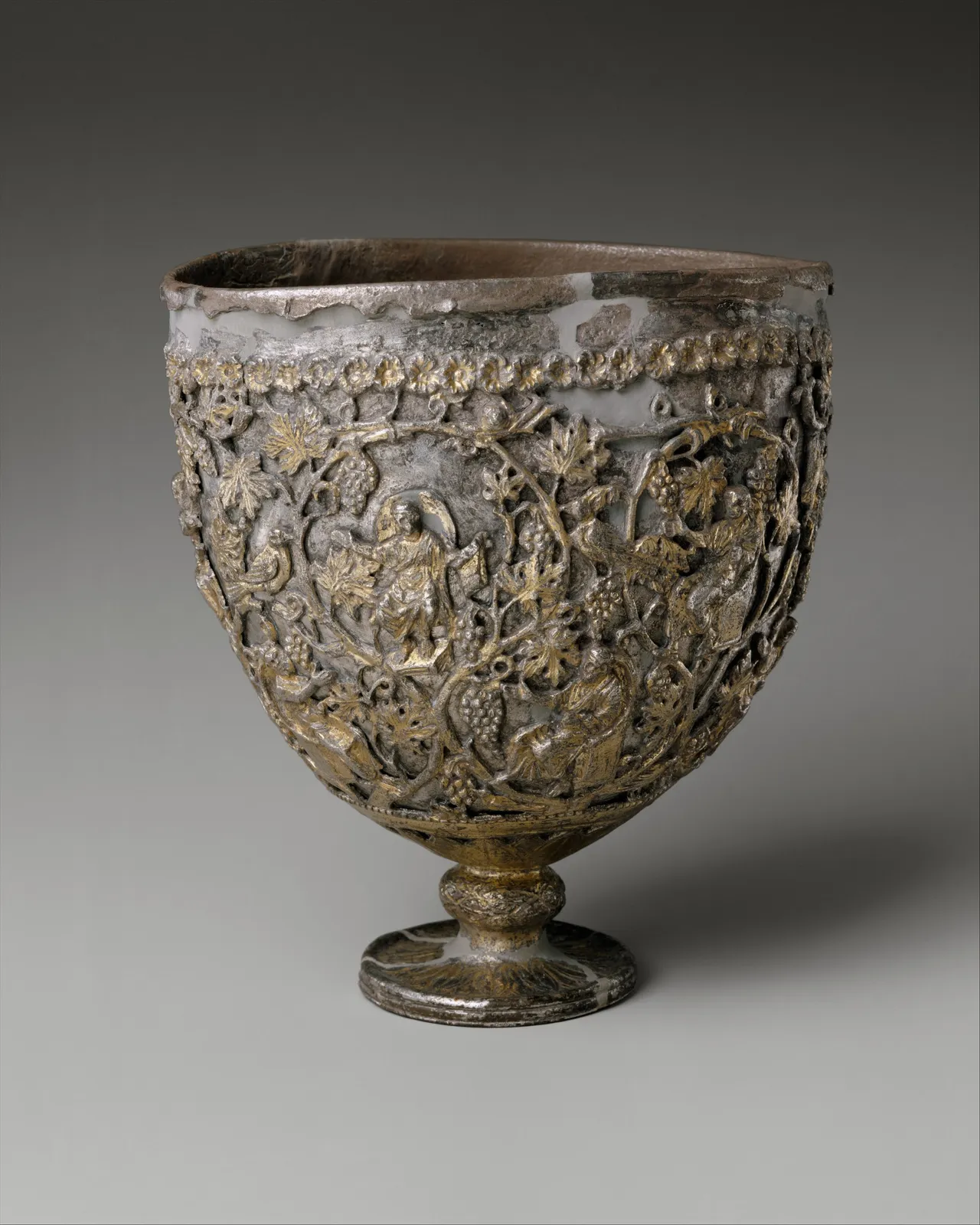
Grants those who see it the food they desire, and shows itself only to the pure knight.