Indian
Soma
Soma
The hymns sing that whoever drinks it is filled with strength and inspiration and becomes immortal.
ElixirFirst recorded c. 1200 BCE
Loading artifact…
Photograph: An Indo-Persian steel mace (gada) of the seventeenth century. A ball-shaped fluted head sits at the end of a long, straight steel shaft, and the head and shaft are inlaid with gold designs here and there.
Focus the photograph, then use the arrow keys to pan and the plus and minus keys to zoom. The buttons at the lower left also move it. Press a numbered button on the photograph to zoom to that note.
Kaumodakī
When hurled, it smashes demons with a sound like thunder.
Vishnu is shown holding a conch, a discus, a mace and a lotus in his four hands. The mace is called Kaumodaki. Krishna, an avatar of Vishnu, also carried this mace.
According to the Mahabharata, Agni, god of fire, wanted to consume the Khandava forest, but Indra, who protected it, thwarted him every time with rain. When Krishna and Arjuna agreed to help Agni, Varuna, god of the sea, gave Arjuna the bow Gandiva and Krishna the mace Kaumodaki, and Agni gave Krishna the discus Sudarshana. When hurled, Kaumodaki smashed demons with a sound like thunder.
In Indian sculpture and painting, Kaumodaki sometimes stands beside Vishnu in the form of a woman, Gadadevi, "goddess of the mace."
The photograph shows Mace (Gada)(Indo-Persian, 17th century), a real museum object that evokes the legendary artifact.
Soma
The hymns sing that whoever drinks it is filled with strength and inspiration and becomes immortal.
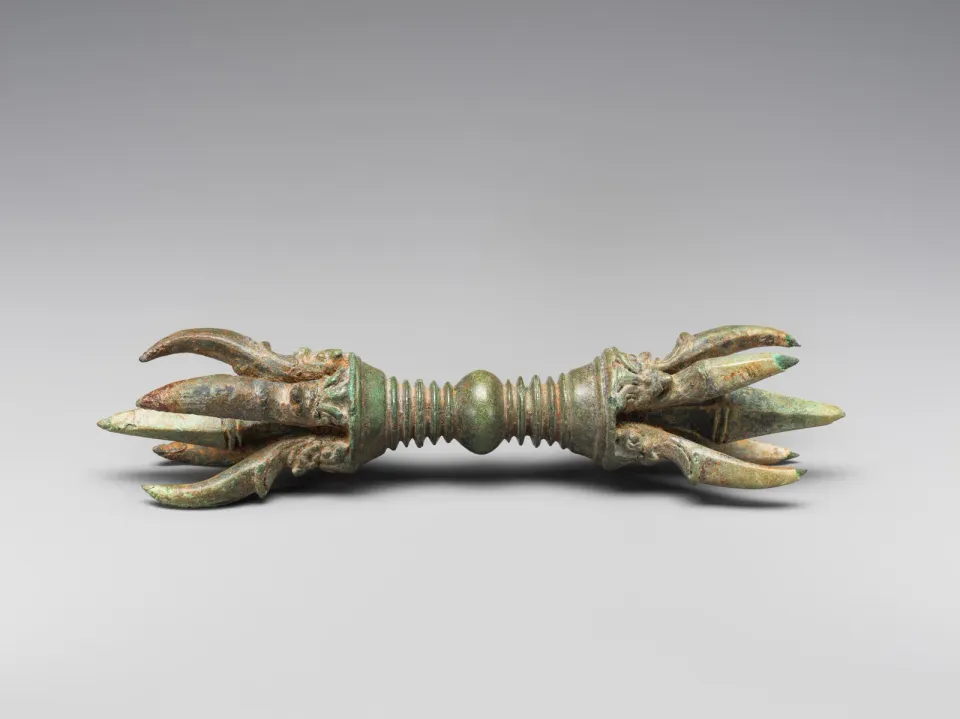
Vajra (वज्र)
Unbreakable as diamond and striking like lightning. It slew Vritra, the serpent of drought.
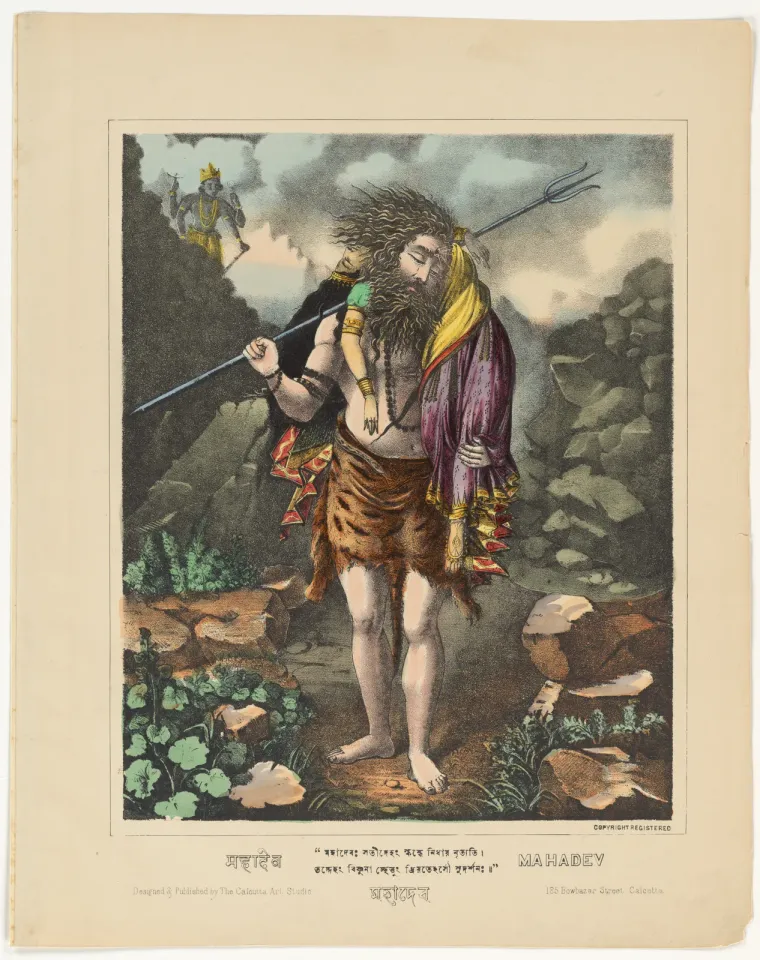
Trishula (त्रिशूल)
Its three prongs govern creation, preservation and destruction, or past, present and future.