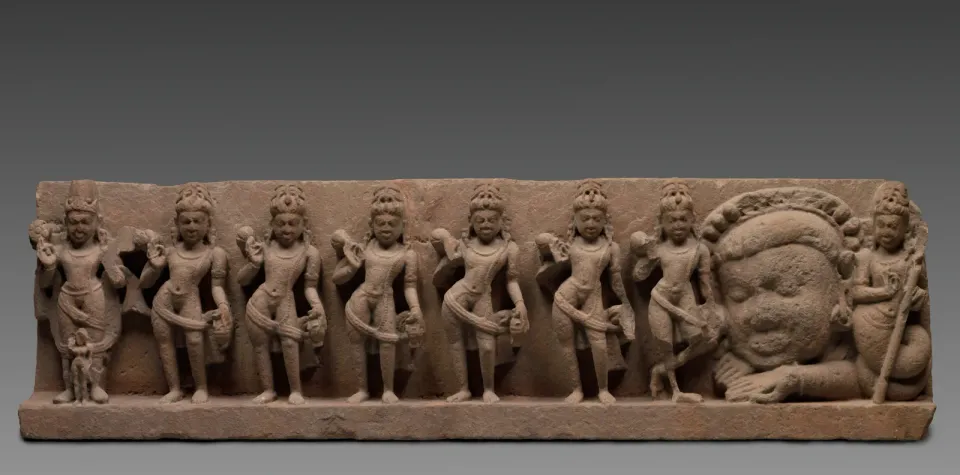
Indian
Soma
Soma
The hymns sing that whoever drinks it is filled with strength and inspiration and becomes immortal.
ElixirFirst recorded c. 1200 BCE
Loading artifact…
Photograph: A granite figure of Vishnu carved in Tamil Nadu, South India, in the early Chola dynasty, about 900–950. The four-armed god in a tall crown stands on a base, holding a discus and a conch in his two rear hands, with layers of ornaments on his chest.
Focus the photograph, then use the arrow keys to pan and the plus and minus keys to zoom. The buttons at the lower left also move it. Press a numbered button on the photograph to zoom to that note.
Kaustubha
The most radiant jewel to rise from the Ocean of Milk, which Vishnu always wears on his chest.
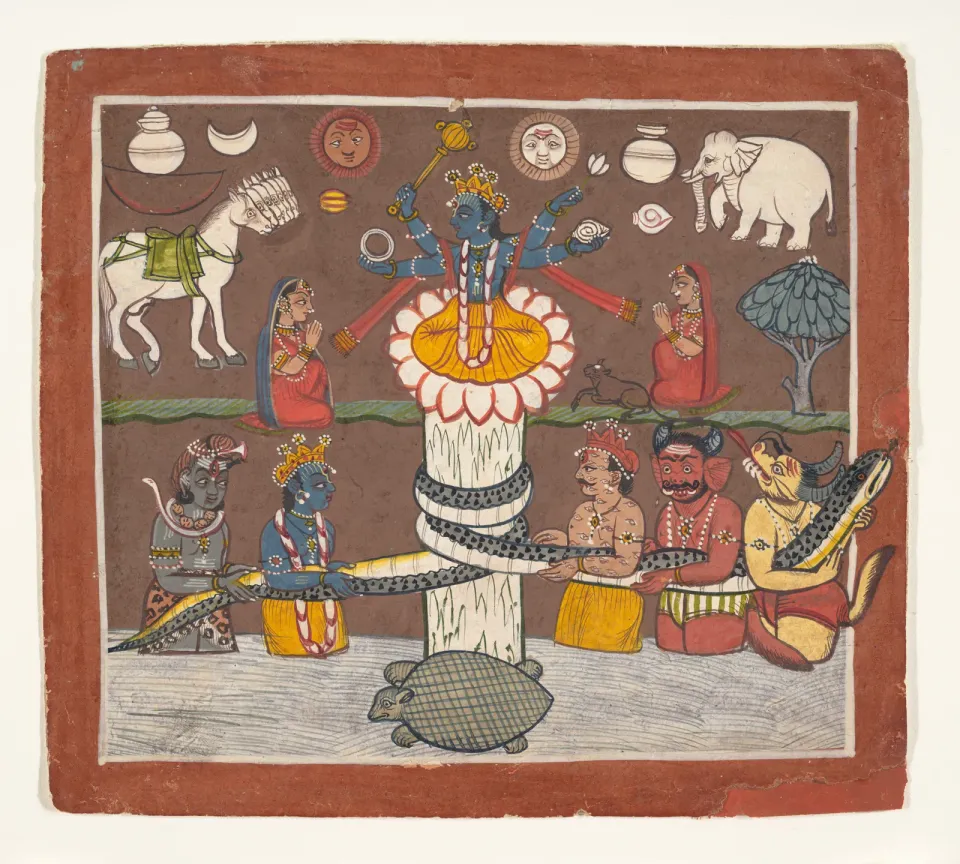
In the Mahabharata, the gods and the asuras together churn the Ocean of Milk to obtain amrita, the drink of immortality. They make Mount Mandara the churning rod, wind the giant serpent Vasuki around it as the rope and pull from either side. At the bottom of the sea a tortoise held up the mountain; the later Puranas say the tortoise was an avatar of Vishnu.
One by one, treasures rose from the sea: the moon, Lakshmi the goddess of fortune, the goddess of wine and the white horse Uchchaihshravas, and then the shining jewel Kaustubha. The Kaustubha went to the chest of Vishnu.
Ever since, Vishnu and his avatar Krishna have been depicted wearing the Kaustubha on the chest. Last of all, Dhanvantari, the god of medicine, rose from the sea bearing a pot of amrita.
The photograph shows Vishnu(South India, Tamil Nadu, probably Pudokkatai, early Chola Dynasty, 10th Century, 900–950), a real museum object that evokes the legendary artifact.
Soma
The hymns sing that whoever drinks it is filled with strength and inspiration and becomes immortal.
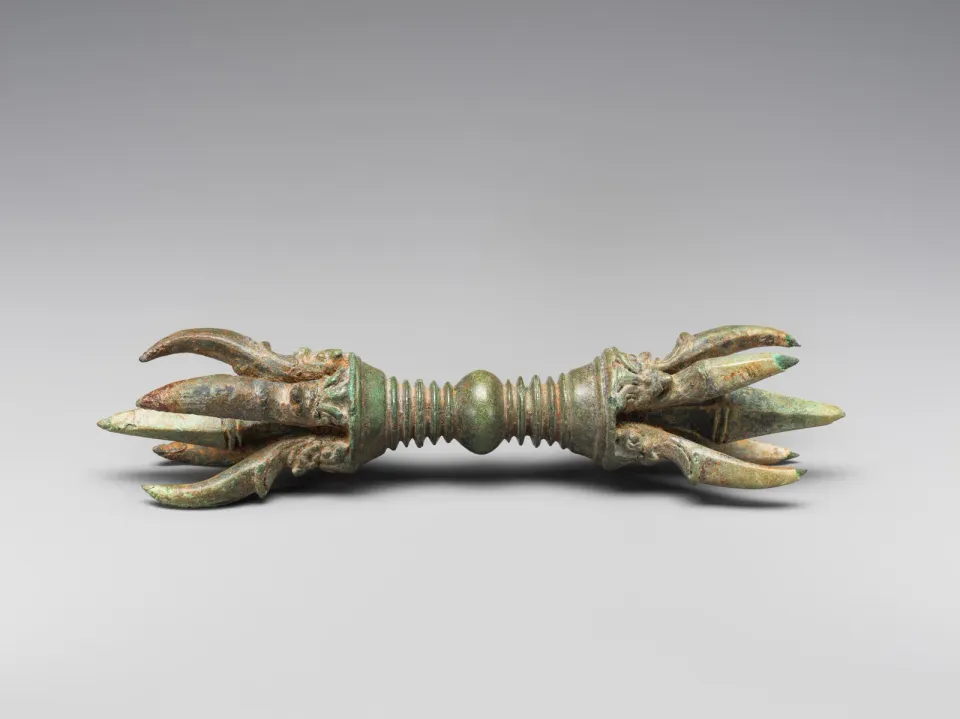
Vajra (वज्र)
Unbreakable as diamond and striking like lightning. It slew Vritra, the serpent of drought.
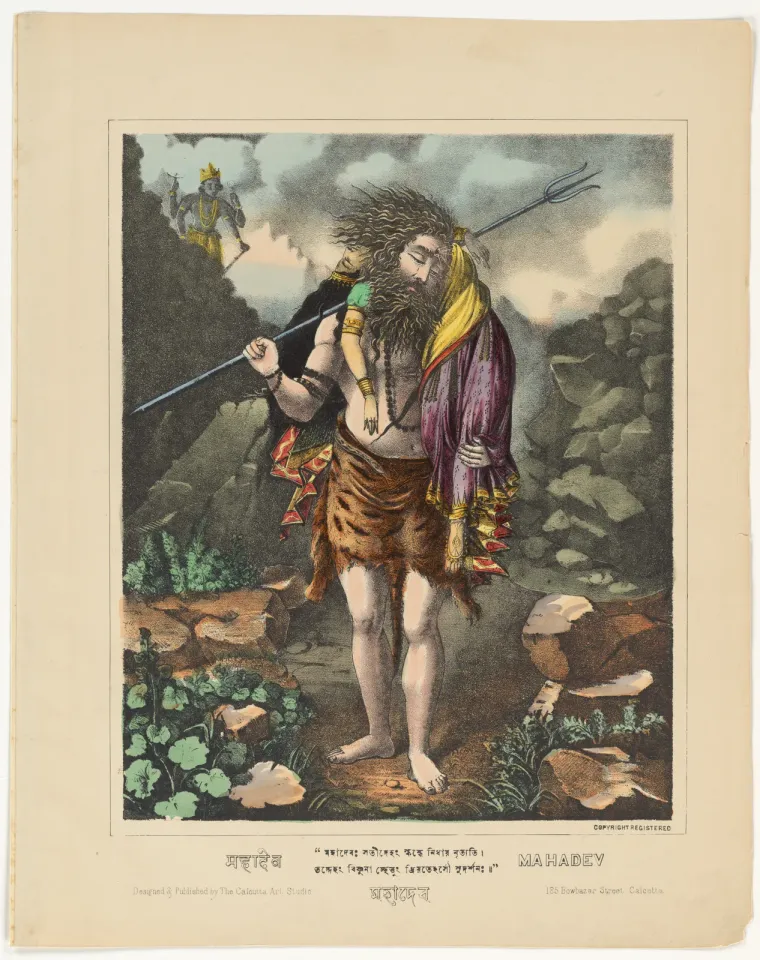
Trishula (त्रिशूल)
Its three prongs govern creation, preservation and destruction, or past, present and future.