Arthurian & Chivalric
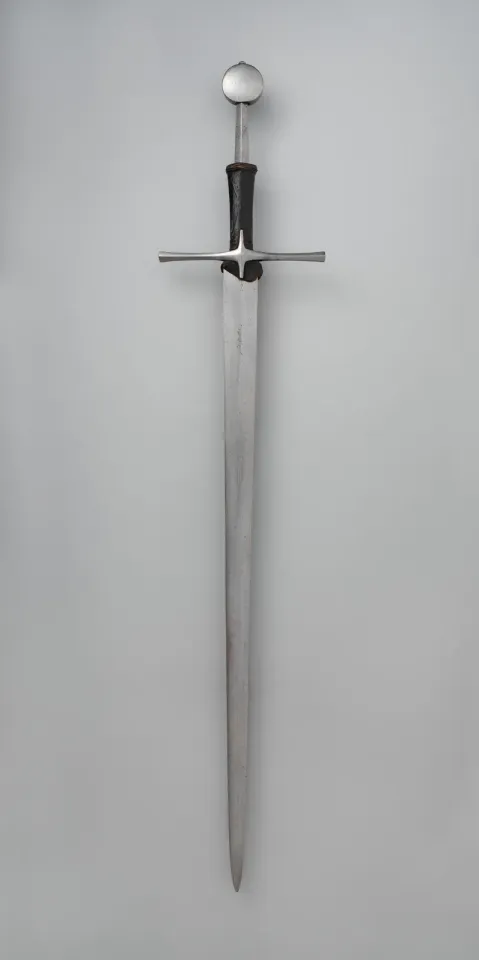
Excalibur
Excalibur
Cuts through enemy armor, and whoever wears its scabbard does not bleed.
WeaponFirst recorded 1136
Loading artifact…
Photograph: A side panel of an ivory casket made in France about 1330. Twisted columns divide it into scenes from knightly romances: at center left a knight fights a lion, at right Lancelot crosses a sword bridge over the waves, and at far right people watch from the battlements.
Focus the photograph, then use the arrow keys to pan and the plus and minus keys to zoom. The buttons at the lower left also move it. Press a numbered button on the photograph to zoom to that note.
L'anel de Lancelot
Looking into its stone showed whether an enchantment before him was false.
In Chrétien de Troyes' Lancelot, the Knight of the Cart, Lancelot sets out for the land of Gorre to rescue the abducted Queen Guinevere. On his finger is a ring given him by the Lady of the Lake, who raised him as a child. When he looked into its stone, anything enchanted showed its true nature.
The way into Gorre lay across a bridge made of a sword blade. Before Lancelot crossed it, gripping the blade with bare hands and feet, two lions seemed to wait at the far end. Once over, he looked into his ring, and the lions were nowhere to be seen.
In this story, where Lancelot even climbs into a prisoner's cart, a disgrace for a knight, to save the queen, the love of Guinevere and Lancelot is told in full for the first time. Chrétien said that Countess Marie of Champagne gave him the matter and meaning of the tale.
The photograph shows Panel from a Casket with Scenes from Courtly Romances(France, Lorraine?, Gothic period, 14th century, 1330), a real museum object that evokes the legendary artifact.
Excalibur
Cuts through enemy armor, and whoever wears its scabbard does not bleed.
Holy Grail
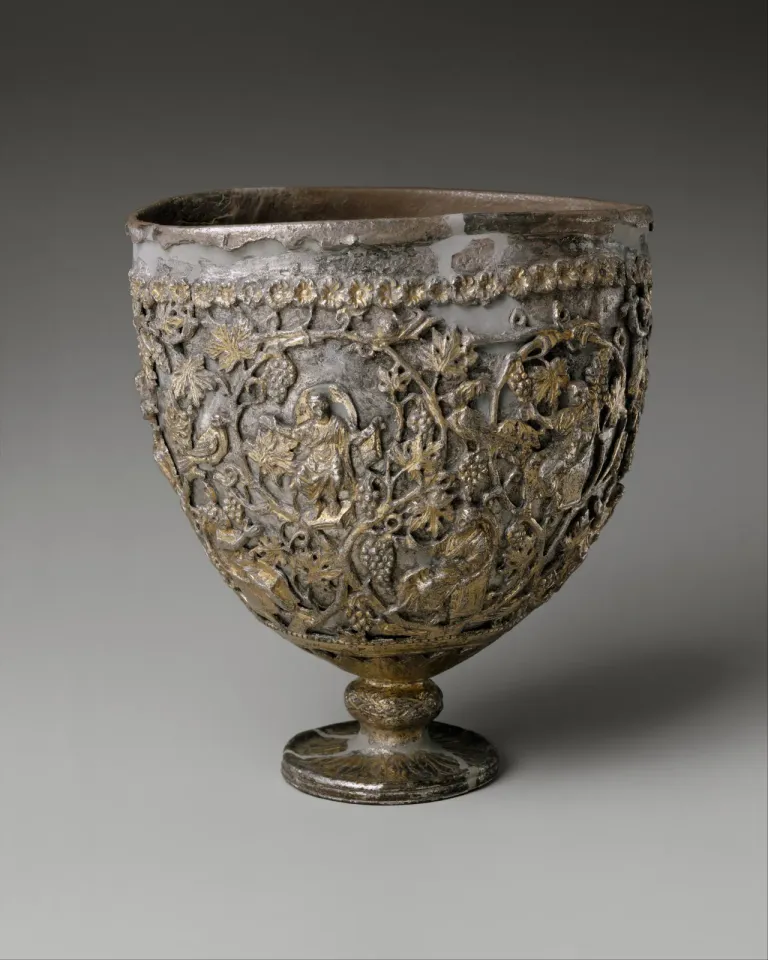
Grants those who see it the food they desire, and shows itself only to the pure knight.
Rhongomyniad
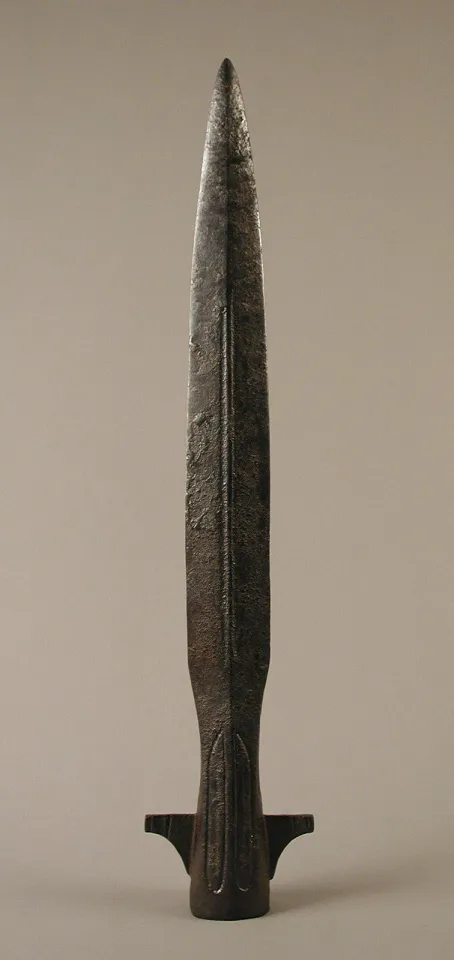
Long and broad-bladed, said to thirst for enemy blood.