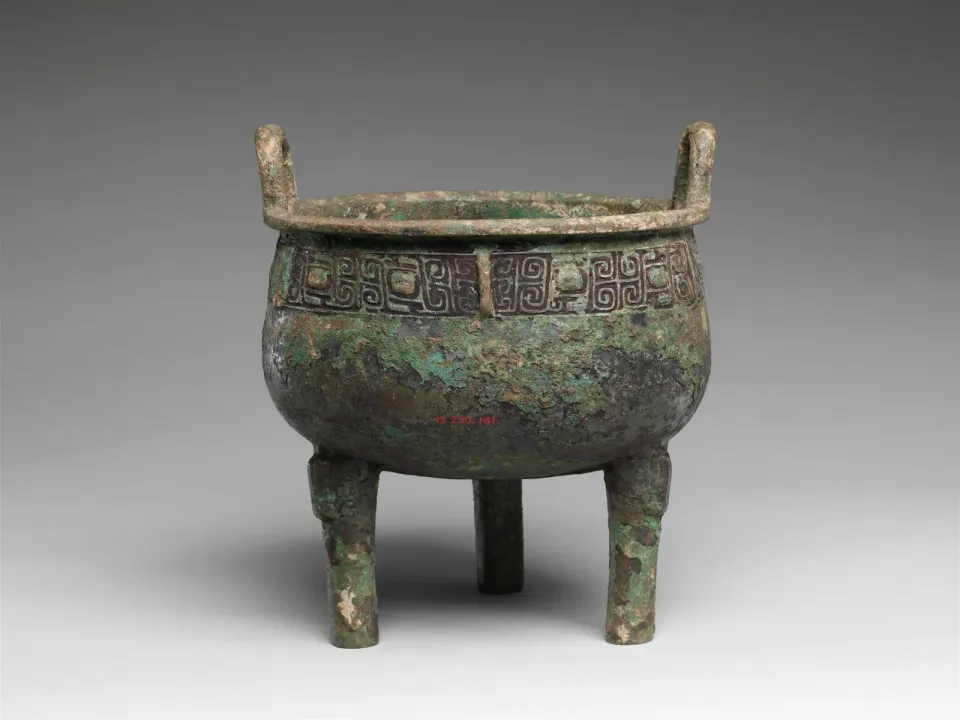
Chinese
Nine Tripod Cauldrons
九鼎
The legitimacy to rule all under heaven. They rest with dynasties of virtue.
VesselFirst recorded c. 400 BCE
Loading artifact…
Photograph: Laozi Crossing the Han Pass, a pale jade (nephrite) boulder carved like a mountain in eighteenth-century Qing China. On a mountain path among trees and rocks are carved Laozi riding an ox and other figures; it rests on a wooden stand.
Focus the photograph, then use the arrow keys to pan and the plus and minus keys to zoom. The buttons at the lower left also move it. Press a numbered button on the photograph to zoom to that note.
道德經
A text of some five thousand characters on the meaning of the Way and its virtue, later called the Daodejing.
According to the Biographies of Laozi and Han Fei in Sima Qian's Records of the Grand Historian, Laozi was keeper of the archives of the Zhou royal court. Seeing the decline of Zhou, he left the world and headed west.
When Laozi reached the pass, Yin Xi, keeper of the pass, entreated him: 'Since you are about to withdraw from the world, I beg you, write a book for me.' Laozi wrote a work in two parts, some five thousand characters on the meaning of the Way and its virtue, and departed, and no one knew where he ended his days.
The text later came to be called the Daodejing and became the root of Daoist thought. Later tales say that Laozi rode out through the Hangu Pass on a blue ox, and the scene became a favorite subject of painting and crafts in China, Korea and Japan.
The photograph shows Laozi crossing the Han Pass(China, 18th century), a real museum object that evokes the legendary artifact.
九鼎
The legitimacy to rule all under heaven. They rest with dynasties of virtue.
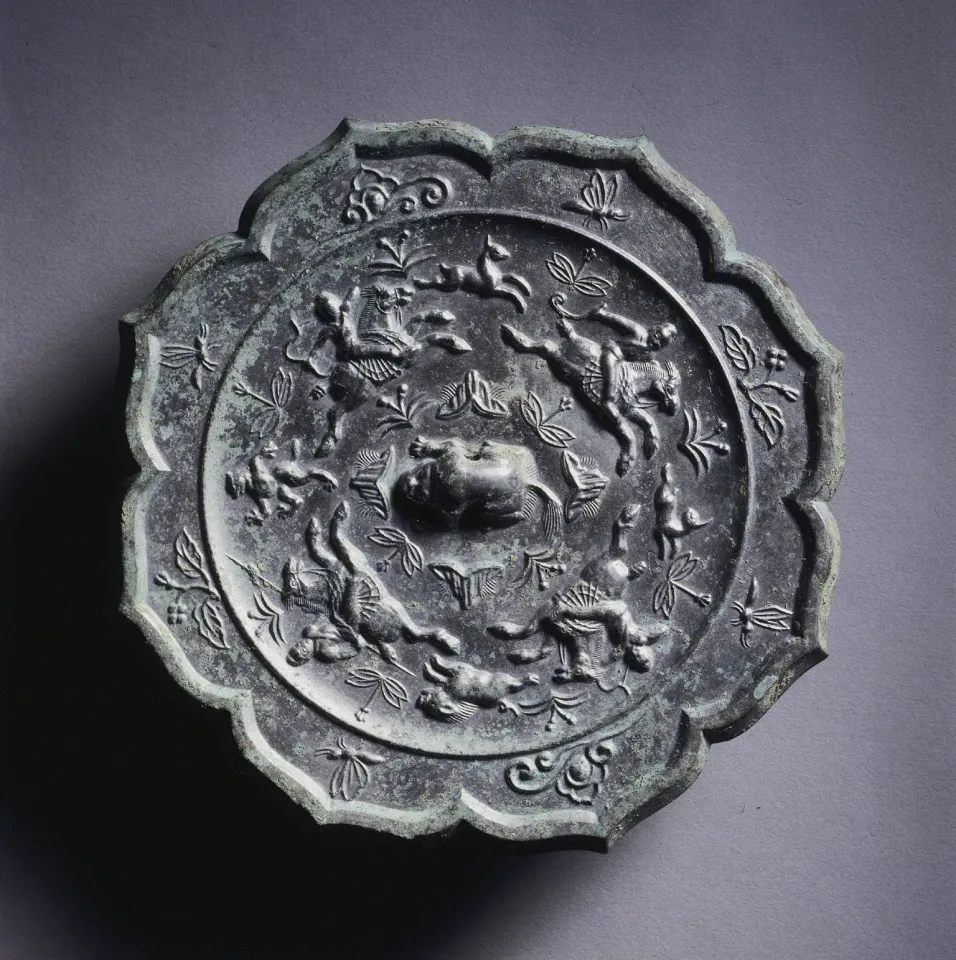
彤弓 (羿)
A red bow strong enough to shoot suns out of the sky.
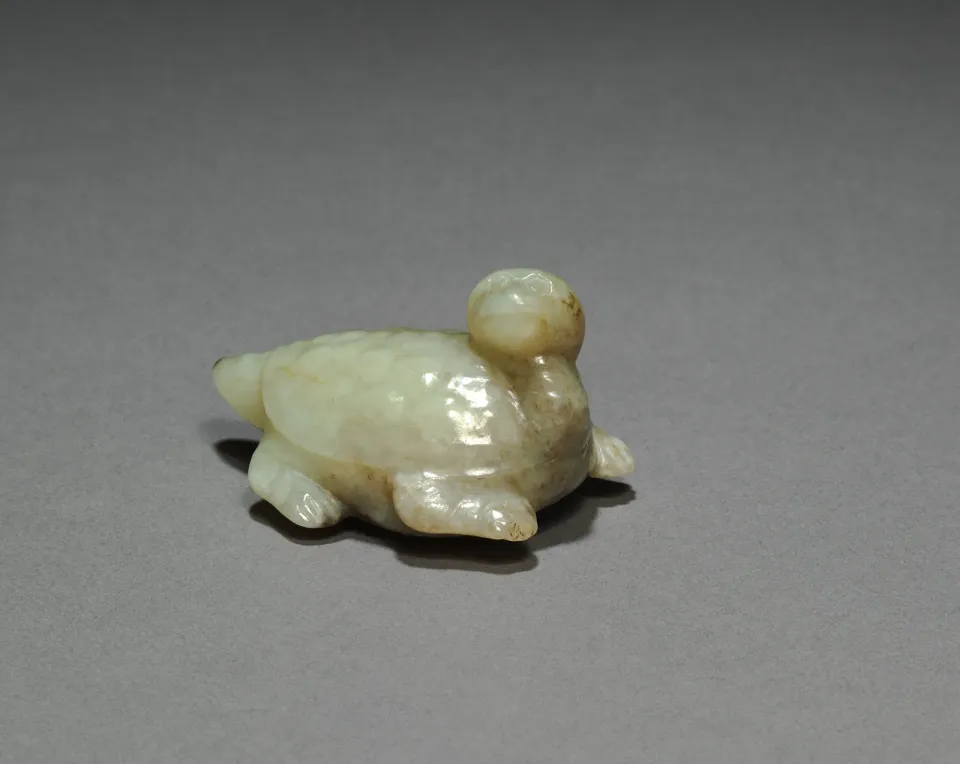
河圖洛書
From the dot patterns on their backs came the eight trigrams and the nine great laws of government.
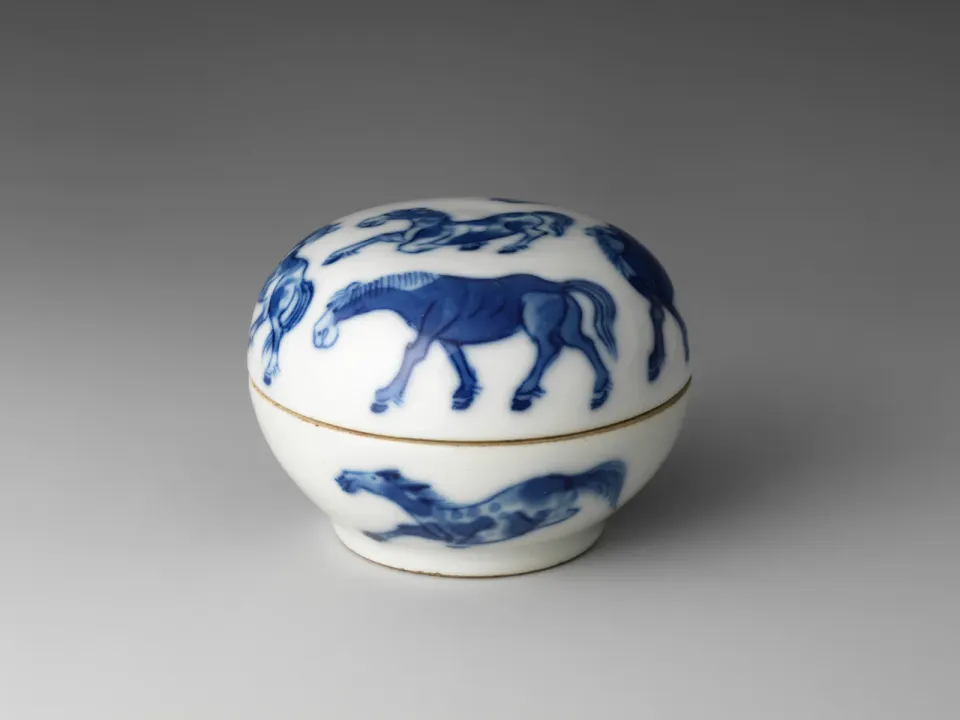
穆王八駿
Eight fine horses that ran a thousand li a day and carried King Mu to the far west.