Arthurian & Chivalric
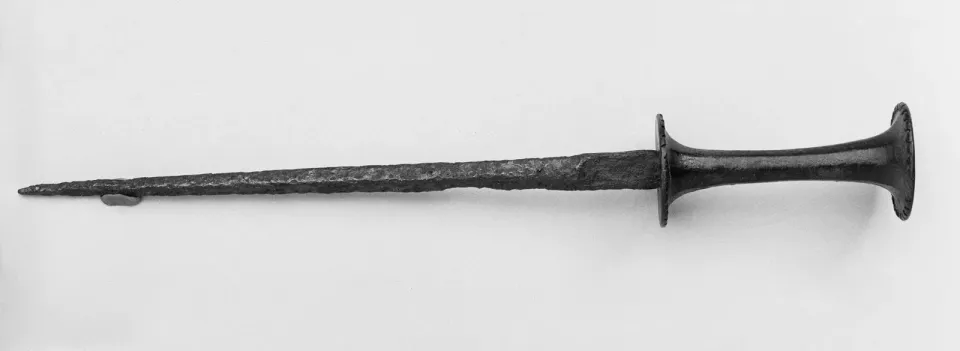
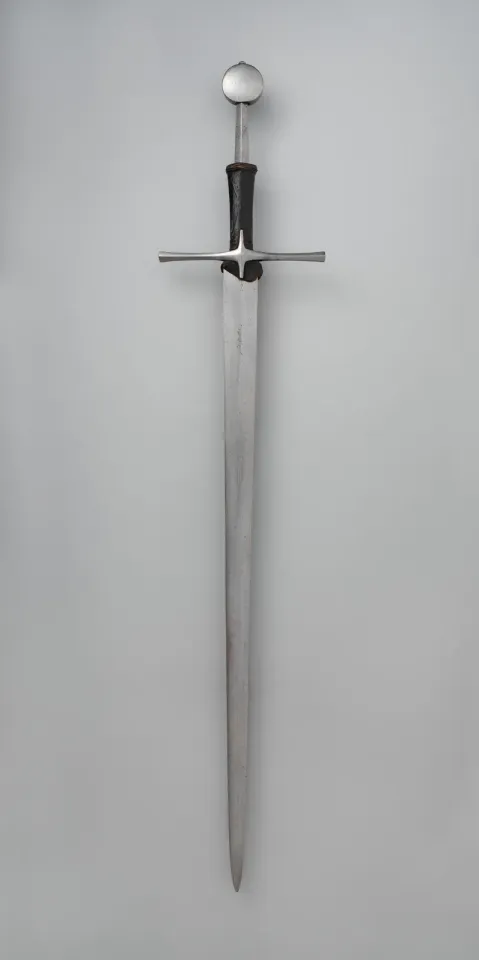
Excalibur
Excalibur
Cuts through enemy armor, and whoever wears its scabbard does not bleed.
WeaponFirst recorded 1136
Loading artifact…
Photograph: A fifteenth-century German flask of green glass. Below a slender neck ringed with a collar, the body divides into several thin twisting tubes, and the base swells into a round bulb.
Focus the photograph, then use the arrow keys to pan and the plus and minus keys to zoom. The buttons at the lower left also move it. Press a numbered button on the photograph to zoom to that note.
Love Potion of Tristan and Iseult
The two who drink it together fall into a love they can never escape.
King Mark of Cornwall sent his nephew Tristan to Ireland to bring back the princess Iseult as his bride. The queen of Ireland, skilled in herbs, brewed a love potion for her daughter and her husband to drink together on their wedding night, so that they would live in love, and entrusted it to the maid Brangaine.
The voyage to Cornwall was hot. When Tristan and Iseult grew thirsty, a servant poured them the potion, thinking it was wine, and the two who shared the cup fell into a love they could never escape. In Beroul's story the potion's power lasts three years; in Thomas's it lasts for life.
Iseult became Mark's queen, but the love did not end. Far away in Brittany, Tristan, dying of a poisoned wound, waited for Iseult and died; Iseult arrived too late and died at his side. In 1865 the story was reborn as Wagner's music drama Tristan und Isolde.
The photograph shows Flask(German, 15th century), a real museum object that evokes the legendary artifact.
Excalibur
Cuts through enemy armor, and whoever wears its scabbard does not bleed.
Holy Grail
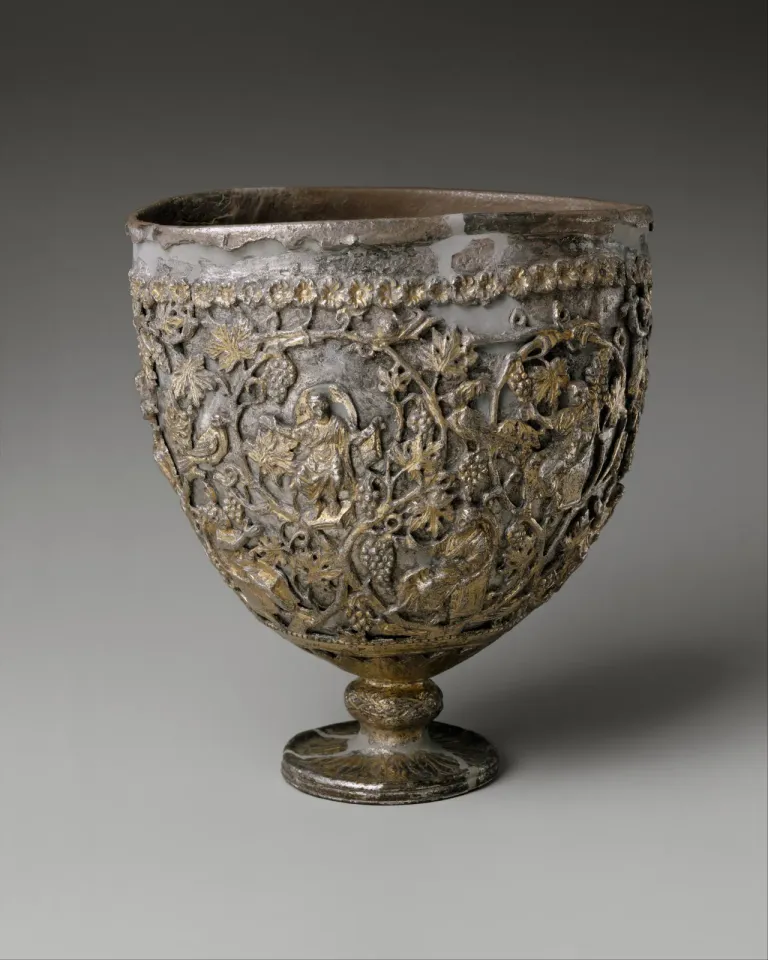
Grants those who see it the food they desire, and shows itself only to the pure knight.
Rhongomyniad
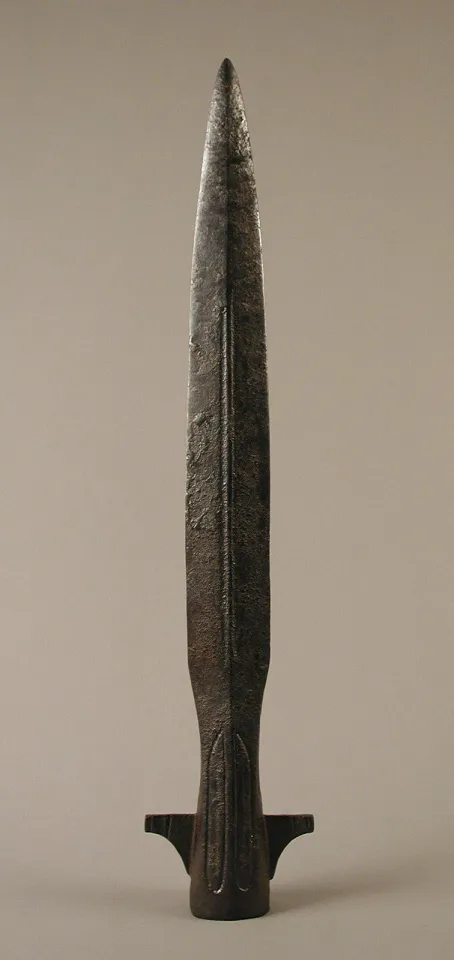
Long and broad-bladed, said to thirst for enemy blood.