Arthurian & Chivalric
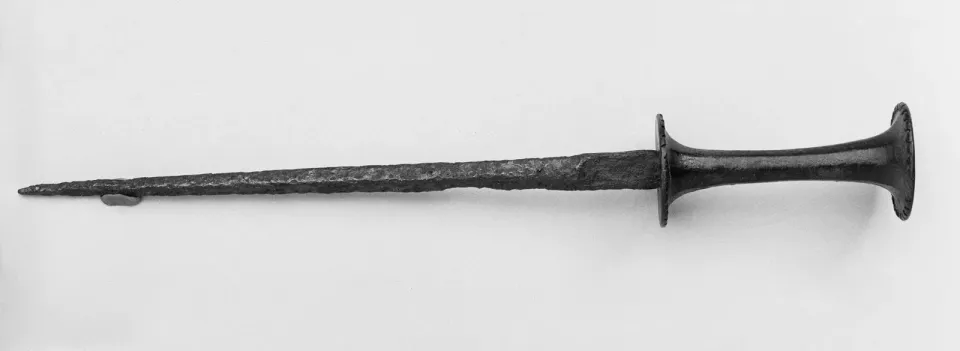
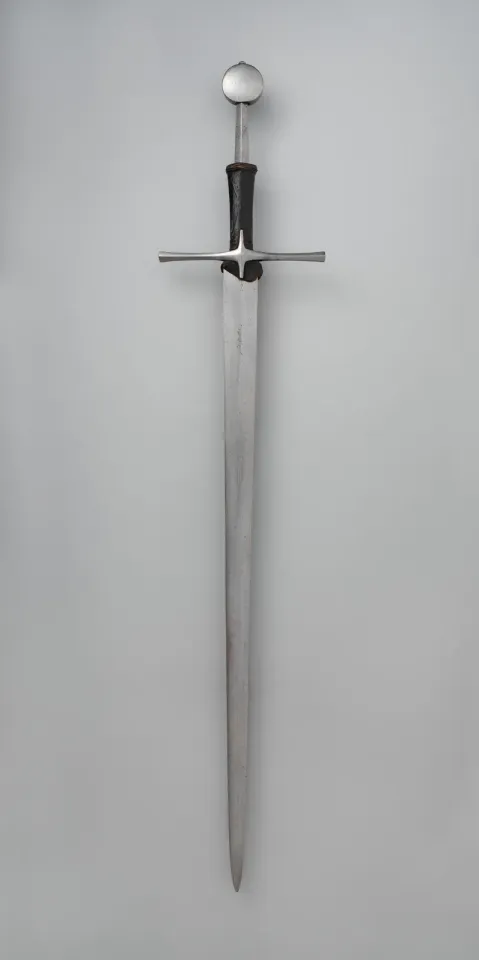
Excalibur
Excalibur
Cuts through enemy armor, and whoever wears its scabbard does not bleed.
WeaponFirst recorded 1136
Loading artifact…
Photograph: An eighteenth-century European pewter barber's basin. The broad basin has a wavy rim, and one edge is scooped out in a curve to fit against a customer's neck.
Focus the photograph, then use the arrow keys to pan and the plus and minus keys to zoom. The buttons at the lower left also move it. Press a numbered button on the photograph to zoom to that note.
Elmo di Mambrino
A golden helmet that keeps its wearer from harm.
In Boiardo's Orlando Innamorato, the Moorish king Mambrino owns a golden helmet that keeps its wearer from harm. Charlemagne's knight Rinaldo defeats him and takes the helmet, and in Ariosto's Orlando Furioso it remains a treasure the knights covet.
What made the helmet most famous is Cervantes's Don Quixote, published in 1605. Seeing a barber riding a donkey with a brass basin on his head to keep off the rain, Don Quixote believes a knight in a golden helmet is approaching. He charges with his lance, drives off the barber and takes the basin.
Trying it on, Don Quixote declares that someone who did not know its worth must have melted down half of the helmet to sell and made the rest into something that looks like a barber's basin. However often Sancho Panza says it is a basin, he will not listen. Later, at an inn, the guests break into an uproar over whether it is a basin or a helmet.
The photograph shows Barber's basin(18th century), a real museum object that evokes the legendary artifact.
Excalibur
Cuts through enemy armor, and whoever wears its scabbard does not bleed.
Holy Grail
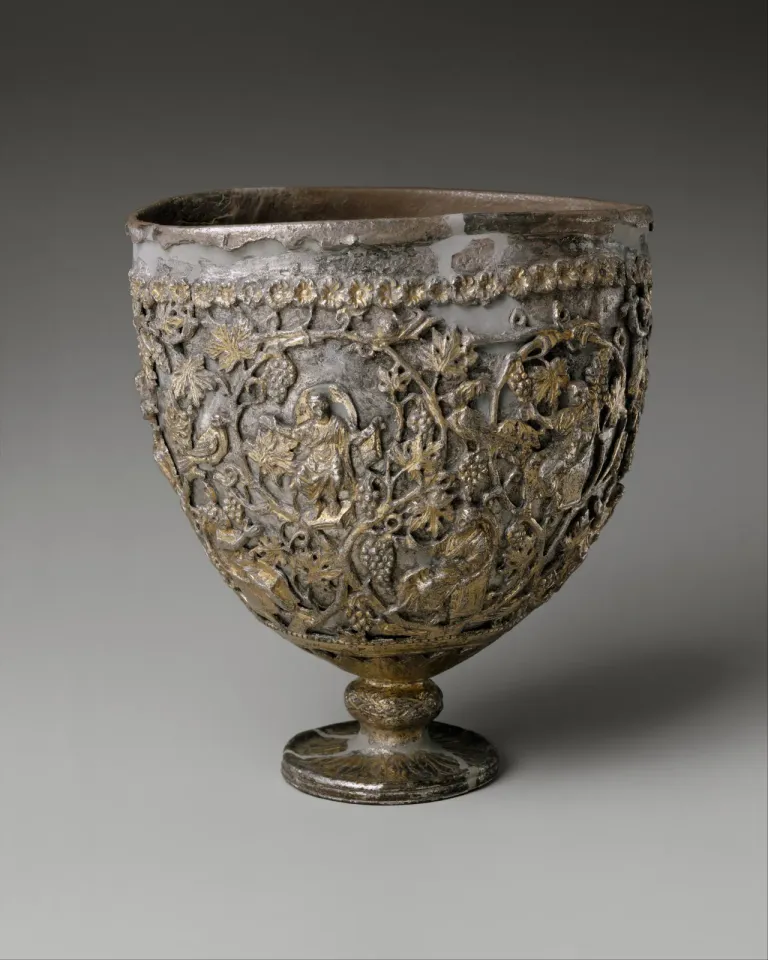
Grants those who see it the food they desire, and shows itself only to the pure knight.
Rhongomyniad
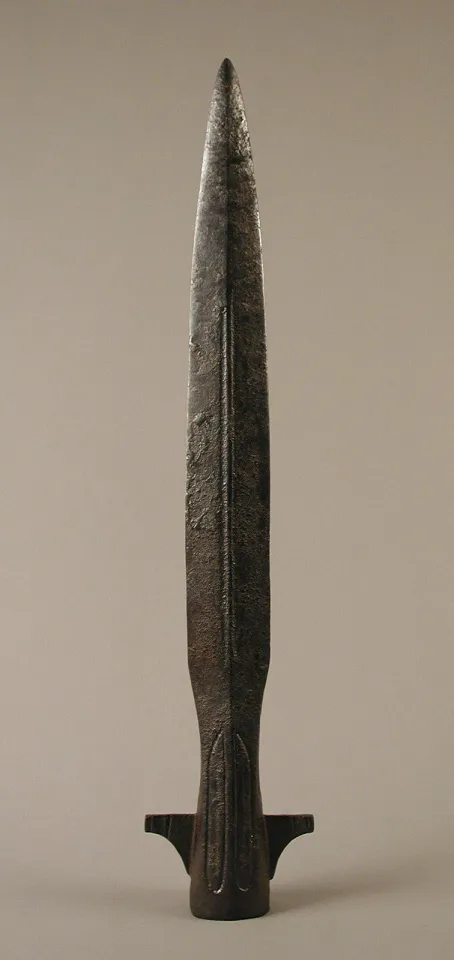
Long and broad-bladed, said to thirst for enemy blood.