Japanese
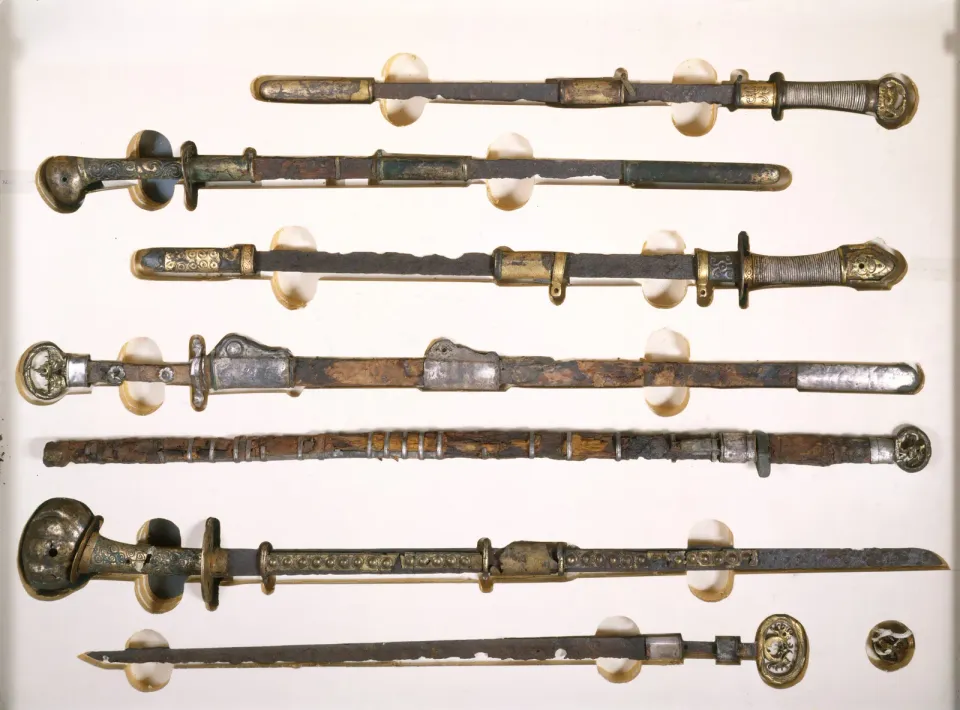
Kusanagi-no-Tsurugi
草薙剣 (Kusanagi-no-Tsurugi)
Cuts the grass by itself and turns back fire.
WeaponFirst recorded 712
Loading artifact…
Photograph: Evening Bell at Mii Temple, from the Eight Views of Omi, a color woodblock print by Utagawa Hiroshige, late 1830s. The roofs of Mii-dera show among the trees of a green mountain on Lake Biwa, with sailboats and far mountains, and the title and a poem at the top.
Focus the photograph, then use the arrow keys to pan and the plus and minus keys to zoom. The buttons at the lower left also move it. Press a numbered button on the photograph to zoom to that note.
三井寺の鐘
A temple bell from the Dragon Palace. When the strongman Benkei dragged it away, it cried, they say, "I want to go back."
According to the Taiheiki, as the warrior Fujiwara no Hidesato was about to cross the Seta bridge over Lake Biwa, a huge serpent lay across it. Hidesato calmly stepped over it, and that night a visitor came to him, saying he was the dragon god of the lake and was being tormented by the giant centipede of Mount Mikami, and begged for his help.
Hidesato shot arrows at the great centipede coiled around the mountain. His first arrows bounced off, but the last one pierced the centipede's head. In gratitude the dragon god took him to the Dragon Palace and gave him all kinds of treasures, among them a great temple bell. Hidesato offered the bell to Mii-dera. People called him Tawara Toda.
Later a story arose that the strongman Benkei dragged the bell to Mount Hiei, and when he struck it, it cried, "I want to go back, I want to go back," so he threw it into a ravine in anger. The evening bell of Mii-dera is counted among the Eight Views of Omi, the eight scenic sights of Lake Biwa.
The photograph shows Evening Bell at Mii Temple, from the series Eight Views of Omi Province(Japan, Edo period (1615–1868), late 1830s or early 1840s), a real museum object that evokes the legendary artifact.
草薙剣 (Kusanagi-no-Tsurugi)
Cuts the grass by itself and turns back fire.
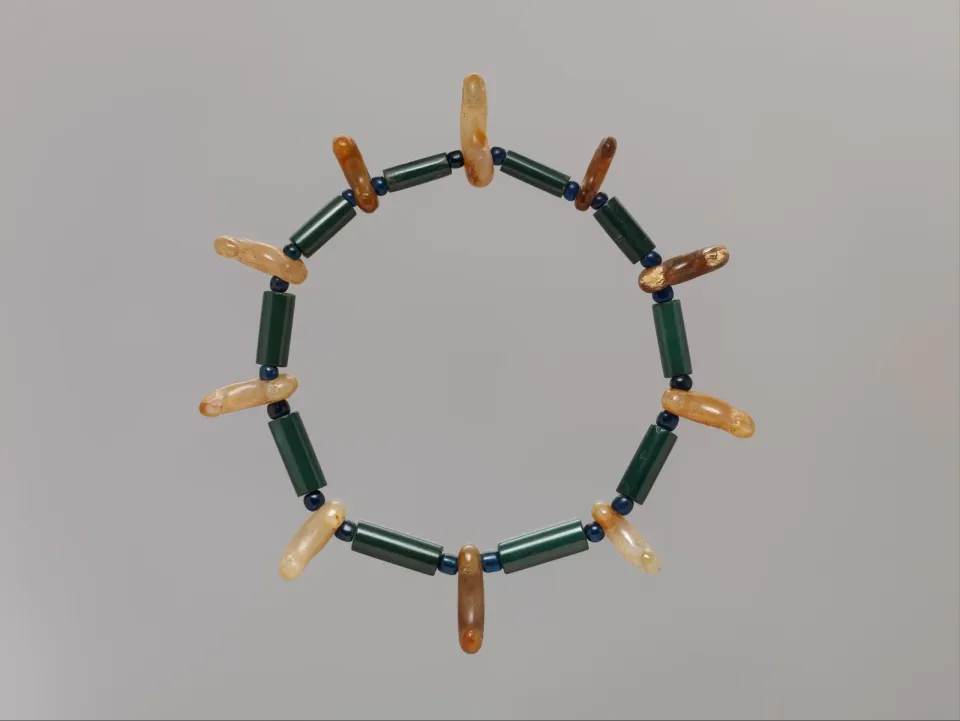
八尺瓊勾玉
One of the three sacred treasures, holding the spirit of the gods and the legitimacy of the imperial line.
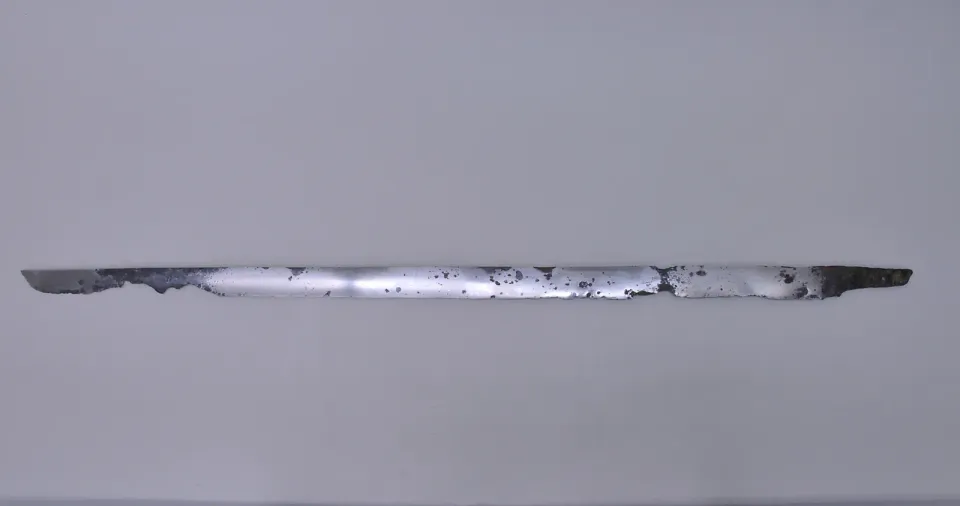
十拳剣
A great sword ten fists long, which cut the eight-headed serpent to pieces.
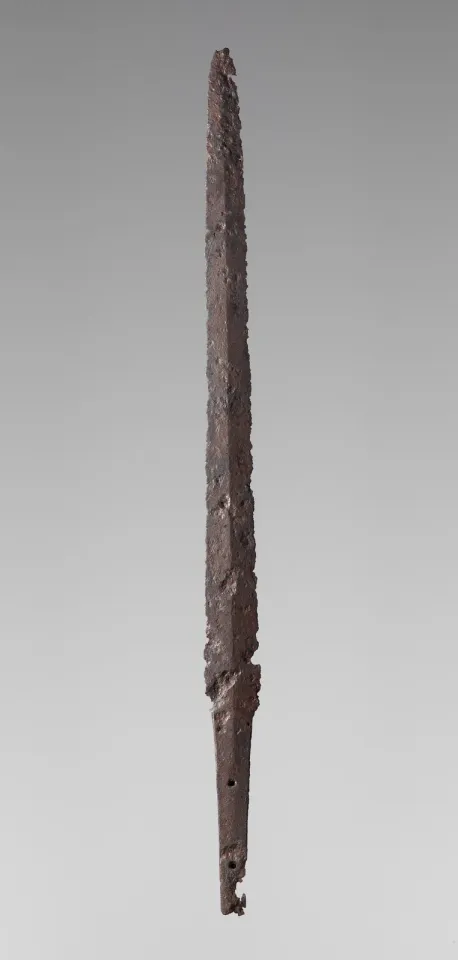
布都御魂
A single stroke revived soldiers felled by poisonous vapors.