Sacred Relics
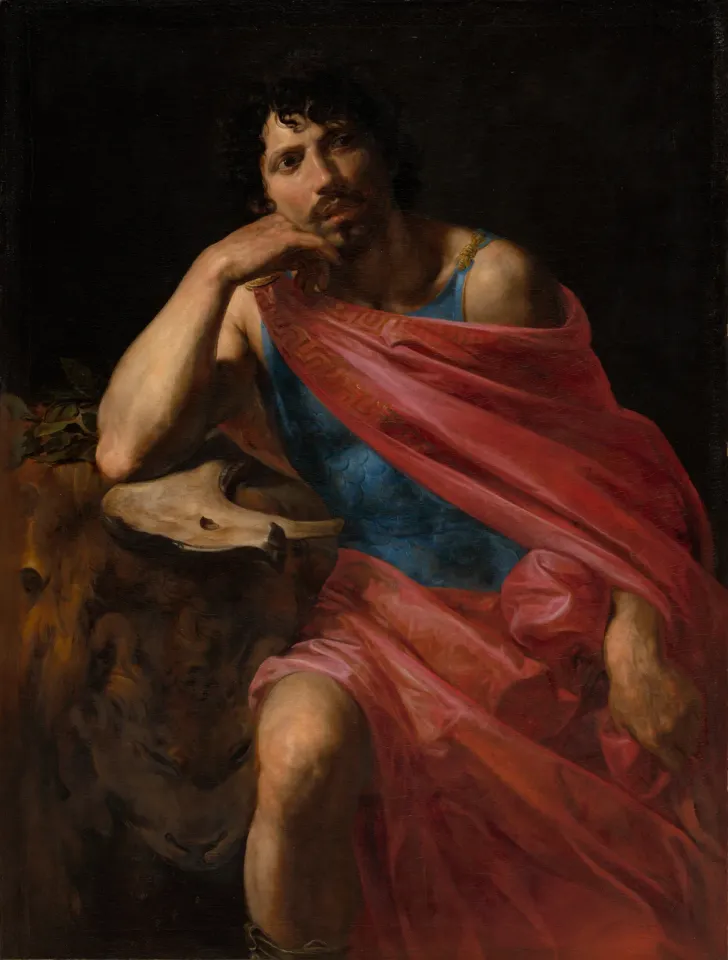
Jawbone of Samson
Jawbone of an Ass
With the jawbone of a newly dead donkey he struck down a thousand Philistines.
WeaponFirst recorded c. 600 BCE
Loading artifact…
Photograph: Moses Praying to End the Serpents' Attack on the Israelites, painted in Allahabad in the Mughal Empire, 1602–4. On a hillside Moses prays with both hands raised, while below him people bitten by snakes fall or writhe.
Focus the photograph, then use the arrow keys to pan and the plus and minus keys to zoom. The buttons at the lower left also move it. Press a numbered button on the photograph to zoom to that note.
Nehushtan (Brazen Serpent)
Whoever had been bitten by the fiery serpents lived when he looked at the bronze serpent on the pole.
Wandering in the wilderness, the Israelites complained against God and Moses that they had neither food nor water. Then fiery serpents appeared and bit the people, and many died. When the people repented, Moses prayed for them.
God told him to make a fiery serpent and set it on a pole. Moses made a serpent of bronze and set it on a pole, and whoever had been bitten lived when he looked at the bronze serpent. The Gospel of John recalls it: "As Moses lifted up the serpent in the wilderness, even so must the Son of Man be lifted up."
The bronze serpent remained in Jerusalem for centuries. According to the Book of Kings, when the people called it Nehushtan and burned incense before it, King Hezekiah of Judah broke it in pieces to put an end to idol worship.
The photograph shows Moses praying to end the serpents’ attack on the Israelites (folio 63 verso), from a Mirror of Holiness (Mir’at al-quds) of Father Jerome Xavier(Mughal India, Allahabad, made for Prince Salim (1569–1627), 1602–4), a real museum object that evokes the legendary artifact.
Jawbone of an Ass
With the jawbone of a newly dead donkey he struck down a thousand Philistines.
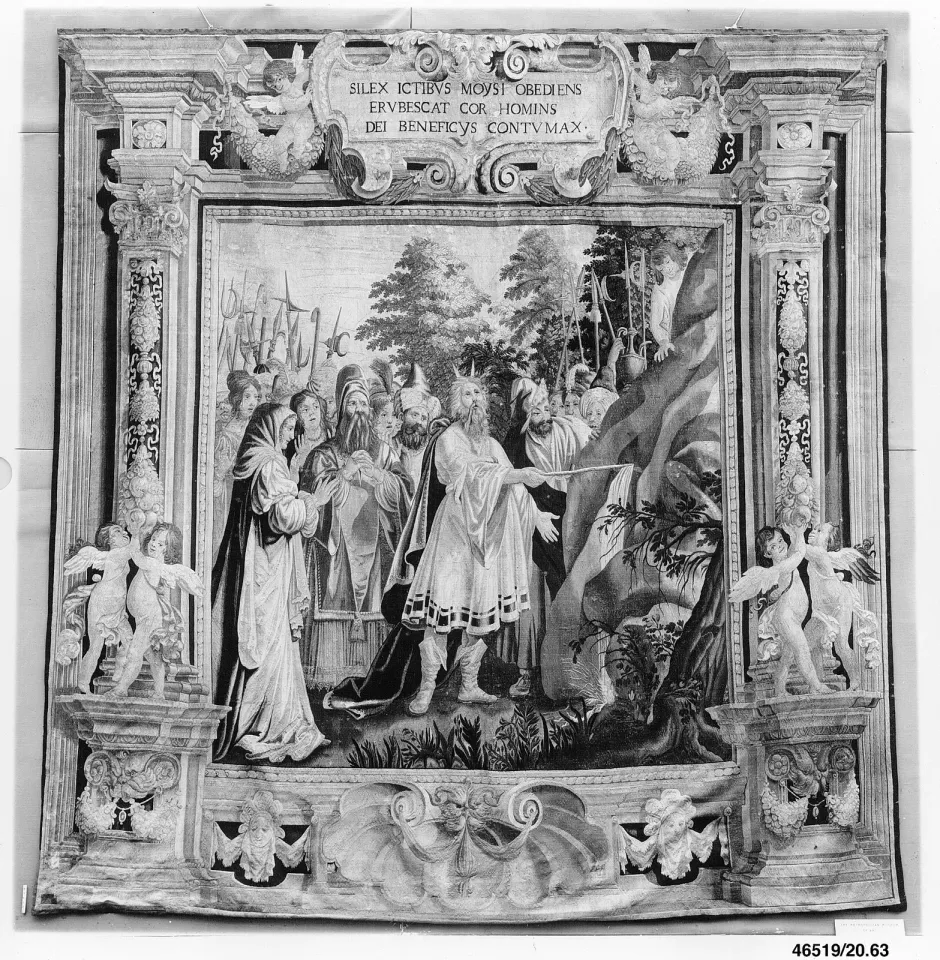
Rod of Moses
Thrown down it becomes a serpent; stretched over the sea it parts the waters; struck against a rock it brings forth water.
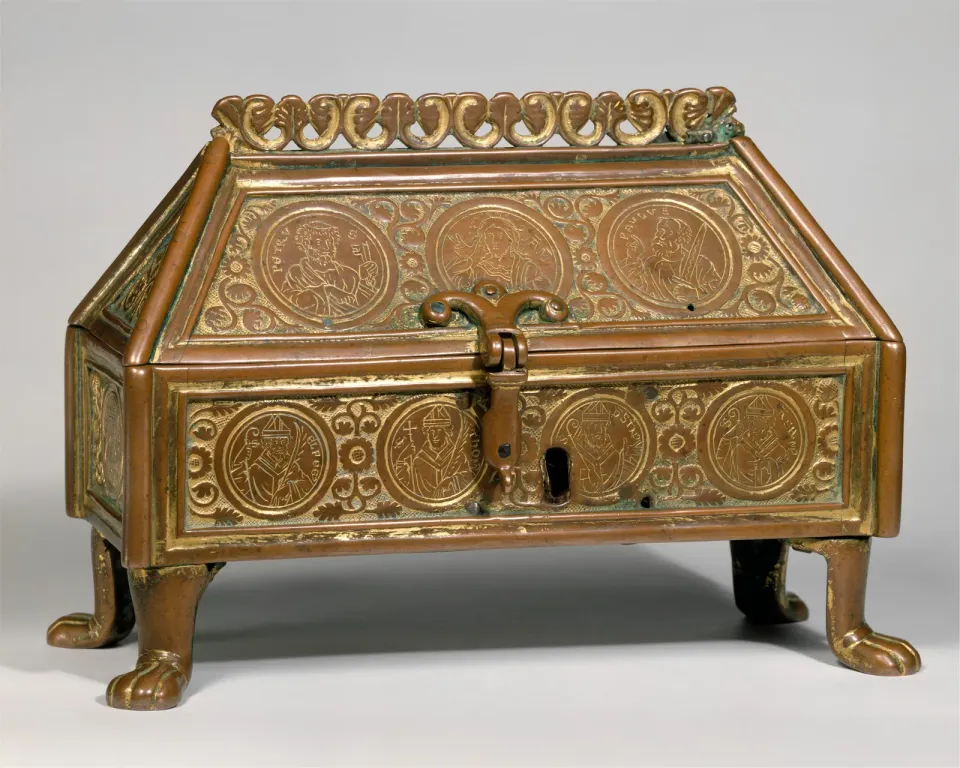
Ark of the Covenant
The seat of God's presence. Carried before the people, it parted the Jordan and brought down the walls of Jericho.
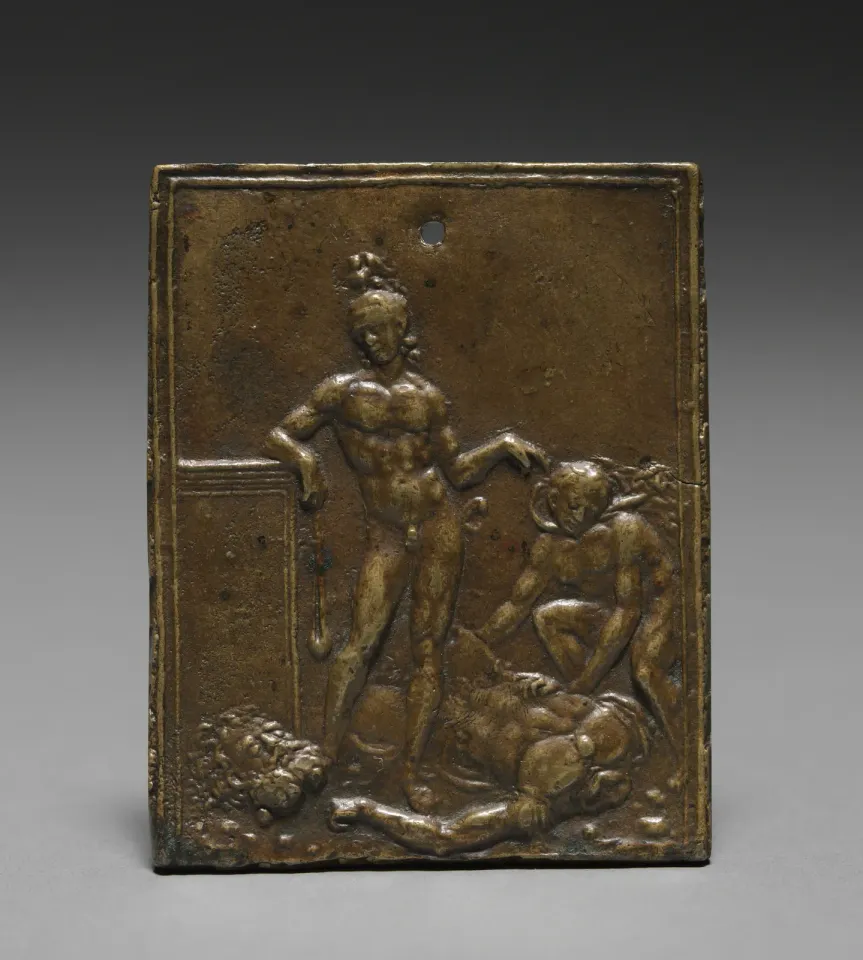
Sling of David
With one smooth stone chosen from a brook, it brought down the giant Goliath.