Chinese
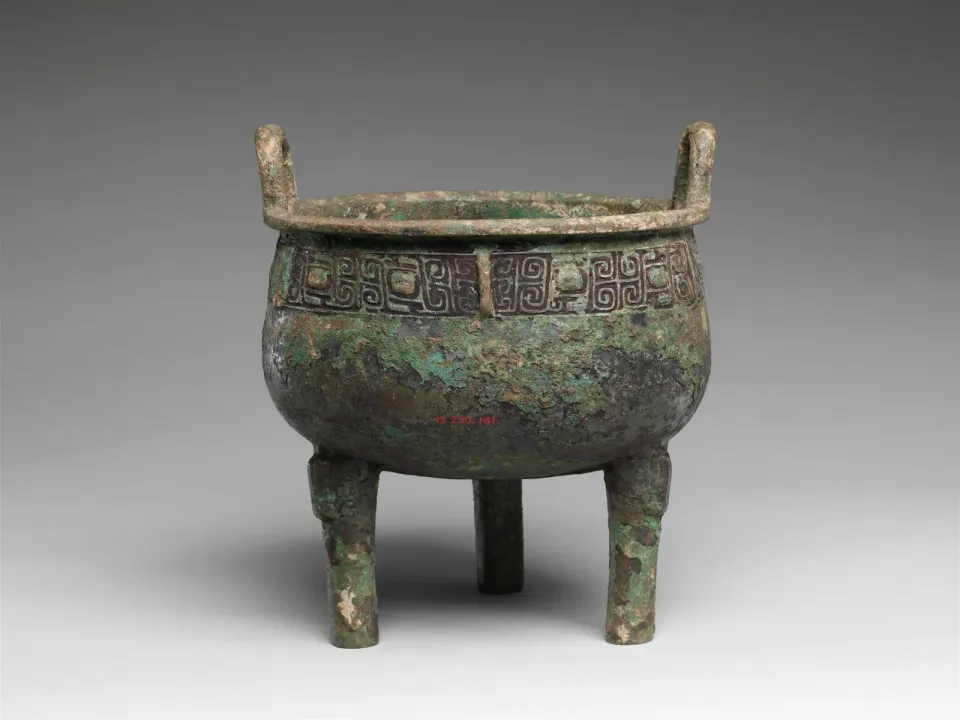
Nine Tripod Cauldrons
九鼎
The legitimacy to rule all under heaven. They rest with dynasties of virtue.
VesselFirst recorded c. 400 BCE
Loading artifact…
Photograph: A Buddhist monk's staff (shakujō) made in Japan in the early nineteenth century. Several rings hang from the round loop of the bronze head, and below it runs a lacquered wooden shaft carved with patterns.
Focus the photograph, then use the arrow keys to pan and the plus and minus keys to zoom. The buttons at the lower left also move it. Press a numbered button on the photograph to zoom to that note.
九環錫杖
It was said that whoever leaned on this staff would come to no poisonous harm.
In Chapter 12 of Journey to the West, the bodhisattva Guanyin comes to Chang'an at the Buddha's command to find someone to bring the scriptures back from India in the west. Disguised as a monk, she goes through the streets offering to sell a cassock of gold brocade and a monk's staff with nine rings.
When Emperor Taizong of Tang bought them and gave them to the monk Tripitaka, the bodhisattva told of their virtues: whoever wore the cassock would not fall into hell, and whoever leaned on the staff would come to no poisonous harm. Wearing this cassock and leaning on this staff, Tripitaka set out on the road west.
A monk's staff is a walking stick carried by Buddhist monks; the rings on its head jingle as it moves, driving off animals and insects on the road and announcing a monk come to beg for alms. The real monk Xuanzang left Chang'an about 629, traveled to India and back, and recorded his journey in the Great Tang Records on the Western Regions.
The photograph shows Ritual Staff (Shakujō)(Japan, early 19th century), a real museum object that evokes the legendary artifact.
九鼎
The legitimacy to rule all under heaven. They rest with dynasties of virtue.
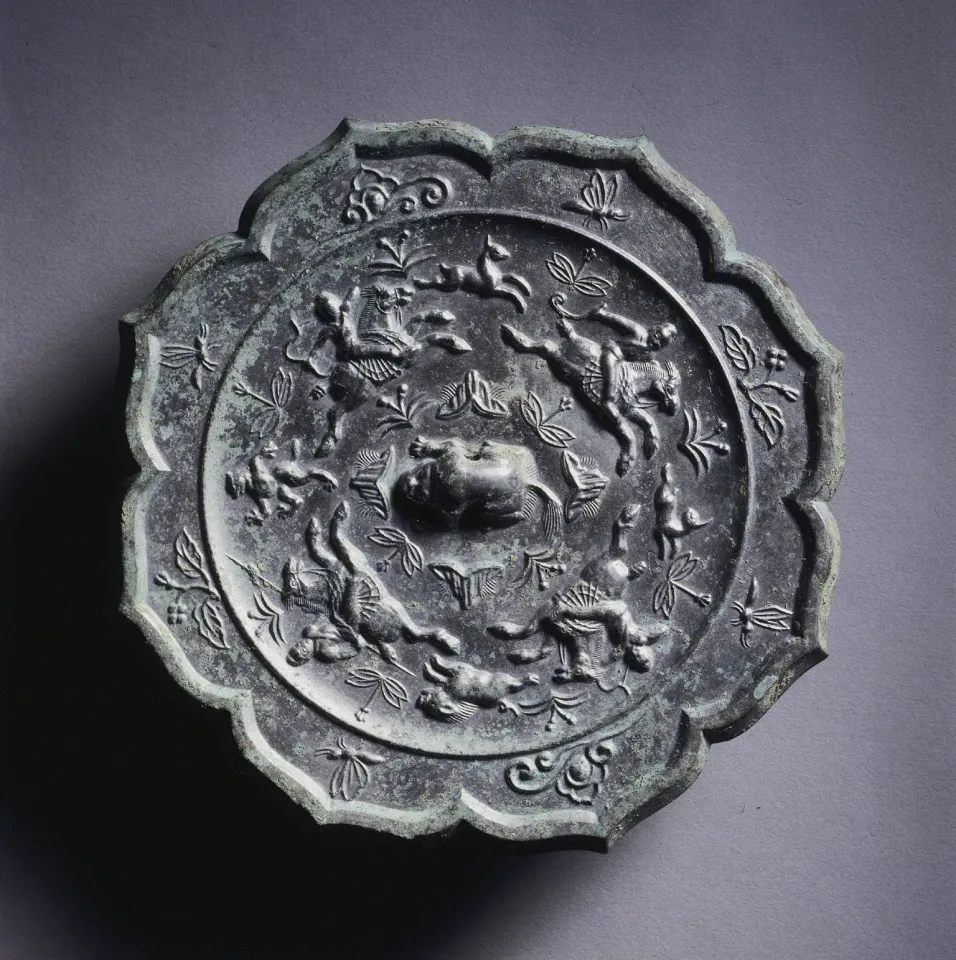
彤弓 (羿)
A red bow strong enough to shoot suns out of the sky.
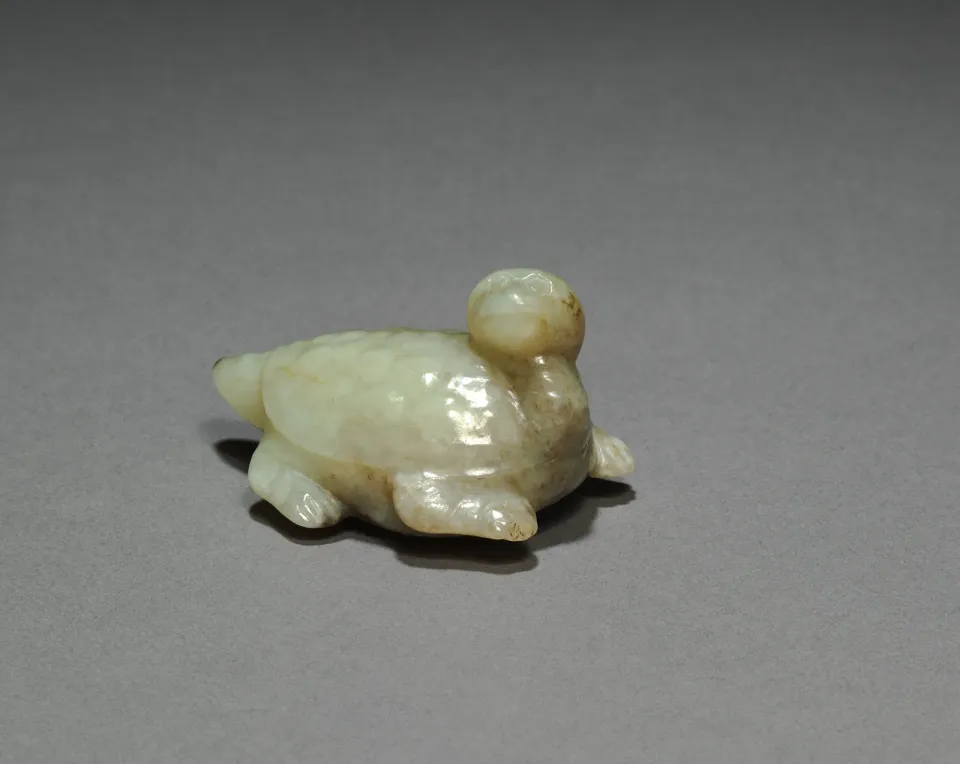
河圖洛書
From the dot patterns on their backs came the eight trigrams and the nine great laws of government.
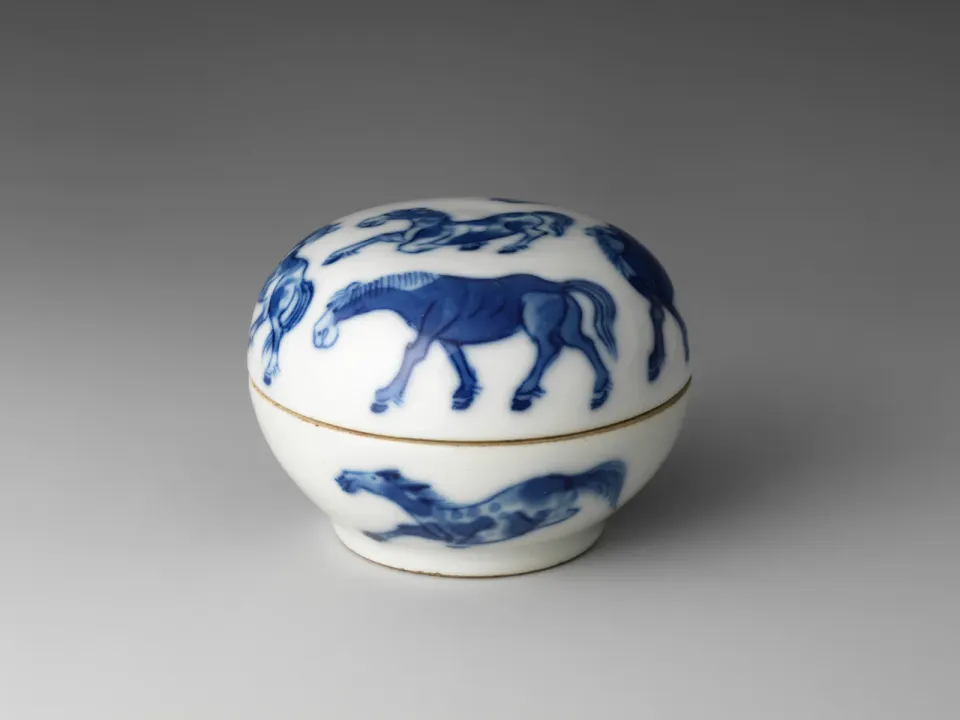
穆王八駿
Eight fine horses that ran a thousand li a day and carried King Mu to the far west.