Arthurian & Chivalric
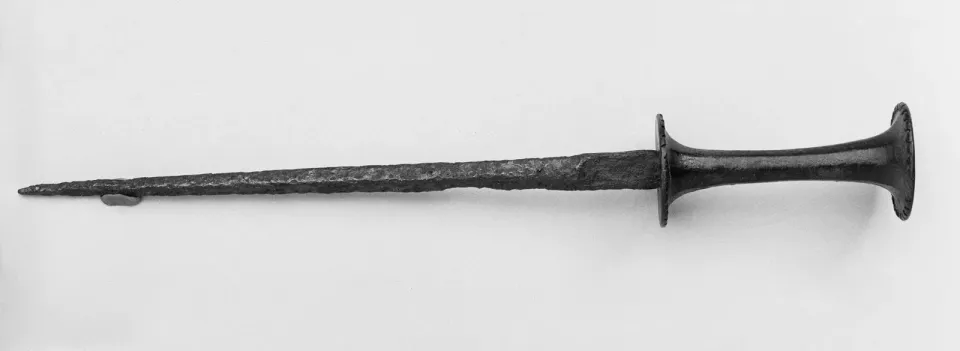
Excalibur
Excalibur
Cuts through enemy armor, and whoever wears its scabbard does not bleed.
WeaponFirst recorded 1136
Loading artifact…
Photograph: A South Italian ivory horn (oliphant) of the twelfth century. The long, curved elephant tusk is densely carved with roundels and animals, with metal bands for a strap at both ends.
Focus the photograph, then use the arrow keys to pan and the plus and minus keys to zoom. The buttons at the lower left also move it. Press a numbered button on the photograph to zoom to that note.
Olifant
When Roland blew it at the pass of Roncevaux, the sound reached Charlemagne's army thirty leagues away.
In 778, as Charlemagne's army returned from Spain, Roland commanded the rearguard at the pass of Roncevaux. When a vast Saracen army fell on them through the treachery of his stepfather Ganelon, his friend Oliver urged him three times to sound his horn and call back the king. Roland refused, saying it would be shameful to ask for help.
Only when nearly all the knights had fallen did Roland blow the olifant. He blew so hard that blood burst from his mouth and his temples split, and the sound carried to Charlemagne thirty leagues away. Ganelon held the king back, saying Roland was probably just hunting a hare.
Dying, Roland struck down an enemy who tried to take Durendal with the olifant, and the gold and crystal set in the horn broke away. Charlemagne later filled the horn with gold coins and laid it on the altar of Saint-Seurin in Bordeaux. "Olifant" is Old French for elephant, that is, ivory.
The photograph shows Oliphant(South Italian, 12th century), a real museum object that evokes the legendary artifact.
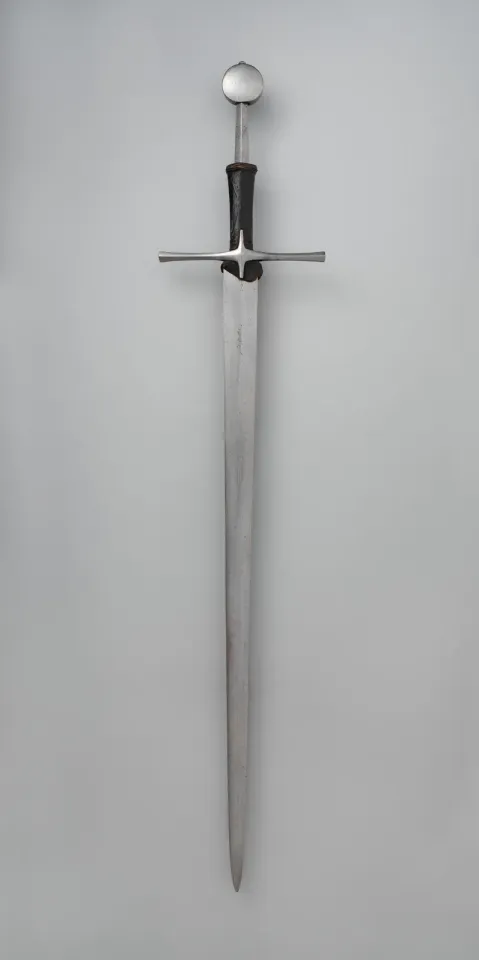
Excalibur
Cuts through enemy armor, and whoever wears its scabbard does not bleed.
Holy Grail
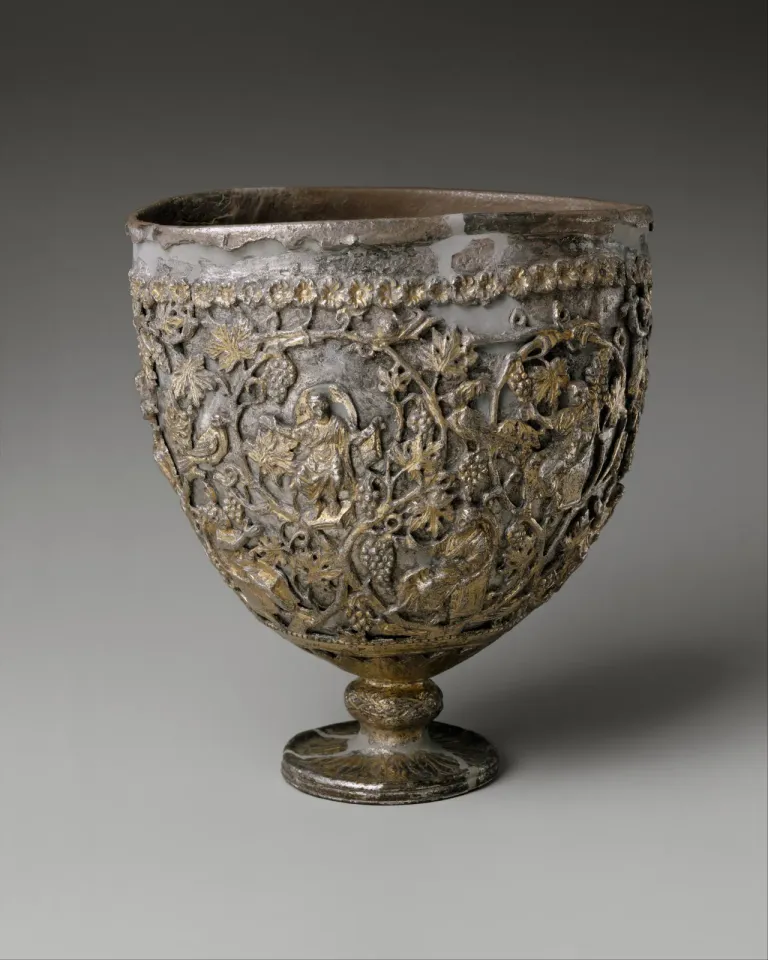
Grants those who see it the food they desire, and shows itself only to the pure knight.
Rhongomyniad
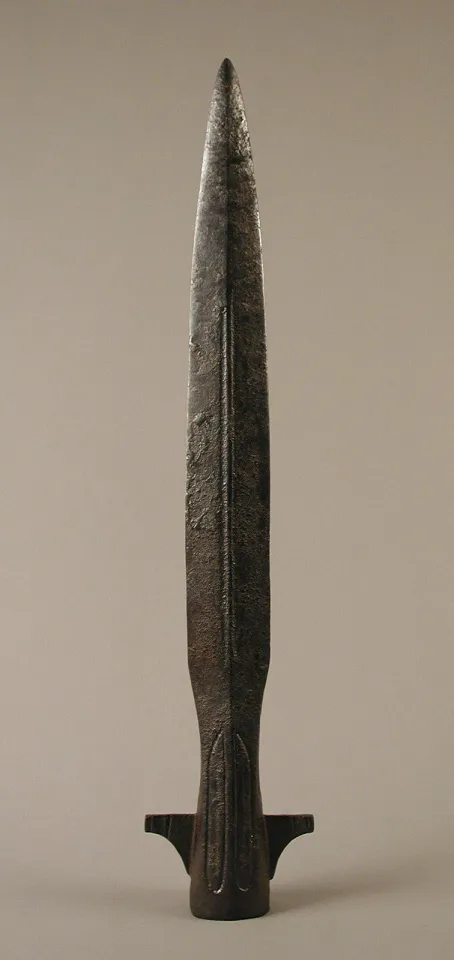
Long and broad-bladed, said to thirst for enemy blood.